How much is import tax from China to UK? Duty and VAT
How much is import tax from China to UK? Two charges: import duty at the rate for your commodity code, from 0% for many machines and chemicals to 12% for many clothes, and import VAT, usually 20% of the customs value plus duty. At 4% duty, £11,000 of goods and freight pays £440 duty and £2,288 VAT. Cambridge China Bridge can quote one UK landed price covering freight, duty and clearance.
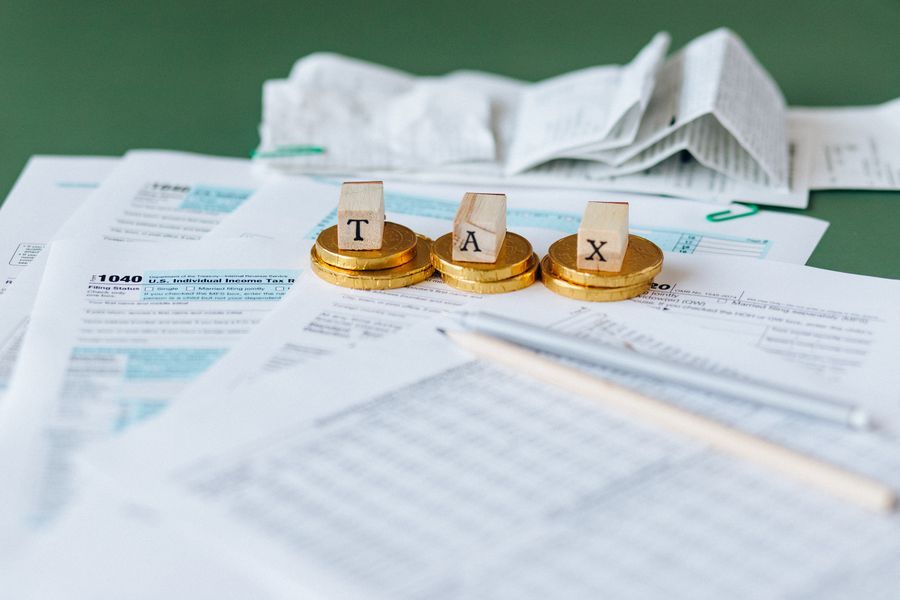
What do you actually pay at the UK border?
When commercial goods arrive from China, check customs duty and import VAT separately. Import duty may be 0% for your commodity code, but that does not itself make the import VAT-free. For movements through Northern Ireland, see our guide to China goods moving to Great Britain.
For example, on a hypothetical £10,000 of goods with £1,000 of freight and insurance and a 4% duty rate, duty is £440 and import VAT is 20% of £11,440, which is £2,288, so £2,728 is paid at import before any VAT is reclaimed.
Import duty is a percentage set by your product's commodity (HS) code — commonly in the 0–12% range, though some goods are higher or zero-rated. Import VAT follows the VAT rate for the goods; the standard UK rate is 20%, while some goods have a reduced or zero rate. For a quick cross-category duty reference, see 2026 duty rates from China by commodity code.
Shipping to Jersey or Guernsey is different: UK duty rates apply there, but the islands are outside the UK VAT area, so no UK import VAT is due on goods cleared on the island and Jersey charges its own GST; see importing from China to Jersey and the Channel Islands.
How is import duty from China calculated?
Duty is charged on the customs value of the goods, which typically includes the product cost plus freight and insurance to the UK.
VAT is then charged on that customs value plus the duty and any incidental expenses not already included, up to the goods' first destination in the UK, plus transport costs to a further destination if known at importation. In other words, VAT is calculated on the goods, the shipping, the duty and those additional expenses combined — which is why the order of the sum matters.
What is the £135 threshold, and when does it apply?
The well-known £135 figure mainly governs how VAT is collected on low-value consignments (at the point of sale rather than at the border); it is most relevant to small e-commerce parcels. For collection in Northern Ireland, see our click-and-collect parcel classification guide. For personal orders, see UK import tax on personal purchases.
For normal commercial bulk orders above £135, duty and import VAT are normally accounted for at import. Qualifying consignments worth £135 or less can currently claim customs duty relief, including business shipments, and different VAT collection rules apply. See our guide to UK low-value import duty changes.
Can you claim import VAT back?
If your VAT-registered business owns the goods at import and uses them for eligible business activity, import VAT may be deductible under the normal rules. Evidence is usually a monthly import VAT certificate (C79) if it was paid at import, or a postponed VAT accounting statement if it was accounted for on the VAT return.
A UK domestic VAT invoice documents VAT on a later UK sale; it is not evidence that you paid import VAT. Check which transaction and evidence apply to your purchase. Customs duty is a different cost and cannot be reclaimed as input VAT.
What do you need in place before you import?
You will need an EORI number to import, the correct commodity code for each product, and accurate paperwork (commercial invoice, packing list). A customs agent or a door-to-door sourcing service can handle the declaration for you. Getting that code right is its own job — see finding your commodity code.
Because duty rates depend entirely on the commodity code, always confirm the code and current rate on the HMRC Trade Tariff — or ask us to check before you commit to an order.
If you are comparing suppliers for a real order, Cambridge China Bridge can qualify suppliers, coordinate inspection and quote the shipping scope alongside a simple landed price or separate goods and freight lines. Confirm the seller, importer, paperwork and tax treatment for the agreed transaction before comparing totals; our UK customs clearance guide explains the declaration handoff.
A worked example, end to end
Say you buy £8,000 of goods and pay £1,200 for sea freight and insurance to the UK border. The customs value is £9,200. If your commodity code carries a 4% duty rate, that is £368 of duty. Import VAT is charged on the customs value plus the duty — 20% of £9,568 — which is £1,913.60.
So the goods that cost £8,000 need £11,481.60 to land. If you are VAT-registered, the £1,913.60 comes back through your VAT return, and your real cost is £9,568. If you are not registered, all of it is cost. That single difference changes which products are worth importing at all.
Note that the value import VAT is charged on is wider than this example shows: it also takes in incidental costs up to the goods' first destination in the UK, such as customs clearance charges, handling, storage and demurrage. Budget a little above the simple calculation. Already have a supplier quote? We check it before you pay.
Where does your duty rate come from?
There is no general 'import duty from China' rate. The rate is set by your commodity code, and it varies from 0% to well over 10% depending on what the product is and what it is made of. Textiles and footwear sit at the higher end; many electronics and machine parts are at 0%.
This is why classification is worth getting right rather than delegating to whoever files the entry. Our commodity code guide covers how to find and check yours, and the free import duty calculator will look up the rate and do this arithmetic for you.
Real rates, read from the tariff on 25 September 2026
The range is easier to see with real codes. The table below was read from the UK Trade Tariff on 25 September 2026 at the third-country rate that applies to China, for products we have written up in detail. The same four-digit heading can hold very different rates: monitors designed for a computer were 0% while other monitors were 14%, and leather-upper shoes paid half the rate of textile ones. Each product links to its own guide, with the rules that apply as well as the duty.
The last row is why the headline rate is never the whole answer. Boom lifts carry 4% duty, and since 20 August 2026 also a provisional anti-dumping duty of 71.74% for exporters not named in the case. Check any code for Chinese measures with the anti-dumping duty checker before you order, and build the customs value the duty is charged on.
| Product | Commodity code | Duty | Anti-dumping duty on China | Guide |
|---|---|---|---|---|
| Headphones and earphones | 8518 30 00 90 | 0% | None | Headphones and earphones guide |
| Laptops | 8471 30 00 00 | 0% | None | Laptops guide |
| Mixer taps for sinks and basins | 8481 80 11 90 | 2% | None | Mixer taps for sinks and basins guide |
| Household vacuum cleaners up to 1,500 W | 8508 11 00 00 | 2% | None | Household vacuum cleaners up to 1,500 W guide |
| LVT and SPC vinyl flooring | 3918 10 90 90 | 6% | None | LVT and SPC vinyl flooring guide |
| Poplar-faced plywood | 4412 33 20 10 | 6% | None | Poplar-faced plywood guide |
| New battery electric cars | 8703 80 10 10 | 10% | None | New battery electric cars guide |
| Cotton socks | 6115 95 00 00 | 12% | None | Cotton socks guide |
| Monitors not designed for a computer | 8528 59 00 90 | 14% | None | Monitors not designed for a computer guide |
| Trainers with textile uppers | 6404 11 00 00 | 16% | None | Trainers with textile uppers guide |
| Electric boom lifts and access platforms | 8427 10 10 10 | 4% | Provisional from 20 Aug 2026: 71.74% residual | Electric boom lifts and access platforms guide |
Is there a UK–China trade deal that lowers the duty?
No, and it is worth knowing this before you go looking. The UK and China have no free trade agreement. Trade between them runs on WTO most-favoured-nation terms, which means the standard third-country rate in the UK Trade Tariff is the rate, and there is no preferential rate to claim.
This catches people out because the opposite is true for a lot of other trade. Where the UK does have an agreement, a valid statement on origin from the supplier can cut the duty to zero, so buyers who have imported from those countries reasonably go looking for the same thing here. There is nothing to find, and a supplier who offers you a certificate that reduces your Chinese duty rate is offering you something that does not exist.
Origin still matters enormously, but for the opposite reason. It does not earn you a discount; it determines whether an anti-dumping measure applies to your goods. That is a charge that can exceed the duty several times over, so the question to ask about origin is not "does this reduce my rate" but "does this expose me to a measure I have not budgeted for".
What is anti-dumping duty, and could it apply to you?
Some goods of Chinese origin carry anti-dumping or countervailing duty on top of the normal rate, and it can be far larger than the duty itself — sometimes tens of percent. Ceramic tiles, aluminium products, certain steel, bicycles and solar equipment are recurring examples.
It is not visible from the headline duty percentage, so it catches people out after the goods have shipped. Check the measures listed against your specific code for Chinese origin before you commit, not after.
What is postponed VAT accounting, and should you use it?
If you are VAT-registered you can use postponed VAT accounting, which means you account for the import VAT on your return rather than paying it at the border and reclaiming later. There is no application — you give your VAT and EORI numbers to whoever handles your customs entry and tell them to select it. How import VAT works on goods from China covers the mechanics.
The benefit is cashflow rather than tax: the money never leaves your account. On regular shipments that can be thousands of pounds of working capital freed up. You then download the monthly statement from your customs account to support the return.
Working out your own order? Send us the product on WhatsApp and we reply the same working day: WhatsApp us
What is a duty deferment account, and do you need one?
By default, duty and import VAT are payable before the goods are released. That is per consignment, and it means money leaves the business at the least convenient moment: while the container is sitting at the port, before you have sold anything.
A duty deferment account changes the timing. Instead of paying consignment by consignment, the total deferred across the accounting period is collected in one monthly Direct Debit. For a business importing regularly, that turns an unpredictable series of payments into a single, forecastable one.
Historically these needed a financial guarantee from a bank, which is what put them out of reach of smaller importers. A guarantee waiver is now available: up to £10,000 per month without a financial guarantee at all. Above that, you can apply for a higher specified amount, but you have to hold positive net assets excluding goodwill greater than the waiver you are asking for, both at the date of application and at your most recent balance sheet date. See our guide to increasing your duty deferment guarantee waiver.
Two practical points. HMRC aims to process an application within 30 working days once it has everything, and longer if a financial guarantee is involved, so this is not something to start when a shipment is already on the water. And approval alone does not make the account usable: you get a deferment approval number, and you have to provide a Direct Debit Instruction to activate it, even if you do not intend to use it straight away.
If you are importing occasionally, you probably do not need your own yet. Your freight forwarder will usually clear the goods against their deferment account and bill you, which is a perfectly normal arrangement. Just be aware it is a service they are providing, it is priced accordingly, and it puts your release schedule inside someone else's cash flow.
Who imports, and which VAT can the buyer reclaim?
Import VAT recovery depends on who owns the goods at import, VAT registration, normal input-tax rules and valid import VAT evidence. If the supplier imports in its own name, you cannot reclaim that supplier's import VAT as yours. A later UK domestic sale is a different transaction: if VAT is charged and you hold a valid domestic VAT invoice, your business may be able to recover that VAT under the normal rules.
Before accepting an all-in DDP quote, ask who sells and imports the goods, whose EORI is used, when ownership passes and which VAT document you will receive. DDP does not by itself determine whether any VAT is recoverable; the actual transaction and evidence do.
What happens if you get it wrong?
The declaration is made in your name even when a broker keys it, and the responsibility for it being right is yours. So it is worth knowing what a mistake actually costs, because the timescale surprises people.
If duty or import VAT has been underpaid, HMRC recovers it with a post-clearance demand note, a C18. They normally have three years from the date the customs debt arose, which is usually the date of the entry, to notify you of it. That window can extend considerably: for entries made on or after 1 January 2021 the notification period can run up to twenty years.
Three years is the number that matters for planning. It means a classification or valuation error can surface long after the goods were sold, the margin was banked and the season moved on — and the demand lands against a business that no longer has the stock to show for it.
Penalties are separate from the duty itself. Under the civil penalty regime, the maximum is £1,000 per contravention for most, and £2,500 for the more significant ones. The minimum is £250, and that is usually what a first penalty looks like, escalating on repeat. For most contraventions HMRC will not charge a penalty at all unless they have sent you a warning letter within the previous two years for the same or a similar error, though they can skip that step for serious errors with substantial revenue impact, for failing to follow written instructions, or for breaching the conditions of an authorisation.
The sensible reading of all this is not that HMRC is waiting to catch you out. It is that the cheap moment to get classification and valuation right is before the first shipment, and that if you discover an error yourself, disclosing it voluntarily is a materially better position than having it found for you.
Budgeting for it properly
Treat duty and VAT as part of the landed price from the first quotation, not as an arrival surprise. A supplier's FOB price tells you very little about what the goods cost you in the UK.
For a repeat product it is worth building the whole calculation once — goods, freight, duty, VAT, and any anti-dumping — and then reusing it. That number is what you compare against your current UK supplier, and it is what our free price comparison gives you.
What else lands on top that is not duty or VAT?
Duty and import VAT are the charges with rules attached, so they get the attention. The ones that quietly finish the job are the handling charges, and they are the reason a landed cost calculated from duty and VAT alone still comes out low.
Expect a customs clearance or entry fee from whoever files the declaration, per entry. Expect terminal handling at the port, which the carrier charges and which is not usually inside a sea freight quote unless it says so. Expect a delivery leg from port to your door. And expect an admin or disbursement fee if the forwarder is fronting your duty and VAT on their own deferment account.
The expensive one is the charge you can avoid entirely: demurrage and detention, which accrue daily once free time at the port runs out. Almost every case of it traces back to paperwork that was not ready when the vessel arrived, which is a planning problem rather than a shipping one.
To work out the import VAT on a shipment, use our import VAT calculator.
To convert a supplier quote in dollars or yuan at the HMRC rate customs uses, try our HMRC exchange rate converter.
If your business is not VAT-registered, import VAT works differently; see Importing when you are not VAT registered.
Frequently asked questions
How much is import tax from China to the UK?
Two charges: customs duty at your commodity code's rate, often 0% to 12%, and import VAT, usually 20% of the customs value plus duty. On £11,000 of goods and freight at 4% duty, that is £440 of duty and £2,288 of VAT; a VAT-registered business normally reclaims the VAT.
Is this tax advice?
No. This is general information and rates change. Duty depends on your product's commodity code; confirm figures on the HMRC Trade Tariff or with a customs professional before ordering.
Can I avoid duty by splitting a shipment into small parcels?
No. Deliberately undervaluing goods or splitting consignments to stay under a threshold is non-compliant, and HMRC has been tightening enforcement of exactly this.
How much is import duty from China to the UK?
There is no single rate. It is set by your product's commodity code and ranges from 0% to well over 10%, with textiles and footwear at the higher end and many electronics at 0%. Some goods also carry anti-dumping duty on top.
If customs duty is 0%, do I still pay import VAT?
Usually yes, if the goods are subject to VAT. HMRC says the import VAT value must be calculated even when no customs duty is payable. The VAT rate depends on the goods: many are standard-rated at 20%, while some are reduced-rated or zero-rated. A zero duty rate alone is not a VAT exemption.
Is import VAT charged on the duty as well?
Yes, and on more than that. Import VAT is charged on the customs value plus the duty, so it compounds — on a £9,200 customs value with £368 of duty, the 20% is calculated on £9,568. The VAT value also includes incidental costs up to the goods' first destination in the UK, such as clearance charges, handling and storage, so the real figure is usually a little higher.
How do I use postponed VAT accounting?
There is no application. Give your VAT and EORI numbers to whoever files your customs entry and ask them to select postponed VAT accounting, then download the monthly statement from your customs account to support your return.
Can I reclaim import VAT if my supplier ships DDP?
You cannot reclaim a supplier's import VAT as your own. If you buy the goods after the supplier imports them and a UK domestic sale carries VAT, you may instead be able to recover the VAT on a valid domestic VAT invoice, subject to the normal rules. Confirm who owns and imports the goods and what evidence you will receive; see our DDP guide.
Is there a trade deal that reduces duty on Chinese goods?
No. The UK and China have no free trade agreement, so trade runs on WTO most-favoured-nation terms and the standard third-country rate applies. There is no preferential rate to claim and no origin document that reduces it.
How long can HMRC come back to me over underpaid duty?
Normally three years from the date the customs debt arose, which is usually the date of the entry. For entries made on or after 1 January 2021 that notification period can extend up to twenty years. Penalties are separate, and run from £250 up to £1,000 per contravention, or £2,500 for more significant ones.
Do I need my own duty deferment account?
Not to start with. Most first-time importers clear goods against their freight forwarder's account and are billed for it. Your own account makes sense once you import regularly: it replaces per-consignment payments with one monthly Direct Debit, and a guarantee waiver covers up to £10,000 a month without a financial guarantee.
Can I claim back import duty from China?
Not the way you reclaim VAT: customs duty is a cost of the goods. HMRC repays or remits it only in set cases, such as goods rejected as defective or not as ordered and then re-exported or destroyed, or duty paid in error, so keep the evidence.
Sources
- GOV.UK — Working out the VAT value even when no customs duty is payable
- GOV.UK — Paying VAT on imports from outside the UK to Great Britain
- GOV.UK — Check when you can account for import VAT on your VAT Return
- GOV.UK — Apply for a duty deferment account
- GOV.UK — Customs debt liability
- GOV.UK — Civil penalties for contraventions of customs law (Customs Notice 301)
- HMRC — Import VAT deduction belongs to the owner of the goods
- HMRC — Place of supply when the seller imports goods
- UK Trade Tariff — commodity codes and duty
- Trade Remedies Authority, case AD0075: Boom lifts from China
- GOV.UK — reforming the customs treatment of low value imports into the united kingdom