Sourcing electric and plug-in hybrid cars from China
New battery electric and plug-in hybrid cars from China pay 10% UK duty, with no UK anti-dumping or countervailing duty. Before registration a new car needs GB type approval, small series approval or individual approval under the Road Vehicles (Approval) Regulations 2020, so approval, right-hand drive and parts come first. Cambridge China Bridge sources vehicles for fleets and dealers.
Buying from China for a business? How our UK China sourcing agent service works · China sourcing agent for small orders and first imports
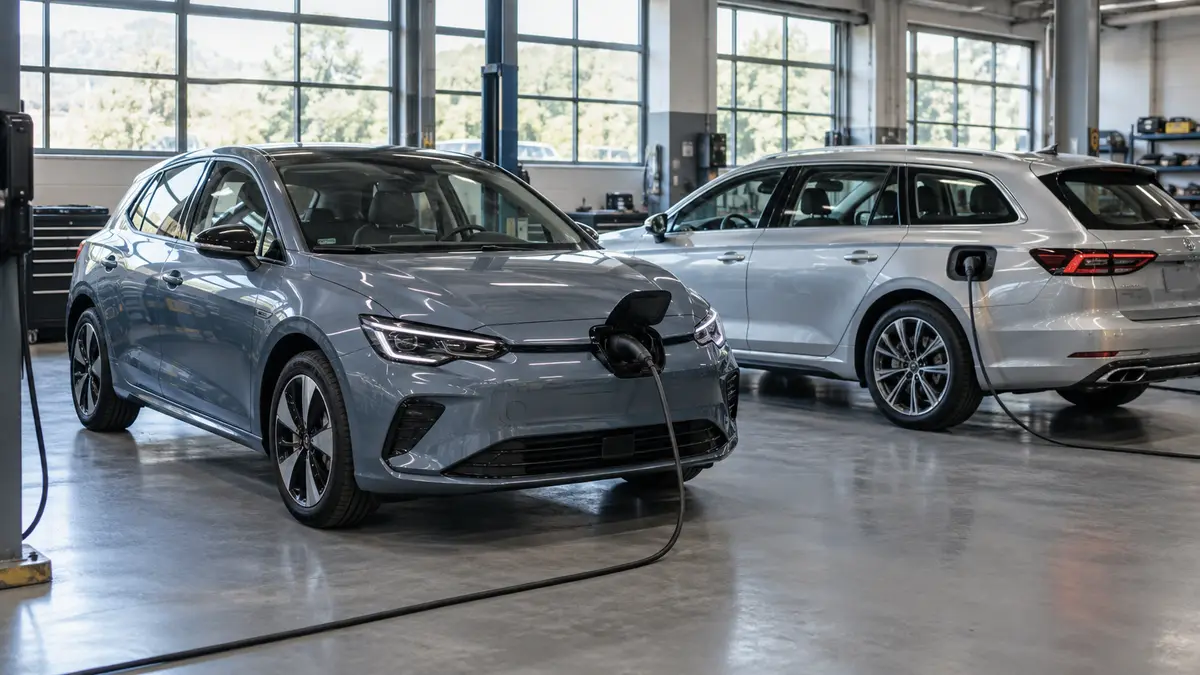
The duty on Chinese cars
Read from the UK Trade Tariff on 25 September 2026, new battery electric cars carried 10% duty on goods from China, as did other new electric-only cars and new petrol plug-in hybrids. No UK anti-dumping or countervailing measure applied to any of these lines. Import VAT is charged on top, on the value including duty. For petrol-only models, see our petrol passenger car sourcing guide. For diesel models, see our diesel passenger car sourcing guide. For track vehicles, see our electric go-kart sourcing guide.
At 10% on a high-value product, duty is a large figure in money, so the customs value and the landed price need to be worked out per vehicle, including freight and insurance.
| Goods | Commodity code | Duty | Anti-dumping or countervailing duty on China |
|---|---|---|---|
| New battery electric cars for nine or fewer persons | 8703 80 10 10 | 10% | None |
| Other new cars with only an electric motor | 8703 80 10 90 | 10% | None |
| New petrol plug-in hybrids, over 1,000 cm3 | 8703 60 10 90 | 10% | None |
Approval comes before registration
The Road Vehicles (Approval) Regulations 2020 set up three routes for vehicles in categories including M1 passenger cars: GB type approval, small series type approval for limited volumes, and individual approval for one-off vehicles. A new car needs one of them before it can be registered for the road, and which route fits depends on the volume: a fleet or dealer programme will usually rely on a manufacturer that already holds, or will apply for, GB approval, while a single imported vehicle goes through individual approval. For course-use and road-use considerations, see our electric golf cart sourcing guide. For the reverse trade, see our guide to exporting UK electric cars to China.
Decide the route before choosing a model. A car built for the Chinese domestic market is left-hand drive and has lighting, speedometer and charging connectors set for that market, so ask whether a right-hand-drive, UK-specification version exists and who holds its approval. A UK charge port matters too; see the EV charger guide.
Shipping cars with batteries
Cars travel by roll-on roll-off vessel or in containers, and a vehicle with a lithium battery is shipped as dangerous goods under the UN entries for battery-powered vehicles, which the forwarder applies to the battery type. Ask the factory and the forwarder how the state of charge will be set and documented, and whether the battery has its transport test summary.
Check each vehicle on arrival against the pre-shipment record: bodywork, charge level, keys and cards, and the charging cable. The container loading check and a pre-shipment inspection give you the baseline.
Worked duty example
A hypothetical order, not a quote: 20 new battery electric cars under 8703 80 10 10, bought for £400,000 free on board with £16,000 of roll-on roll-off freight and insurance, so the customs value is £416,000. Duty at 10% is £41,600, and import VAT at 20% of £457,600 is £91,520. A dealer importing cars for resale can normally reclaim that VAT, but a business buying cars for its own fleet usually cannot, because VAT on cars is blocked unless a car is used exclusively for business; that changes the real cost by the full VAT figure. An autonomous suspension on these codes applies only to ambulances. The import duty and VAT guide explains each step. For ambulance imports, see our ambulance sourcing guide.
Inspection checklist
Software and cyber approvals: check the vehicle type has UN Regulation 155 cyber security and UN Regulation 156 software update approvals, and that the software version on each car matches the one approved.
Charging: run an AC charge through the Type 2 inlet and a DC charge through the CCS2 inlet to IEC 62196 on sampled cars, and record the peak charging power against the specification.
Pre-delivery condition: measure paint thickness to ISO 2808 across panels to find repairs, check the underbody and wheels for transit damage, and record the state of charge and 12-volt battery voltage on every vehicle at unloading.
Working out your own order? Send us the product on WhatsApp and we reply the same working day: WhatsApp us
What goes wrong
Electric car imports fail on approval, specification and support. The model has no GB approval for the exact variant, or the right-hand-drive build differs from the approved one; headlamps, speedometer units and charging inlets are set for another market; and the connected-car app or navigation is locked to Chinese services. Traction batteries arrive with lower state of health than new, 12-volt batteries go flat on the voyage, and parts and software updates are slow once the cars are on the road.
Confirm the approval certificate covers the exact variant and trim, inspect right-hand-drive build, lighting, speedometer and CCS2 charging on pre-shipment vehicles, test the app, navigation and over-the-air updates with a UK account, get a battery state-of-health report per vehicle, agree state of charge and 12-volt isolation for shipping, and sign a parts, software and warranty agreement before the order.
Parts, software and warranty
A car is supported for years after it is sold. Before ordering, agree who supplies spare parts and in what time, how software updates will be delivered, and who honours the warranty in the UK. For a fleet, a stock of the fast-wearing parts should arrive with the vehicles.
Cambridge China Bridge sources electric vehicles for fleets and dealers: we confirm the approval route and UK specification with the manufacturer, arrange inspection before shipment, and plan the parts and documents with the order. See how our sourcing service works.
Frequently asked questions
What is the UK import duty on electric cars from China?
Read from the UK Trade Tariff on 25 September 2026, new battery electric cars carried 10% duty from China, as did new plug-in hybrids, with no UK anti-dumping or countervailing duty. Import VAT is added on top.
Can I register a car imported from China in the UK?
It needs GB type approval, small series approval or individual approval under the Road Vehicles (Approval) Regulations 2020 before registration, so confirm the approval route before ordering.
How are electric cars shipped from China?
By roll-on roll-off vessel or container, as dangerous goods under the UN entries for battery-powered vehicles, with the state of charge set and documented.
What should be agreed before ordering Chinese EVs for a fleet?
The approval route and right-hand-drive UK specification, spare parts supply, software updates and who honours the warranty in the UK.