Sourcing agent vs freight forwarder vs customs broker
A sourcing agent works on the buying side and finishes when the right product exists, a freight forwarder moves the goods, and a customs broker files the declaration. First imports go wrong in the gaps between the three, not inside any one of them. Cambridge China Bridge sources from China for UK and overseas buyers, from a first trial order to full containers.
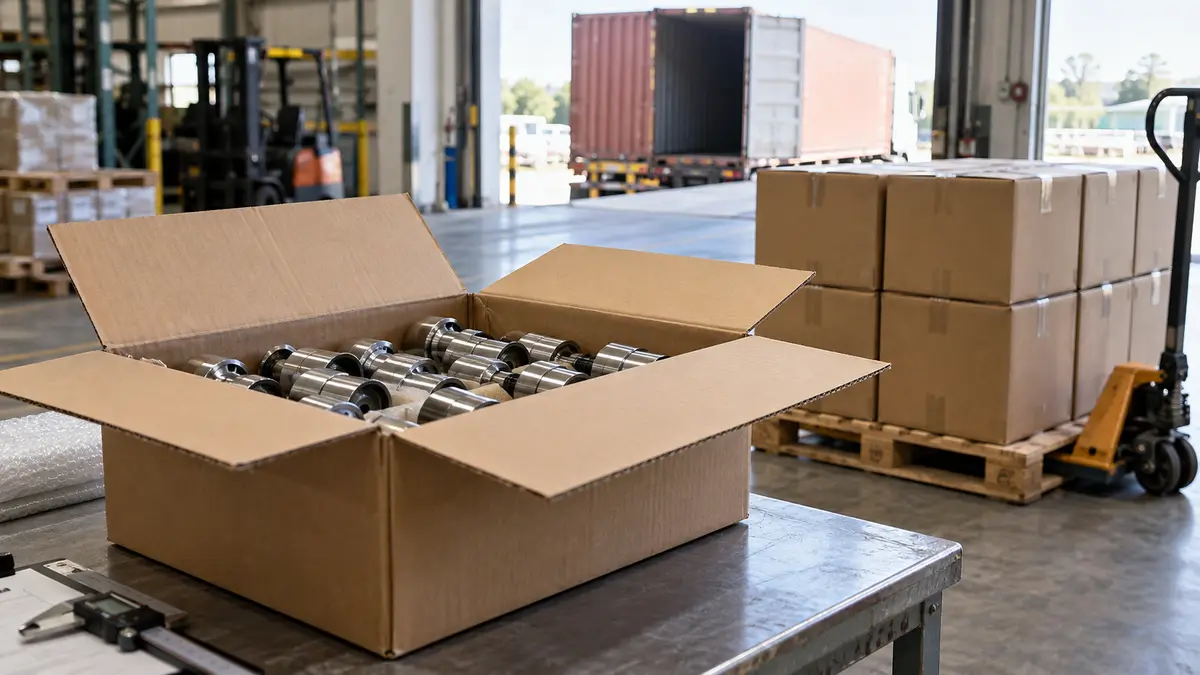
Three jobs, not three names for one job
A sourcing agent works on the buying side: finding factories, checking they are real, negotiating, controlling the specification and inspecting the goods before they ship. Their job finishes when the right product exists, made correctly.
A freight forwarder moves the goods: booking space, consolidating, arranging the sea or air leg and the delivery at the far end. A customs broker files the declaration with HMRC so the goods can legally enter the country. Their jobs start when the product already exists.
Where they overlap, and why that confuses people
Most freight forwarders also do customs work, so in practice one company often covers both moving and clearing. That is why 'forwarder' and 'broker' get used interchangeably even though they are distinct functions.
Sourcing agents commonly arrange freight too, which is where the confusion with forwarders comes from. The distinction that matters is not who books the container — it is whether anyone is accountable for the product itself being right.
The liability question nobody explains
When someone files a customs declaration for you, they do it as either a direct or an indirect representative, and the difference is real money. Under direct representation the agent acts in your name and you are solely liable for the declaration — including any underpaid duty — unless they made a deliberate or unreasonable error.
Under indirect representation the agent acts in their own name and is jointly and severally liable with you. That sounds better for you, which is exactly why many brokers will not do it. If your business has no UK customs establishment, indirect representation is the route you are pushed onto — and finding someone willing is harder and dearer.
What none of them does by default
A forwarder does not check that the goods in the carton match your specification. A customs broker does not verify that your commodity code is right — they declare what you tell them, and the classification remains your legal responsibility. Neither will notice that the factory substituted a cheaper component.
That gap is the whole reason sourcing agents exist. If your only supplier-side relationship is a forwarder, nobody is looking at the product before it is on a ship. We work in that gap as a sourcing agent in the UK.
Which one you actually need
If you already have a factory you trust and just need goods moved and cleared, you need a forwarder with customs capability — not a sourcing agent. Paying for sourcing you are not using is waste.
If you do not have a supplier, or you have had quality problems, or the product is custom, the sourcing decision is where the money is won or lost and a forwarder cannot help you there. Many buyers end up using both, or an agent who folds freight and customs into a single landed price. For marketplace orders, see our TikTok Shop UK sourcing guide.
Working out your own order? Send us the product on WhatsApp and we reply the same working day: WhatsApp us
Questions that separate them quickly
Ask a prospective supplier of any of these three: whose name goes on the customs declaration, and are you acting as direct or indirect representative? Who physically looks at the goods before they ship, and what do they check against? If quality is wrong on arrival, whose problem is it?
The answers sort the three roles faster than any brochure. A forwarder will answer the first question well and the second not at all.
How we work
We cover the sourcing side — finding and vetting the factory, holding the specification, inspecting before shipment — and fold freight and UK customs into one landed price, with the declaration made in your name to support recovery of import VAT, subject to ownership, eligible business use and valid evidence.
We charge £0 sourcing fees, so if all you need is freight, we will tell you that a forwarder is the cheaper answer rather than selling you something you do not need. Whichever you use, who is the importer of record decides who carries the customs debt and who can reclaim the VAT.
Frequently asked questions
Can one company be all three?
In effect, yes. Many forwarders also clear customs, and a sourcing agent can arrange freight and customs as part of a landed price. What matters is whether anyone is accountable for the product being right, not how many roles sit under one invoice.
What is the difference between direct and indirect representation?
Under direct representation the agent declares in your name and you are solely liable for the declaration, unless they made a deliberate or unreasonable error. Under indirect representation they declare in their own name and are jointly and severally liable with you — which is why many brokers decline to offer it.
Does a customs broker check my commodity code?
No. They declare the code you give them. Classification remains your legal responsibility, which is why getting the code right matters — see our commodity code guide.
Do I need a sourcing agent if I already have a factory?
Often not. If the supplier is proven and the product is stable, a freight forwarder with customs capability may be all you need. A sourcing agent earns its keep when the supplier is unproven, the product is custom, or quality has gone wrong before.