Sourcing wet and dry vacuum cleaners from China
Wet and dry vacuum cleaners from China carry UK duty of 0% or 2%, depending on motor power and receptacle capacity. Confirm with the relevant authority whether the exact model is excluded from the vacuum-cleaner ecodesign rules and which electrical safety requirements apply to mains models. Cambridge China Bridge sources wet and dry vacuum cleaners.
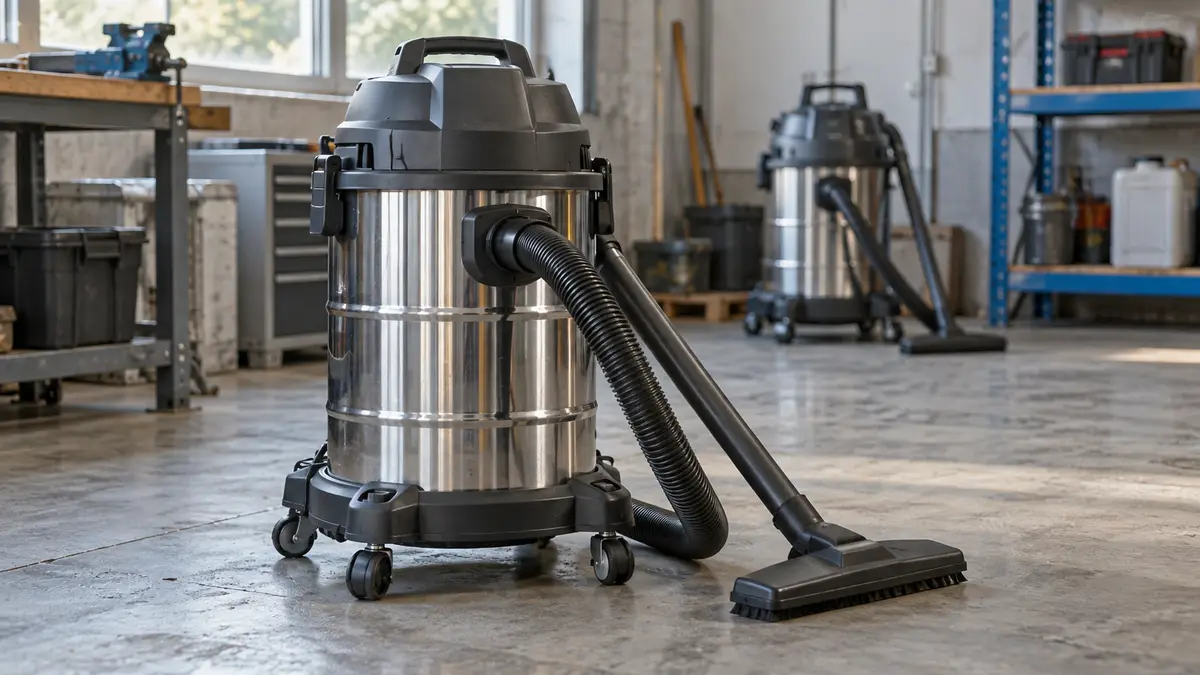
Duty by motor power and receptacle capacity
Heading 8508 covers vacuum cleaners and their parts, including wet and dry machines. With a self-contained electric motor, a machine falls under 8508 11 00 00 when power does not exceed 1,500 W and receptacle capacity does not exceed 20 litres. Machines exceeding either limit fall under 8508 19 00 00.
Read from the UK Trade Tariff on 30 September 2026, the duty for goods from China was 2% under 8508 11 00 00 and 0% under the other listed lines. The supplied tariff record lists no anti-dumping or countervailing duties, suspensions or attached import controls. Import VAT is separate from duty.
Confirm the commodity code using the rated input power, receptacle capacity and motor arrangement. Classify separately supplied accessories individually rather than assuming they all count as vacuum-cleaner parts. See the wider vacuum-cleaner guide for other product types. For pneumatic models, see our pneumatic industrial vacuum sourcing guide. For shipments in the opposite direction, see exporting small appliances to China.
| Goods | Commodity code | Duty | Anti-dumping or countervailing duty on China |
|---|---|---|---|
| Wet and dry vacuums with own motor, up to 1,500 W and receptacle up to 20 l | 8508 11 00 00 | 2% | None |
| Wet and dry vacuums with own motor exceeding either power or capacity threshold | 8508 19 00 00 | 0% | None |
| Other wet and dry vacuum cleaners without a self-contained electric motor | 8508 60 00 00 | 0% | None |
| Parts of wet and dry vacuum cleaners, subject to classification | 8508 70 00 00 | 0% | None |
Specify liquid collection and dry filtration
State the liquids and dry debris the machine will collect, the intended cleaning environment and whether it connects to power tools. Specify rated input power, nominal tank capacity, usable liquid capacity before shut-off, hose bore, hose connections, drain arrangement and supplied floor tools. Ask for airflow and suction measurements with their test methods.
Agree the filter and bag arrangement for each mode, how users change between wet and dry collection, and how the float shut-off protects the motor. Specify tank material, lid seal, latches, castors and spare filters. Avoid accepting a general wet-and-dry description as evidence of suitability for hazardous dust or flammable liquids. For explosion-proof equipment, see our explosion-proof industrial vacuum sourcing guide.
Confirm with the relevant authority whether the exact wet and dry vacuum cleaner is excluded from the vacuum-cleaner ecodesign regulation. For mains models, also confirm the requirements for electrical safety documentation, a declaration of conformity, the applicable CE or UKCA marking and importer identification. Importers must ensure that equipment comes with easily understandable English instructions. Match reports to the supplied motor, cable and model; arrange testing and certification checks before approving production.
Worked duty example
Illustrative example, not a quote: Illustrative order: 20 wet and dry vacuum cleaners within this code's limits under 8508 11 00 00, invoiced at £8,000 free on board, with £1,200 of freight and insurance to the UK. The customs value is £9,200. Duty at 2% is £184. Import VAT at 20% is charged on the customs value plus duty, £9,384, so it is £1,876.80. Import taxes total £2,060.80; a VAT-registered importer can usually reclaim the VAT, so the lasting cost is the £184 of duty. The import duty and VAT guide explains each step.
Inspection checklist
Liquid collection: check the float moves freely and the shut-off operates during an agreed water collection test. Inspect the lid seal, tank seams and drain closure for leaks.
Dry collection: check filter seating, bag attachment and hose joints against the approved sample. Run the agreed debris test and inspect for visible escape of dust.
Handling: check latches, handle attachments, castors and hose retention with the tank loaded as agreed. Inspect for tank dents and cracked fittings after unpacking.
Documents and contents: match model identification and electrical ratings to the approved documents. Check the English instructions explain filter changes, emptying and permitted uses; confirm every specified tool and spare is included.
Working out your own order? Send us the product on WhatsApp and we reply the same working day: WhatsApp us
What goes wrong
A large advertised tank can have a much smaller usable liquid capacity because the float closes early. Poor seals and loose hose joints reduce pickup, while a sticking float can allow liquid towards the motor. Compare the production machine with the approved sample using the same collection test.
Mode changes are another failure point: users may leave a dry filter fitted for liquid collection or refit a damp filter for dust. Agree clear instructions and test the changeover yourself. General cleaning performance does not establish suitability for hazardous materials; require evidence for any specialist claim before including it in your product description.
Cambridge China Bridge sources these products for UK businesses, checking the factory and the documents before shipment. See factory verification. For components and parts, see sourcing for manufacturers.
Frequently asked questions
What is the UK import duty on wet and dry vacuum cleaners from China?
Duty is 2% for machines with their own motor, power up to 1,500 W and receptacle capacity up to 20 litres. Other own-motor machines and the other listed heading lines carry 0%, with no listed trade remedies.
Do wet and dry vacuum cleaners have to meet the vacuum ecodesign limits?
Confirm with the relevant authority whether the exact wet and dry vacuum cleaner is excluded from that regulation, and which electrical safety obligations apply to mains models.
What should I test before approving a wet and dry vacuum?
Test liquid pickup, float shut-off, tank and drain seals, dry filter seating and mode changes. Use the intended debris and compare results with the approved sample.
Can a wet and dry vacuum collect hazardous dust?
Do not assume so from the product name. Define the intended material and ask for model-specific evidence supporting that use before ordering or making a claim.