Sourcing pneumatic vacuums from China
Pneumatic industrial vacuum cleaners without a self-contained electric motor fall under the other-vacuum-cleaners line at 0% UK duty from China; heading 8508 ranges from 0% to 2%. New machinery sold in Great Britain needs CE or UKCA marking, a declaration of conformity and English instructions. Cambridge China Bridge sources pneumatic industrial vacuum cleaners.
Duty on pneumatic machines and parts
Heading 8508 covers vacuum cleaners and their parts. For a compressed-air-powered machine without a self-contained electric motor, the relevant starting point is 8508 60 00 00, other vacuum cleaners. Separately imported vacuum cleaner parts have their own line. The electric-machine rows provide classification comparisons rather than pneumatic alternatives.
Read from the UK Trade Tariff on 30 September 2026, other vacuum cleaners and parts carried 0% duty from China. The heading's electric-machine lines carried 0% or 2%. The supplied tariff record lists no anti-dumping or countervailing measures, suspensions or attached import controls.
Confirm the actual construction and each separately supplied part using finding your commodity code. For the broader product family, see wet and dry vacuum cleaners. Zero duty does not itself remove import VAT; see UK import duty and VAT.
| Goods | Commodity code | Duty | Anti-dumping or countervailing duty on China |
|---|---|---|---|
| Other vacuum cleaners, including pneumatic machines | 8508 60 00 00 | 0% | None |
| Vacuum cleaner parts | 8508 70 00 00 | 0% | None |
| Self-contained electric motor models, other, for comparison | 8508 19 00 00 | 0% | None |
| Electric models up to 1 500 W and 20 l, for comparison | 8508 11 00 00 | 2% | None |
Specify the air supply and collected material
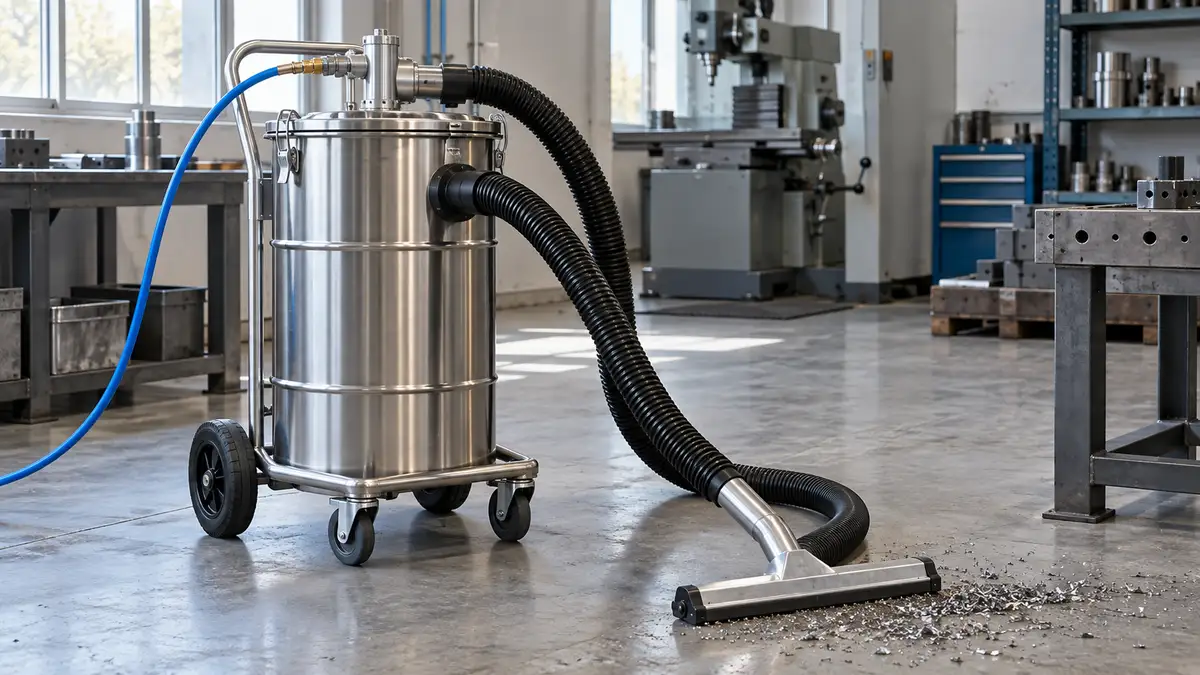
State whether the vacuum uses an air ejector or an air motor. Ask for inlet pressure, air consumption, suction and airflow measured under the same operating conditions. Match these to the air available at the installation point while other tools are running. Specify the inlet coupling, hose bore, hose length, exhaust silencer and shut-off arrangement. For air-supply tubing, see our guide to sourcing polyurethane pneumatic tubing.
Define the material to be collected, including particle size, moisture, abrasiveness and any liquids. Agree the container material, usable capacity, filter construction, sealing arrangement and emptying method. Ask the factory to demonstrate pickup with representative material and the proposed hose, rather than relying on a suction figure alone.
New machinery placed on the Great Britain market must have CE or UKCA marking, a declaration of conformity and instructions in English. Confirm with the relevant authority whether the vacuum-cleaner ecodesign regulation applies to the supplied industrial model. For combustible dust, obtain an application-specific safety review: HSE warns that dust moving over non-conducting surfaces generates electrostatic charge. Air power alone is no basis for accepting an explosion-safety claim.
Worked duty example
Illustrative example, not a quote: Illustrative workshop batch of pneumatic industrial vacuum cleaners under 8508 60 00 00, invoiced at £8,000 free on board, with £1,200 of freight and insurance to the UK. The customs value is £9,200. Duty at 0% is £0. Import VAT at 20% is charged on the customs value plus duty, £9,200, so it is £1,840. With no duty, the only import tax is the VAT, which a VAT-registered importer can usually reclaim. The import duty and VAT guide explains each step.
Inspection checklist
Air supply: run the assembled machine with the agreed hose and coupling; record inlet pressure during pickup, air demand, leaks and exhaust behaviour against the approved specification.
Collection and filtration: check representative-material pickup, filter seating, lid seals, hose collapse and the emptying procedure. For liquid-capable models, demonstrate the agreed overfill protection.
Construction: inspect drum seams, clamps, castors, handles and hose connections. Compare filter and seal replacements with the approved sample and parts list.
Identification and documents: match the model on the machine, declaration and instructions. Check the CE or UKCA marking and the supplied English instructions before accepting the shipment.
Working out your own order? Send us the product on WhatsApp and we reply the same working day: WhatsApp us
What goes wrong
A machine demonstrated on an unrestricted factory air line can lose pickup at the buyer's site through a narrow coupling, long hose or competing air demand. Filter loading and leaking lid seals can also reduce performance. Put the complete operating setup into the acceptance brief and repeat the demonstration with representative material.
A metal drum and an air-powered head do not establish suitability for combustible dust. Ask for evidence covering the assembled machine, hose, tools and intended material. Avoid accepting a generic certificate or a component report as proof of the complete configuration; arrange testing and certification checks before approving the specification. For explosion-proof models, see our explosion-proof industrial vacuum sourcing guide.
Cambridge China Bridge sources these products for UK businesses, checking the factory and the documents before shipment. See factory verification. For components and parts, see sourcing for manufacturers.
Frequently asked questions
What is the UK import duty on pneumatic industrial vacuum cleaners from China?
The other-vacuum-cleaners line, 8508 60 00 00, carries 0% duty from China in the supplied tariff record. Vacuum cleaner parts also carry 0%. Confirm the machine's construction and classification.
How much compressed air does a pneumatic vacuum need?
Ask for measured air consumption and inlet pressure during pickup with the specified hose and coupling. Compare that demand with the air available at your installation point while other equipment runs.
Does an air-powered vacuum need CE or UKCA marking?
New machinery placed on the Great Britain market must be CE or UKCA marked, supplied with a declaration of conformity and have instructions in English. Check the documents against the actual model.
Is a pneumatic vacuum safe for combustible dust?
Air power alone does not establish suitability. HSE identifies electrostatic charging when dust moves over non-conducting surfaces. Obtain evidence for the complete configuration and intended application.