Sourcing central vacuum systems from China
Central vacuum systems from China carry UK duty from 0% to 2%, depending on the imported equipment's motor, power and dust capacity. Confirm with the relevant authority whether central vacuum cleaners are excluded from the household vacuum ecodesign regulation; mains power units still need electrical safety compliance. Cambridge China Bridge sources central vacuum systems.
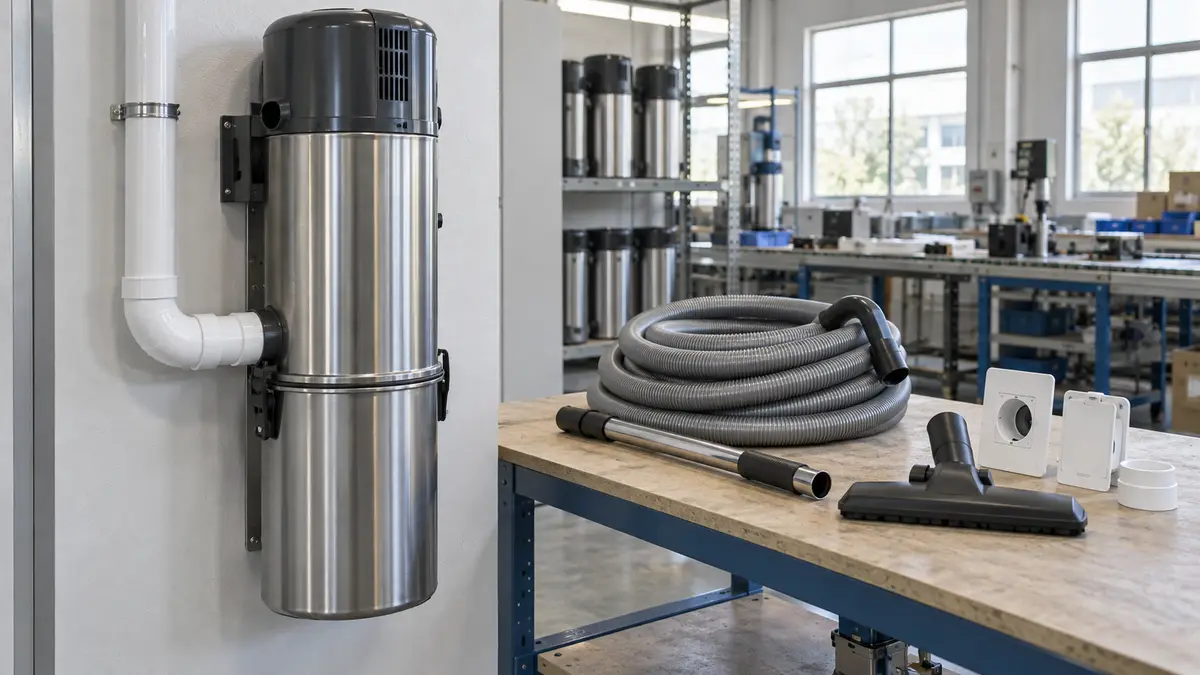
Duty on central vacuum units and parts
Heading 8508 covers vacuum cleaners and their parts. For central systems, describe exactly what is shipped: the power unit, cleaning equipment or replacement parts. A fixed installation does not by itself determine the tariff line. The wider vacuum cleaner guide explains the heading beyond central systems.
Read from the UK Trade Tariff on 30 September 2026, units with a self-contained motor rated up to 1,500 W and a dust bag or receptacle up to 20 litres carry 2% duty from China. Other self-contained motor units, other vacuum cleaners and parts carry 0%. The supplied tariff facts list no anti-dumping or countervailing duties, suspensions or attached import controls.
Confirm the commodity code using the motor arrangement, rated input power, receptacle capacity and shipment contents. Ask your customs broker to check separately supplied pipes, fittings and electrical accessories rather than treating every installation component as a vacuum cleaner part. The import duty and VAT guide explains the tax calculation.
| Goods | Commodity code | Duty | Anti-dumping or countervailing duty on China |
|---|---|---|---|
| Central vacuum units with own motor, up to 1,500 W and receptacle up to 20 l | 8508 11 00 00 | 2% | None |
| Central vacuum units with own motor exceeding either power or capacity limit | 8508 19 00 00 | 0% | None |
| Other vacuum cleaners for central systems, subject to classification | 8508 60 00 00 | 0% | None |
| Central vacuum cleaner parts, subject to classification | 8508 70 00 00 | 0% | None |
Specify the power unit and installed pipe network
Agree the intended use, electrical supply, motor arrangement, dust capacity, mounting position and exhaust route. Specify pipe and hose dimensions, inlet connections, control wiring, filter access and replacement seals. Ask for airflow and suction measurements with the proposed pipe route and hose attached, including the most distant inlet. Record the test setup so competing factory figures can be compared.
Confirm with the relevant authority whether central vacuum cleaners are excluded from the vacuum ecodesign regulation described in the wider guide. For mains power units sold in Great Britain, check electrical safety conformity assessment, technical documentation and marking. Equipment liable to generate electromagnetic disturbance also falls within the electromagnetic compatibility rules, subject to their exceptions. Request model-matched evidence of restricted-substance compliance where applicable. Our testing and certification service can coordinate these checks.
For equipment within the electrical waste rules, commercial importers are producers and must register annually. Confirm the supplied equipment's scope before arranging registration, particularly where the order forms part of a fixed installation. Specify accessible filter servicing, bin removal and replacement motors rather than judging the system only by its advertised suction.
Worked duty example
Illustrative example, not a quote: Illustrative order of 20 central vacuum power units with own motor, each within the power and receptacle limits under 8508 11 00 00, invoiced at £8,000 free on board, with £1,200 of freight and insurance to the UK. The customs value is £9,200. Duty at 2% is £184. Import VAT at 20% is charged on the customs value plus duty, £9,384, so it is £1,876.80. Import taxes total £2,060.80; a VAT-registered importer can usually reclaim the VAT, so the lasting cost is the £184 of duty. The import duty and VAT guide explains each step.
Inspection checklist
Connections: check hose cuffs, pipe sockets, inlet seals and control contacts against the approved installation sample. Assemble the supplied parts and check for air leaks.
Performance: run the unit with the agreed pipe route and hose. Check pickup at the most distant inlet, start and stop response, vibration and exhaust noise against the purchase specification.
Service access: remove and refit the dust receptacle and filter. Check gasket seating, bracket alignment, access for maintenance and the identity of supplied spares.
Documents and labels: match the model and electrical rating to the declaration and test reports. Check the conformity marking and importer identification; importer details belong on the equipment unless this is not possible. The importer must ensure that instructions are in easily understandable English.
Working out your own order? Send us the product on WhatsApp and we reply the same working day: WhatsApp us
What goes wrong
A strong suction figure at the bare motor inlet can hide poor pickup through the installed network. Leaking inlet flaps, mismatched hose cuffs and unsuitable bends are useful fault checks when the furthest outlet performs poorly. Agree a representative assembled test before approving the production sample.
Filter seals can be trapped when the bin is refitted, mounting brackets can distort in transit, and control contacts can fail to start the unit reliably. Check these points on arrival. A report for a different motor or controller leaves the supplied model's performance and compliance evidence unresolved; match documents to the production build before shipment.
Cambridge China Bridge sources these products for UK businesses, checking the factory and the documents before shipment. See factory verification. For components and parts, see sourcing for manufacturers.
Frequently asked questions
What is the UK import duty on central vacuum systems from China?
Duty is 2% for self-contained motor units up to 1,500 W with a receptacle up to 20 litres. Other motor units, other vacuum cleaners and parts are 0%. The supplied facts list no anti-dumping or countervailing duties.
Do central vacuum cleaners have the household vacuum wattage limit?
Any such exclusion does not remove electrical safety obligations for mains power units.
Do central vacuum systems need CE or UKCA marking?
For electrical equipment within the GB safety rules, CE or UKCA marking can be used with the applicable conformity assessment. Check the declaration and technical documentation for the supplied model.
How do I compare central vacuum suction figures?
Ask factories to use the same pipe route, hose and inlet arrangement. Compare airflow and suction under that setup, then test pickup at the most distant inlet rather than relying on a bare-unit figure.