Sourcing wellington and rubber boots from China
Waterproof footwear from China with moulded rubber or plastic uppers, such as wellington boots, moulded ankle boots and rubber safety boots with a steel toecap, pays 16% UK duty, with no anti-dumping duty. Safety boots are personal protective equipment, and all footwear needs a composition label. Cambridge China Bridge sources wellington and rubber boots.
Buying from China for a business? How our UK China sourcing agent service works · China sourcing agent for UK manufacturers and engineering firms
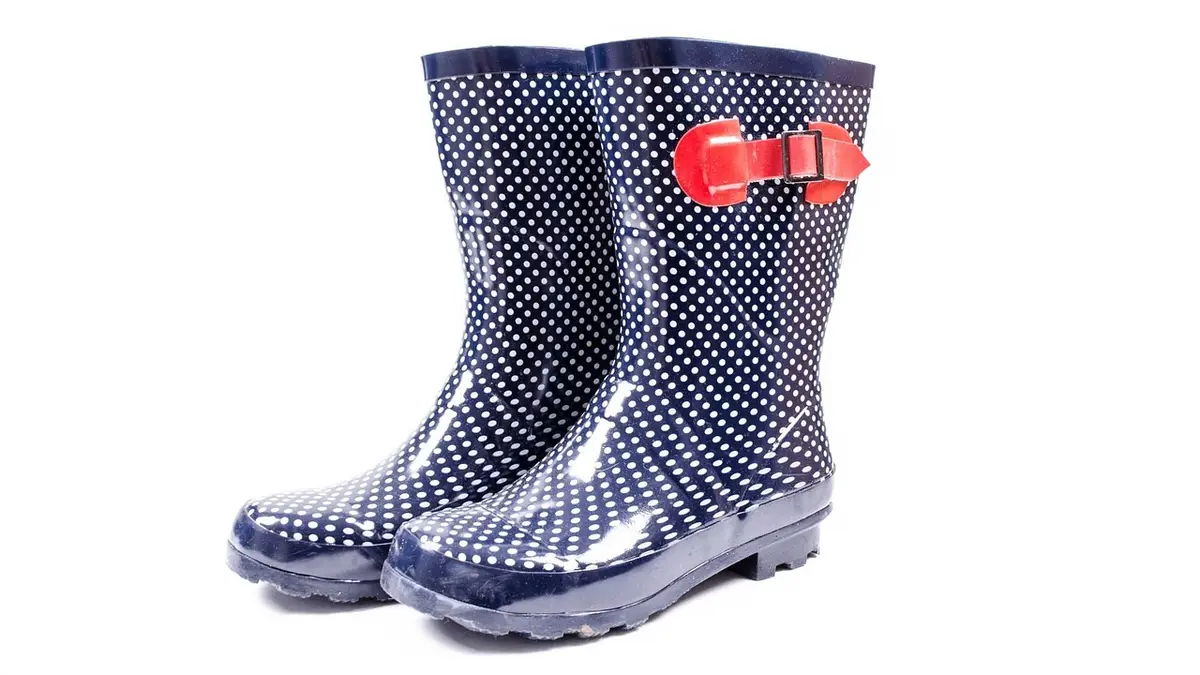
A flat 16%
Read from the UK Trade Tariff on 25 September 2026, waterproof footwear of heading 6401 carried 16% duty on goods from China, with no anti-dumping measure. The heading covers boots whose uppers are neither fixed to the sole nor assembled by stitching, riveting, nailing, screwing or plugging, which in practice means moulded or vulcanised boots.
Stitched rubber or plastic footwear is in heading 6402, covered in the own-brand footwear guide; confirm the commodity code. For felt or textile-soled styles, see our slippers and other footwear guide. For moulded EVA footwear, see our EVA clog sourcing guide. For boxing styles, see our textile boxing boot sourcing guide. For sports footwear shipped from the UK, see exporting trainers to China.
| Goods | Commodity code | Duty | Anti-dumping duty on China |
|---|---|---|---|
| With a protective metal toecap | 6401 10 00 00 | 16% | None |
| Ankle boots, rubber uppers | 6401 92 10 00 | 16% | None |
| Ankle boots, plastic uppers | 6401 92 90 00 | 16% | None |
| Covering the knee | 6401 99 00 10 | 16% | None |
| Other | 6401 99 00 90 | 16% | None |
Safety boots, labels and chemicals
Rubber boots sold as safety footwear are personal protective equipment under Regulation (EU) 2016/425 as it applies in Great Britain. Safety footwear is tested to EN ISO 20345, which includes a 200 joule toecap, and all-rubber or all-polymer safety boots are marked S4 or S5. Ask for the type examination certificate, the test report and the declaration of conformity, and check the UKCA or CE marking. For leather versions, see leather safety boot sourcing.
The Footwear (Indication of Composition) Labelling Regulations 1995 require the material of the upper, the lining and sock, and the outer sole to be shown on the footwear. Under UK REACH Annex XVII, entry 51 limits the phthalates DEHP, DBP, BBP and DIBP in plasticised material to 0.1% by weight, which matters for PVC boots, and entry 50 limits eight PAHs in rubber or plastic parts in prolonged skin contact to 1 mg/kg each.
Worked duty example
Illustrative example, not a quote: 3,000 pairs of knee-high PVC wellington boots under 6401 99 00 10, invoiced at £18,000 free on board, with £2,500 of freight and insurance to the UK. The customs value is £20,500. Duty at 16% is £3,280. Import VAT at 20% is charged on the customs value plus duty, £23,780, so it is £4,756. Import taxes total £8,036; a VAT-registered importer can usually reclaim the VAT, so the lasting cost is the £3,280 of duty. The import duty and VAT guide explains each step. Protective boots for industrial use can be zero-rated under HMRC's VAT Notice 701/23 when all its conditions are met; ordinary wellingtons are standard-rated.
That is about £1.09 a pair, roughly a sixth of the £6.83 customs value of each pair, so at 16% the duty belongs in the retail price calculation, unlike the 0% to 4% most hard goods pay.
Inspection checklist
Safety and occupational boots: tests run by the methods of EN ISO 20344, with toecap impact and compression, penetration resistance where a P or midsole marking is claimed, and slip resistance reported for the exact model, safety boots certified to EN ISO 20345 and non-toecap work boots to EN ISO 20347, and markings on each boot checked against the certificate.
Leaks and durability: sampled boots from every size filled with or stood in water to check for leaks at the mould lines and the sole joint, the forefoot flexed repeatedly and checked for cracks, and linings and heel counters checked for bonding; a cold-flex test is worth adding for boots sold into winter.
Chemicals, sizing and labels: a test report for the bulk rubber or PVC showing the phthalates in UK REACH Annex XVII entry 51 and the PAHs in entry 50 within their limits, foot length and calf width measured against the size chart using ISO 9407 Mondopoint where the buyer sizes that way, and each pair checked for the composition label the Footwear (Indication of Composition) Labelling Regulations 1995 require.
Working out your own order? Send us the product on WhatsApp and we reply the same working day: WhatsApp us
What goes wrong
Wellingtons fail by leaking, cracking and smelling. Moulded boots leak at thin spots or where the mould joins, cheap rubber and PVC crack at the flex crease after a winter in the cold, and linings delaminate from the shell. Boots made with restricted plasticisers or recycled rubber smell strongly and can fail the phthalate or PAH limits, and sizes run small or inconsistent between moulds.
Ask for a phthalate and PAH test on the bulk material, water-test boots from each size, flex the forefoot and check for cracks, check toecaps on safety boots against the certificate, and measure foot length and calf width against your size chart. Pack boots with shape inserts so the shafts do not crease in the carton.
Cambridge China Bridge sources wellingtons, rubber safety boots and moulded outdoor footwear, with tests, labels and sizing agreed before the order. See how our sourcing service works.
Related guides: Waterproof changing robes from China. For water-shoe sourcing, see textile-upper water shoes from China.
Frequently asked questions
What is the UK import duty on wellington boots from China?
Read from the UK Trade Tariff on 25 September 2026, waterproof footwear of heading 6401 carried 16% duty from China.
Which standard covers rubber safety boots?
EN ISO 20345; all-rubber or all-polymer safety boots are marked S4 or S5.
Do PVC boots need a phthalate test?
Yes. UK REACH entry 51 limits DEHP, DBP, BBP and DIBP to 0.1% by weight in plasticised material.
Are stitched rubber boots in heading 6401?
No. Stitched rubber or plastic footwear is in heading 6402.