Sourcing robot vacuum cleaners from China
Robot vacuum cleaners from China usually carry 2% UK duty; heading 8508 ranges from 0% to 2%. Confirm with the Office for Product Safety and Standards whether the vacuum-cleaner ecodesign rules apply to the model; connected consumer models need product-security compliance. Cambridge China Bridge sources robot vacuum cleaners.
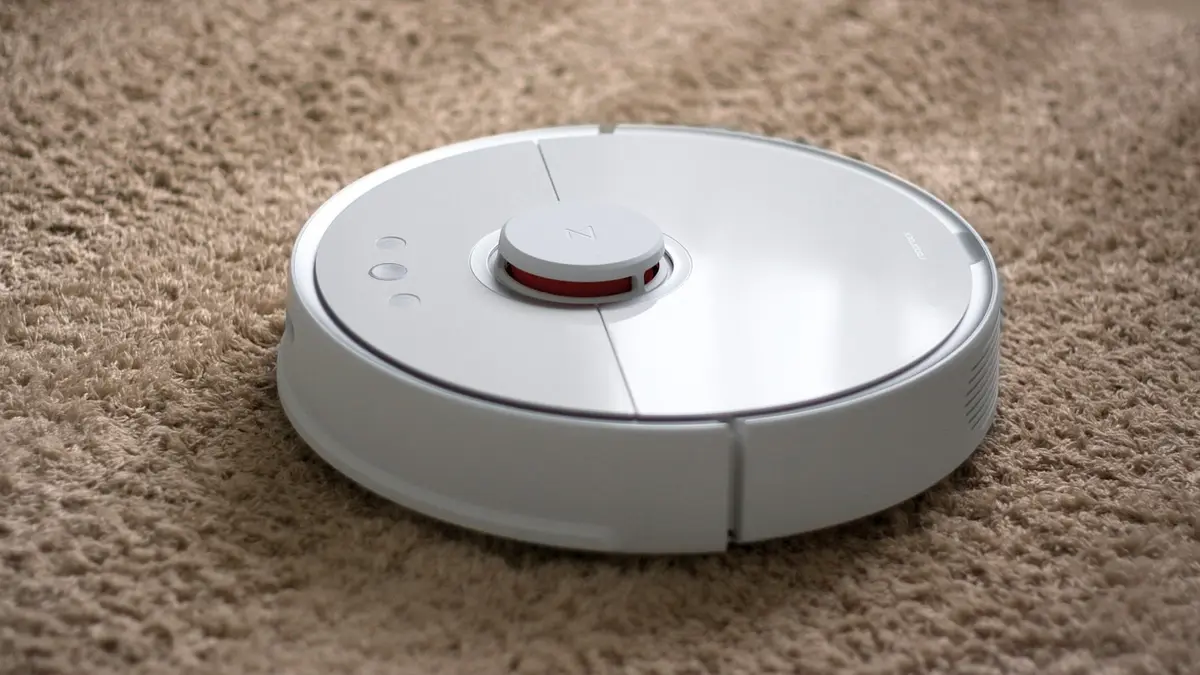
Duty on robot vacuums and replacement parts
Heading 8508 covers vacuum cleaners and their parts. A robot vacuum with its own motor, power not exceeding 1,500 W and a dust receptacle not exceeding 20 litres falls within 8508 11 00 00. The table includes the alternative heading lines for classification checks; machines without their own motor are not typical robot vacuums. For central systems, see our guide to sourcing central vacuum systems. For mattress-cleaning models, see our mattress vacuum cleaner sourcing guide.
Read from the UK Trade Tariff on 30 September 2026, the qualifying own-motor line carries 2% duty for goods from China. The other machine lines and parts carry 0%. The supplied tariff record lists no anti-dumping or countervailing measures, suspensions or attached import controls for these lines. Import VAT is normally 20%.
Confirm the commodity code against the actual machine and separately supplied parts. Do not assume that a charging dock or battery sold separately shares the robot's code. See the wider vacuum-cleaner guide for the heading and import duty and VAT for landed-cost calculations. For shipments in the opposite direction, see exporting small appliances to China.
| Goods | Commodity code | Duty | Anti-dumping or countervailing duty on China |
|---|---|---|---|
| Robot vacuums with own motor, up to 1,500 W and receptacle up to 20 litres | 8508 11 00 00 | 2% | None |
| Own-motor vacuum cleaners exceeding either limit | 8508 19 00 00 | 0% | None |
| Other vacuum cleaners without a self-contained electric motor | 8508 60 00 00 | 0% | None |
| Vacuum cleaner parts, including qualifying robot-vacuum replacement parts | 8508 70 00 00 | 0% | None |
Specify navigation, cleaning and connected functions
Define the floor types, rug edges, thresholds and furniture clearances the robot must handle. Agree a repeatable cleaning route and debris test, with measured run time at the intended suction settings. Specify brush construction, filter seals, battery cells, replacement parts and whether the dock only charges or also empties dust and handles mop water.
Confirm with the Office for Product Safety and Standards whether the vacuum-cleaner ecodesign regulation applies to the robot model. Electrical safety, electrical-waste responsibilities and battery shipping still need checking. Before sale, importers must be able to demonstrate compliance with the relevant regulations and safety requirements. Ask for evidence covering the supplied robot, battery, charger and dock.
For consumer models connecting to the internet or a network, check product-security compliance and ensure a statement of compliance accompanies the product. For models with radio connectivity sold in Great Britain, the importer must check that the manufacturer has completed the relevant conformity assessment. Arrange a testing and certification review before approving production.
Worked duty example
Illustrative example, not a quote: Illustrative small-business batch of robot vacuum cleaners under 8508 11 00 00, invoiced at £8,000 free on board, with £1,200 of freight and insurance to the UK. The customs value is £9,200. Duty at 2% is £184. Import VAT at 20% is charged on the customs value plus duty, £9,384, so it is £1,876.80. Import taxes total £2,060.80; a VAT-registered importer can usually reclaim the VAT, so the lasting cost is the £184 of duty. The import duty and VAT guide explains each step.
Inspection checklist
Navigation: run the agreed route on representative floors; check obstacle handling, cliff detection, room coverage and return to the dock.
Cleaning: compare debris collection, edge cleaning and brush tangling with the approved sample; check filter seating and dust leakage.
Battery and dock: measure run time under the agreed conditions; check charging contact alignment, docking recovery and any dust-emptying or mop-water functions.
Connected functions and paperwork: test application pairing, mapping, account reset and updates; match compliance documents to the delivered model and inspect the accompanying statement of compliance where required.
Working out your own order? Send us the product on WhatsApp and we reply the same working day: WhatsApp us
What goes wrong
A demonstration on an empty hard floor can hide poor rug handling, missed edges and repeated docking failures. Test the approved sample and production machines under the same conditions. Brush bearings, battery substitutions and poorly seated filters deserve particular attention.
An application that pairs at the factory may still fail during customer setup. Test with the intended UK application distribution and account settings, and agree who maintains software and supplies spare brushes, filters and batteries. Record the approved hardware and software configuration so changes trigger review.
Cambridge China Bridge sources these products for UK businesses, checking the factory and the documents before shipment. See factory verification. For components and parts, see sourcing for manufacturers.
Frequently asked questions
What is the UK import duty on robot vacuum cleaners from China?
The supplied tariff record gives 2% for own-motor machines up to 1,500 W with a receptacle up to 20 litres. Other machine lines and parts are 0%, with no listed anti-dumping or countervailing duty.
Do robot vacuum cleaners have to meet the mains-vacuum ecodesign limits?
Confirm with the Office for Product Safety and Standards whether that regulation applies to the robot model. Electrical safety, electrical-waste responsibilities, battery shipping and connected-product rules still need checking.
Does an application-controlled robot vacuum need a statement of compliance?
For a consumer robot within the connectable-product security regime, yes. The statement must accompany the product. Check its scope against the model and intended market.
How should I compare robot vacuum samples?
Use the same debris, floors, obstacles and suction settings. Compare cleaning results, run time, mapping, docking and brush tangling, rather than relying on advertised suction figures alone.