Sourcing food-grade rubber belts from China
Food-grade vulcanised rubber conveyor belts from China pay 6% UK duty across the relevant conveyor-belting codes. Food-contact materials must be made using good manufacturing practice and must not transfer substances that harm health or spoil food. Cambridge China Bridge sources food-grade rubber conveyor belts.
Buying from China for a business? How our UK China sourcing agent service works · China sourcing agent for UK manufacturers and engineering firms
UK duty on food-grade rubber conveyor belts
Read from the UK Trade Tariff on 30 September 2026, heading 4010 covers conveyor or transmission belts and belting of vulcanised rubber. This guide covers food-grade conveyor belts: reinforcement only with metal, reinforcement only with textile, and other constructions. The table separates textile belt rolls and endless belts under the same commodity code.
All relevant conveyor-belting lines carry 6% duty for goods from China. The supplied tariff data lists no anti-dumping or countervailing duty, suspension or attached import control for these lines. Food-contact safety requirements still apply to belts intended to touch food.
Confirm the rubber material and reinforcement before choosing the commodity code. Plastic and textile belting have different classifications, as explained in the wider conveyor belts and V-belts guide. For the illustrative order, use UK import duty and VAT to follow the calculation.
| Goods | Commodity code | Duty | Anti-dumping or countervailing duty on China |
|---|---|---|---|
| Food-grade rubber belt rolls reinforced only with textile | 4010 12 00 00 | 6% | None |
| Food-grade rubber conveyor belts reinforced only with metal | 4010 11 00 00 | 6% | None |
| Other food-grade rubber conveyor belts | 4010 19 00 00 | 6% | None |
Specify the food-contact cover and belt construction
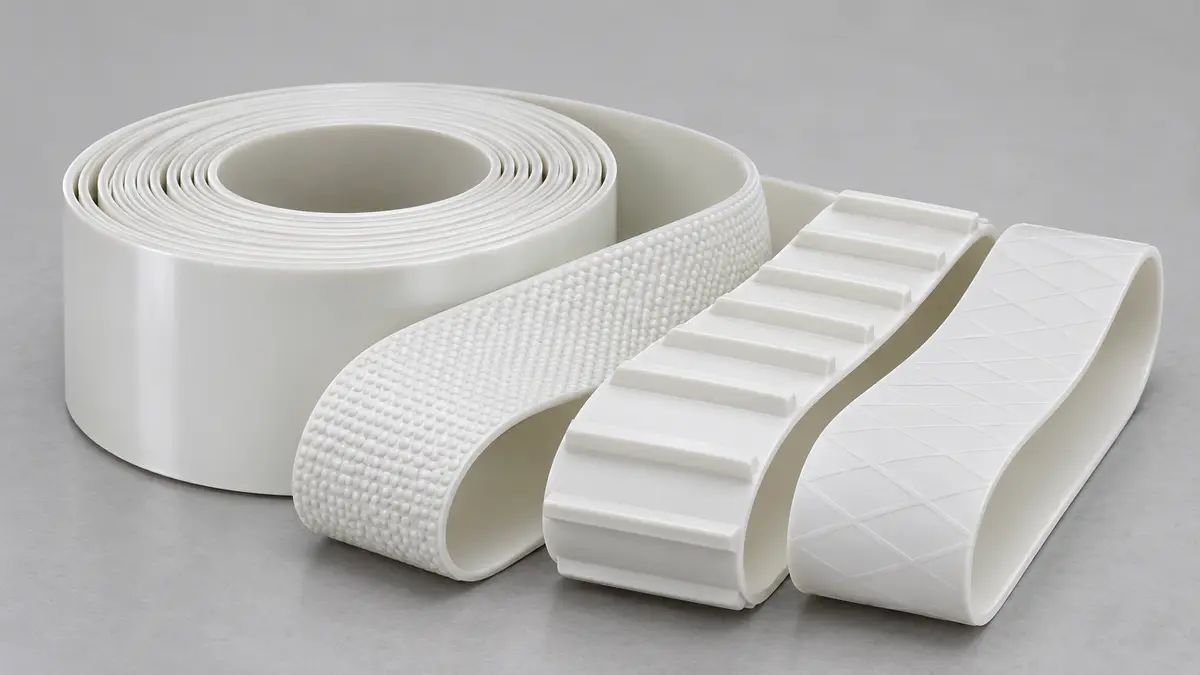
Specify the rubber compound, colour, food-contact face, reinforcement, ply count, width, length, cover thicknesses and tensile rating. State whether the belt is supplied in rolls or as an endless belt, and agree the splice, sealed edges, surface texture and minimum pulley diameter. Include any cleats or sidewalls in the approved drawing.
Describe the foods being conveyed, including fats and oils, contact time, operating temperature, repeated use and cleaning chemicals. Ask a laboratory to assess migration and effects on food taste and smell for the actual compound and intended conditions. Match the evidence to the cover, splice materials and other food-contact parts. Arrange testing and certification before approving production.
Food-contact materials must be manufactured using good manufacturing practice and must not transfer constituents in quantities that endanger health, unacceptably change food composition or impair its sensory characteristics. Food-contact manufacture requires an effective, documented quality assurance system. Businesses must maintain traceability, including systems identifying their business suppliers and customers.
Worked duty example
Illustrative example, not a quote: Illustrative order: 12 rolls of textile-reinforced food-grade rubber conveyor belt under 4010 12 00 00, invoiced at £24,000 free on board, with £3,500 of freight and insurance to the UK. The customs value is £27,500. Duty at 6% is £1,650. Import VAT at 20% is charged on the customs value plus duty, £29,150, so it is £5,830. Import taxes total £7,480; a VAT-registered importer can usually reclaim the VAT, so the lasting cost is the £1,650 of duty. The import duty and VAT guide explains each step.
Inspection checklist
Documents: match the supplied belt, compound identification and batch records to the approved sample and food-contact assessment. Keep supplier and business customer records linked to the belt batches.
Dimensions: measure width, length and cover thickness across the belt against the agreed drawing. Check reinforcement and ply count against the order.
Food-contact surface: inspect for cracks, pinholes, exposed fabric, embedded dirt and damaged edges. Check colour and surface finish against the approved sample, and record unexpected odour.
Joint and running: inspect the splice for gaps, lifting and exposed reinforcement. Trial tracking, flexing and cleaning on the intended equipment before releasing the belt for production.
Working out your own order? Send us the product on WhatsApp and we reply the same working day: WhatsApp us
What goes wrong
A white cover or a supplier's food-grade description does not establish suitability for the intended process. A report may cover a different compound, colour or contact condition. Ask for evidence covering your food and cleaning conditions rather than accepting a report with no link to the supplied belt.
Thin covers, weak ply adhesion and uneven edges cause early wear, separation and poor tracking. Cracked splices or exposed fabric can trap residues. Agree acceptance checks before manufacture, retain an approved sample and investigate differences before installation. Use quality inspection explained to plan the checks.
Cambridge China Bridge sources these products for UK businesses, checking the factory and the documents before shipment. See factory verification. For repeat volumes, see container programmes.
Frequently asked questions
What is the UK import duty on food-grade rubber conveyor belts from China?
The relevant vulcanised rubber conveyor-belting lines carry 6% duty.
Does a white rubber belt prove it is food grade?
No. Ask for evidence linked to the actual compound, food-contact parts and intended use. Colour alone does not establish suitability.
Can the same rubber belt handle dry and fatty foods?
Do not assume it can. Specify the foods, fats, temperature, contact time and cleaning process, then ask for assessment and test evidence covering those conditions.
Are plastic food conveyor belts classified under 4010?
The published wider guide places polyvinyl chloride and polyurethane belting under heading 3926. Confirm the material and construction before choosing the commodity code.