Customer injured by my product: what should I do?
Stop sale of the suspect batch, preserve the item and incident evidence, and notify your insurer. For GB consumer goods, an importer can be a producer under the 2005 safety rules. If you know the product poses risks incompatible with the safety requirement, notify the enforcement authority immediately in writing; do not wait for the factory or insurer.
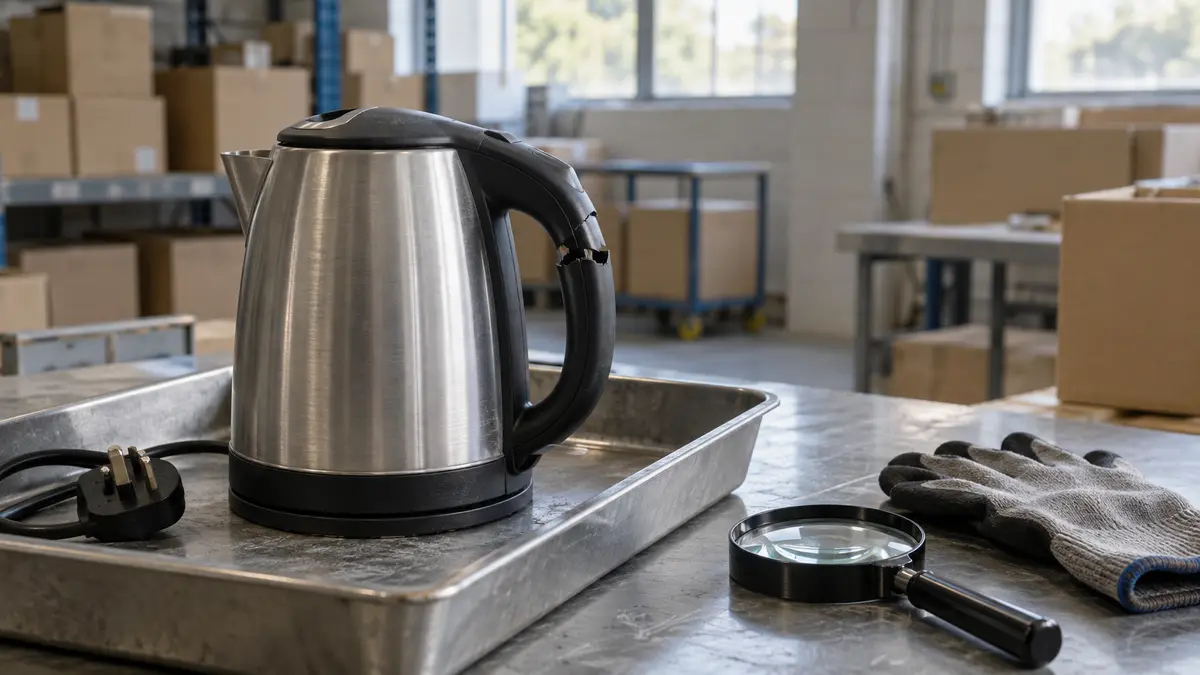
Identify your role before treating this as a factory problem
This guide covers injury reports involving non-food consumer products supplied in Great Britain: England, Scotland and Wales. The General Product Safety Regulations 2005 remain applicable there. Northern Ireland has a different general product safety regime: Regulation (EU) 2023/988 replaced the 2005 rules there on 13 December 2024. Product-specific legislation may govern particular safety risks and reporting obligations.
Under regulation 2 of the 2005 Regulations, where the manufacturer is outside the UK and has no UK-established representative, the UK-established business placing the imported product on the GB market falls within the definition of producer. Buying from a Chinese factory does not leave all safety responsibilities with that factory.
The Consumer Protection Act 1987 creates a separate liability route. Section 2(1), subject to the other provisions of the Act, makes specified persons liable for damage caused wholly or partly by a product defect. Section 2(2)(c) expressly includes someone importing a product into the UK in the course of business to supply it to another. Section 3 assesses a defect by the safety people generally are entitled to expect. An injury allegation therefore needs investigation; it does not itself establish a defect or liability. See who is liable when you import.
The first 48 hours: an ordered action checklist
Use this as a practical response sequence, not a statutory 48-hour reporting allowance. Carry out urgent protective measures together where necessary.
1. Protect the customer and secure the item. Encourage medical help where needed and ask them to stop using it. Preserve the product, detached parts, packaging and instructions. Do not ask them to recreate the accident, dismantle the item or handle an electrical, fire or leakage hazard. Agree safe collection and storage before issuing an ordinary return label.
2. Stop sale of the suspect batch. Block dispatch and listings for the affected stock, segregate returns and tell warehouses and distributors to hold it. Where batch identification is missing, begin with a wider precautionary hold and document the evidence needed to narrow it.
3. Record the incident. Open a dated log with the customer's own account, purchase reference, model, batch or serial number, reported injury, use conditions, photographs and witnesses. Save the original listing and messages. Record who possesses the item and every transfer or alteration. Arrange examinations with the insurer or investigator; use laboratory sample custody for the handover record.
4. Notify your insurer or broker promptly. Send the facts and protective actions, check the policy's notification conditions, and ask who will appoint an investigator or solicitor. Before agreeing compensation or destructive testing, seek instructions. Clarify investigation and recall cover separately; see product liability insurance for China imports.
5. Make any required regulatory notification immediately. Apply the reporting trigger below as soon as information becomes available. Do not wait until the end of this checklist, a final laboratory report or an insurer's reply.
6. Notify the supplier in writing. Identify the model, batch, reported failure and stock hold. Require preservation of production, component, inspection and change records. Request a written response and containment proposal. Keep the original product under agreed evidence arrangements rather than automatically returning it to China.
Report the risk to the right authority
Regulation 9 requires a producer or distributor who knows that a supplied product poses risks incompatible with the general safety requirement to notify an enforcement authority forthwith in writing, including the action taken to prevent risk. The regulation contains limited exceptions, including conditions concerning isolated circumstances or products. Do not assume that one reported injury qualifies for an exception; seek the authority's advice where the position is uncertain.
OPSS guidance says unsafe-product notifications under these rules in GB normally go to local Trading Standards. The February 2026 business notification guidance also covers notification of noncompliance under relevant legislation. Its Annex A identifies sector authorities: for example, HSE handles electrical equipment designed for workplace use in GB. A consumer injury does not automatically make HSE the correct recipient. For machinery incidents, see imported machine workplace accidents.
Prepare a notification packet: product and batch identification; photographs and sale channels; supplier and distribution details; the reported incident; risk assessment and available test reports; stock quantities and locations; and corrective action taken or proposed. Mark unknown information explicitly and arrange updates with the authority. For a serious risk, regulation 9 specifically requires precise identification, a full risk description, available traceability information and the action undertaken.
Keep the notification, attachments, submission time, acknowledgement and named contact in the incident file. OPSS is the national product safety regulator; the official guidance provides an OPSS route where no local authority can be identified and no other national regulator has the relevant remit.
Investigate the batch, not just the returned item
Regulation 7 requires proportionate measures to learn about product risks and take appropriate action. Where reasonable, these include sample testing, investigating safety complaints and keeping a complaint register where necessary, and informing distributors of monitoring results where a risk exists or may exist. Corrective action includes withdrawal, effective warnings and, as a last resort, recall. The official notification guidance identifies PAS 7100:2022 as the supporting recall code of practice.
For a hypothetical plastic garden-table collapse, frame the investigation as questions: did a leg mounting crack, did a fixing pull out, was an assembly part absent, or did the table overturn during the reported use? Photograph fracture surfaces before testing. Compare the returned item's markings and assembly instructions with retained samples and stock from the same production run. Ask the factory for material specifications, mould or component changes, assembly records and inspection results. These are investigation prompts, not a diagnosis.
Build a batch map linking factory runs, purchase orders, shipment cartons, warehouse receipts and customer orders. If records cannot distinguish affected from unaffected goods, record that uncertainty rather than treating unreported stock as safe. Use the assessment to decide whether the hold should expand and whether consumers need a warning or recall; the wider process is in recalling imported products in the UK.
Keep customer safety action and the supplier reimbursement dispute on separate tracks. For help obtaining factory records and managing that dispute, see our supplier problems service.
Budget replacement stock: a worked duty and VAT example
Suppose you buy replacement plastic garden tables after resolving the safety issue. The tariff example uses furniture of plastics, not plastic chairs, separate components or every product involved in a recall. Confirm the actual classification before declaring goods. The UK Trade Tariff commodity page and API for 9403700000 show 0% third-country duty and 20% import VAT. No anti-dumping measure is listed for this code in the API response checked for 13 October 2026.
All amounts below are hypothetical: goods value £10,000; freight and insurance to the UK border £1,000; additional transport and incidental costs to the first UK destination £200. Assume ordinary paid imports, no relief claim, no other customs-value adjustments and no further known destination costs.
Customs value = £10,000 + £1,000 = £11,000. Duty = £11,000 × 0% = £0. Import VAT value = £11,000 + £0 + £200 = £11,200. Import VAT = £11,200 × 20% = £2,240. Duty plus import VAT = £2,240.
HMRC requires the VAT calculation to start from customs value even where duty is zero, adding duty and relevant incidental expenses. These figures illustrate a purchased replacement shipment only. Obtain separate customs advice for a different arrangement, such as goods supplied without charge. See UK import duty and VAT.
| Goods | Commodity code | Duty | Anti-dumping duty on China |
|---|---|---|---|
| Furniture of plastics: hypothetical replacement garden tables | 9403700000 | 0% | None listed in the checked API response |
Working out your own order? Send us the product on WhatsApp and we reply the same working day: WhatsApp us
Before releasing stock or closing the incident
Create a written decision record naming the affected products, evidence reviewed, remaining uncertainties, corrective action, decision maker and next review. Make any release conditional on an evidenced safety assessment and compliance with applicable requirements, rather than the factory's assurance alone. For bunk beds, see our bunk bed safety checks. For fold-down wall beds, see our wall bed installer checks.
Keep the injury claim, complaint investigation and stock-safety decision identifiable within the same file. Record insurer correspondence, regulator instructions, customer communications, supplier replies and the reasons for changing the hold or recall scope. Schedule follow-up checks on whether the corrective action has reached affected customers.
Frequently asked questions
Must every injury report trigger an immediate recall?
Investigate promptly and hold suspect stock. Regulation 7 requires proportionate corrective action, including withdrawal, warnings and recall as a last resort. Apply the regulatory notification trigger separately; do not postpone a required report while deciding recall scope.
Can the factory investigate the customer's item first?
Request its records immediately, but agree custody and examination of the original item with your insurer or investigator before sending it away. Record any transfer and preserve its condition before testing.
Sources
- General Product Safety Regulations 2005: Great Britain
- 2005 Regulations: producer definition, current legislation
- 2005 Regulations: risk monitoring and corrective action
- 2005 Regulations: notification requirements
- Consumer Protection Act 1987: liability
- Consumer Protection Act 1987: business importers
- Consumer Protection Act 1987: meaning of defect
- OPSS business notification guidance, February 2026
- UK Trade Tariff: furniture of plastics
- UK Trade Tariff API: dated commodity measures
- HMRC: calculating the import VAT value