How to check every cavity in a multi-cavity mould
Give each cavity a traceable identity, take balanced samples from every active cavity across the run, and assess results separately against agreed limits. Release records should identify accepted cavities and held stock. Sampling cannot guarantee every part. Cambridge China Bridge can coordinate these checks with its staff in China.
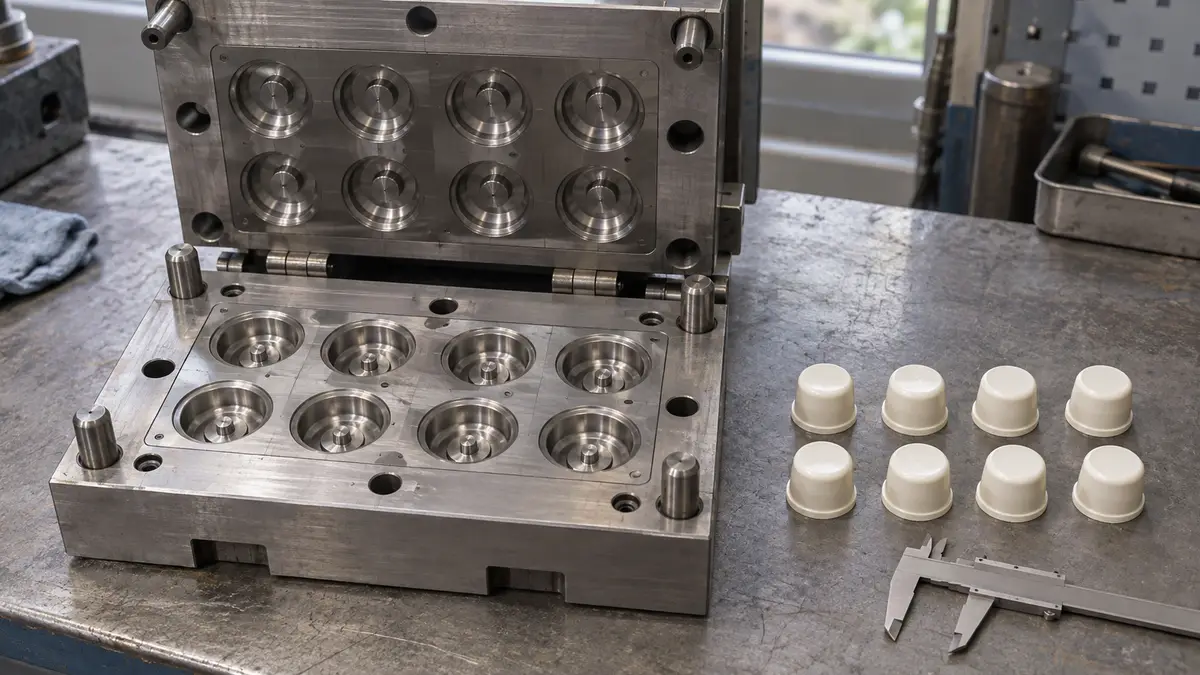
Make each cavity traceable
Ask the factory for a cavity map tied to the mould identity and revision. Match each cavity to a readable mark on its parts, where the design allows. Approve the mark's location so it does not interfere with fit, appearance or function. Check actual parts against the map before accepting the identification system.
If parts cannot carry marks, agree a collection method that preserves cavity identity from ejection through inspection and packing. Labelled trays or separate collection channels can help. Check that operators can maintain the separation during normal production. Unidentified mixed parts cannot support a reliable cavity-specific investigation.
Agree balanced sampling before the run
Write a sampling matrix covering every active cavity and the agreed collection stages across production. Take equal sample quantities from each cavity at comparable stages, with extra investigation samples labelled separately. Ask the inspector to witness collection or select samples from traceable production stock. A factory-selected bag of good-looking parts is weak evidence.
Collect after the process has stabilised and at agreed stages through the run, including after relevant interruptions or adjustments. Record collection time, mould, machine, material batch and process settings. Agree sample quantities according to defect risk and the checks needed. Keep this cavity assessment distinct from the shipment decision described in AQL sampling.
Judge each cavity against the same limits
Use the approved drawing revision, material specification, cosmetic limits and functional checks for every cavity. Apply consistent conditioning and measurement methods. Check dimensions and features that affect assembly, sealing or strength, alongside visible defects. Use factory measurement checks to establish whether the measuring method is dependable.
Keep individual results grouped by cavity and collection stage. Compare variation within each cavity and differences between cavities. A pooled average can conceal a cavity producing unacceptable parts. If capability analysis is agreed, assess whether the data and measuring method support it before treating the result as release evidence.
Record release decisions by cavity
Use a release record with a separate entry for each cavity. Include the mould revision, production batch, sample identities, collection stages, checks, acceptance limits, individual results, defects and supporting photographs. Record the decision, approver and date. Mark missing evidence as pending rather than assuming that another cavity's results cover it.
Define the stock covered by each decision, including collection intervals and packing references. Record whether it is accepted, held or rejected, and keep held stock physically identifiable. Connect these records to batch traceability so a cavity decision can be followed through to the goods proposed for shipment.
Working out your own order? Send us the product on WhatsApp and we reply the same working day: WhatsApp us
Contain failures and check changes
When a cavity fails, hold its traceable output and investigate the affected production interval. If output has been mixed and cannot be separated reliably, hold the mixed stock pending an agreed assessment. Do not simply remove failed samples from the report. Disabling a cavity needs an agreed process review because it may affect the remaining cavities.
After repair, insert replacement or a relevant process change, collect fresh evidence from the affected cavity and check for effects elsewhere. Record the change and authorise release against the agreed limits. For repeat production, keep cavity checks active rather than relying solely on the original approval. Link repair history to tooling maintenance.
Frequently asked questions
Does a passed batch sample prove every cavity is good?
Only if the evidence identifies and covers every active cavity can it support a cavity-level decision. A pooled batch result may conceal a weak cavity. Sampling still cannot guarantee every part.
How many parts should we sample from each cavity?
Agree quantities before production based on defect risk, variation and the tests needed. Balance routine samples across cavities and collection stages; record extra investigation samples separately.
What if moulded parts have no cavity marks?
Use a verified collection and labelling method that preserves cavity identity. If parts become mixed without reliable identification, treat cavity attribution as unknown and assess the mixed stock.
Can we ship parts from the cavities that passed?
Consider release only where accepted output remains traceable and separated from held stock. Check whether the failure or any process adjustment affects other cavities, then record the authorised release scope.