Sourcing worsted wool ottoman fabric from China
Worsted wool ottoman fabric from China carries 6% to 8% UK duty under heading 5112, depending on composition. Specify woven transverse ribs and verified fibre content; check CITES requirements where protected animal fibres are used. Cambridge China Bridge sources worsted wool ottoman fabric.
Buying from China for a business? How our UK China sourcing agent service works · China sourcing agent for small orders and first imports
Duty by fibre blend and fabric weight
Read from the UK Trade Tariff on 4 October 2026, heading 5112 covers woven fabrics of combed wool or combed fine animal hair. For worsted wool ottoman within this heading, the Chinese-origin duty is generally 8%; the other-blends line containing more than 10% silk carries 6%. The supplied snapshot lists no anti-dumping or countervailing duty and no suspensions. The ottoman trade name alone does not identify the commodity line.
Every line carries a CITES import control. If protected animal fibres are used, apply for the relevant permit for import into Great Britain and contact China's management authority for the corresponding export permit. Ask your customs broker to confirm the requirements for the named species. Code 5112 19 00 00 also flags cat and dog fur controls: imports and exports of such fur and products made from it are banned.
Confirm composition, combed yarn construction and weight through finding your commodity code. The table selects heavier ottoman fabrics and relevant blends; lighter cloth can fall on other lines. See the wider worsted wool fabrics guide for the heading.
| Goods | Commodity code | Duty | Anti-dumping or countervailing duty on China |
|---|---|---|---|
| Woven ottoman, at least 85% wool or fine animal hair, over 200 g/m² | 5112 19 00 00 | 8% | None |
| Worsted ottoman mixed mainly with man-made filaments | 5112 20 00 00 | 8% | None |
| Worsted ottoman mixed mainly with man-made staple fibres, over 200 g/m² | 5112 30 80 00 | 8% | None |
| Other worsted ottoman blends containing more than 10% silk | 5112 90 10 00 | 6% | None |
| Other worsted ottoman blends, over 200 g/m² | 5112 90 98 00 | 8% | None |
Specify the transverse ribs and finishing
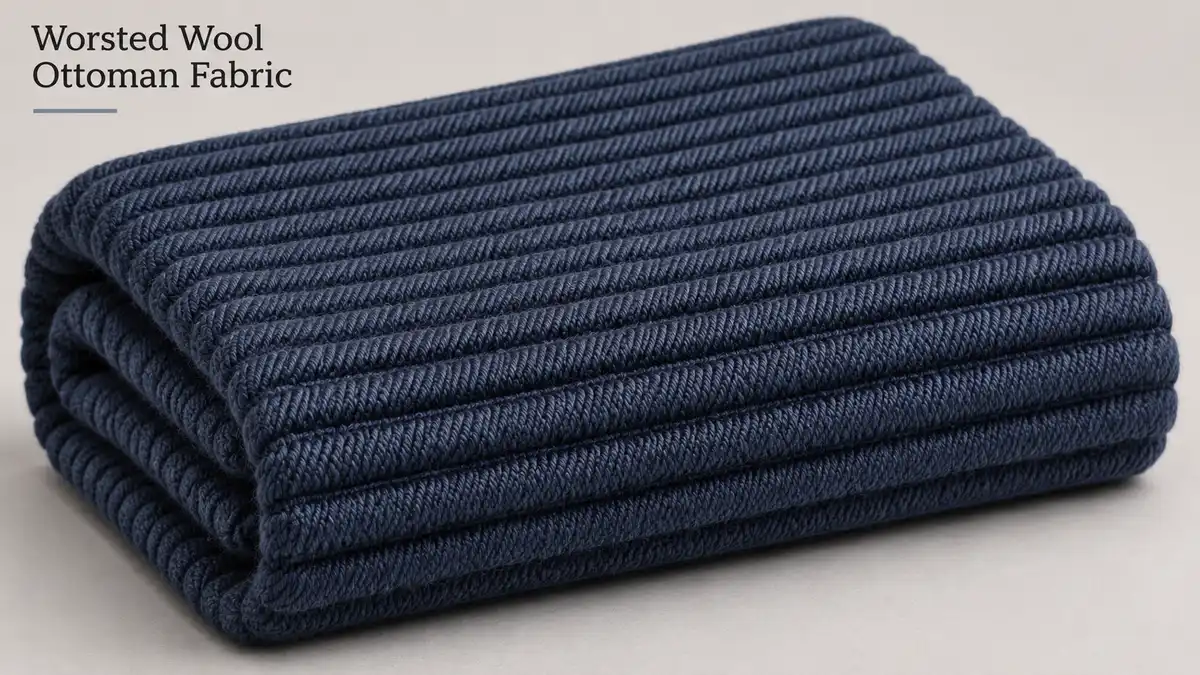
Describe the product as woven worsted wool ottoman with transverse raised ribs. Record fibre percentages, warp and weft yarns, rib spacing and prominence, mass per unit area, usable width, colour and finish. Approve a physical swatch showing the face and reverse. Ask the mill to identify the combed wool yarns so that a similar-looking knitted or woollen fabric is not substituted.
Agree checks for pilling, rubbing fastness, seam slippage and dimensional change after the intended cleaning process. Trial pressing on a cut sample to see whether the ribs flatten or become shiny. Textile labels must show fibre content. REACH restrictions can limit or ban substances in articles, so ask for dye and finish information and agree relevant chemical checks with your testing provider.
Worked duty example
Illustrative example, not a quote: Illustrative order: 200 m² of worsted wool ottoman fabric under 5112 19 00 00, invoiced at £5,000 free on board, with £1,500 of freight and insurance to the UK. The customs value is £6,500. Duty at 8% is £520. Import VAT at 20% is charged on the customs value plus duty, £7,020, so it is £1,404. Import taxes total £1,924; a VAT-registered importer can usually reclaim the VAT, so the lasting cost is the £520 of duty. The import duty and VAT guide explains each step.
Inspection checklist
Construction: compare face and reverse with the approved swatch; check rib direction, spacing, missing picks, snags and flattened bands across the usable width.
Composition and weight: compare laboratory fibre results and measured mass per unit area with the specification; reconcile roll labels and packing records.
Shade and finish: compare rolls and both edges with the approved colour sample; check rubbing transfer, uneven handle, pressing shine and distorted ribs.
Arrival condition: inspect wrapping for moisture, check roll lengths and usable width, and retain labelled samples from each lot before cutting.
Working out your own order? Send us the product on WhatsApp and we reply the same working day: WhatsApp us
What goes wrong
A mill matches the colour but changes the weft yarn or finishing, leaving shallower ribs and a different drape. Skewed ribs become obvious across garment panels; seam slippage opens stressed joins; pressing crushes the raised surface. Keep a sealed approval swatch and trial cutting, sewing and pressing before releasing the bulk lot.
Mixed dye lots produce visible panel differences, while shrinkage changes fit after cleaning. Separate suspect rolls and record faults before cutting. Use quality inspection explained to agree how inspection findings will be recorded and resolved.
Cambridge China Bridge sources these products for UK businesses, checking the factory and the documents before shipment. See factory verification. For repeat volumes, see container programmes.
Frequently asked questions
What is the UK import duty on worsted wool ottoman fabric from China?
The supplied tariff snapshot shows 8% for most relevant lines and 6% for the other-blends line containing more than 10% silk. It lists no anti-dumping or countervailing duty.
Does ottoman fabric always fall under heading 5112?
The trade name is insufficient. This guide covers woven ottoman of combed wool within 5112. Confirm fibre composition, yarn construction and weight before selecting the line.
Which sample checks matter for wool ottoman?
Check rib definition and alignment, fibre content, weight, shade, rubbing fastness, seam slippage and cleaning shrinkage. Trial pressing because raised ribs can flatten or develop shine.
Why does wool ottoman fabric have a CITES control?
The tariff attaches CITES controls across these lines because some fine animal fibres come from protected species. Identify every animal fibre and confirm species-specific requirements with your customs broker.