Sourcing worsted wool voile fabric from China
Worsted wool voile fabric from China carries UK duty of 6% to 8% under heading 5112, depending on composition. Textile labels must show fibre content; the tariff also flags CITES, so check any protected animal fibres before ordering. Specify openness, yarn twist and usable width. Cambridge China Bridge sources worsted wool voile fabric.
Buying from China for a business? How our UK China sourcing agent service works · China sourcing agent for small orders and first imports
Duty by fibre blend and fabric weight
Read from the UK Trade Tariff on 4 October 2026, heading 5112 covers woven fabrics of combed wool or combed fine animal hair. Worsted wool voile is classified by its actual fibre blend and weight, rather than the name voile. The lightweight rows shown here cover wool-rich fabric and qualifying blends; confirm the finished fabric weight against the relevant 200 g/m² boundary.
The supplied tariff lines carry 8% duty for goods from China, except the other-fabrics branch containing more than 10% silk by weight, which carries 6%. No anti-dumping or countervailing duty or tariff suspension is recorded. Confirm composition and construction through finding your commodity code. For another fabric family within this heading, see worsted wool crepe.
The tariff attaches CITES import and export controls. For protected animal fibres, confirm the necessary permits or notifications for the China shipment with your customs broker before ordering. The heavier wool-rich line also flags cat and dog fur controls: imports and exports of that fur and products containing it are banned. Keep the species identity with the fibre specification.
| Goods | Commodity code | Duty | Anti-dumping or countervailing duty on China |
|---|---|---|---|
| Wool voile containing at least 85% wool, not exceeding 200 g/m² | 5112 11 00 00 | 8% | None |
| Wool voile mixed mainly or solely with man-made filaments | 5112 20 00 00 | 8% | None |
| Wool voile mixed mainly with man-made staple fibres, not exceeding 200 g/m² | 5112 30 10 00 | 8% | None |
| Other wool voile containing more than 10% silk by weight | 5112 90 10 00 | 6% | None |
| Other wool voile blends, not exceeding 200 g/m² | 5112 90 91 00 | 8% | None |
Specify the voile's openness and stability
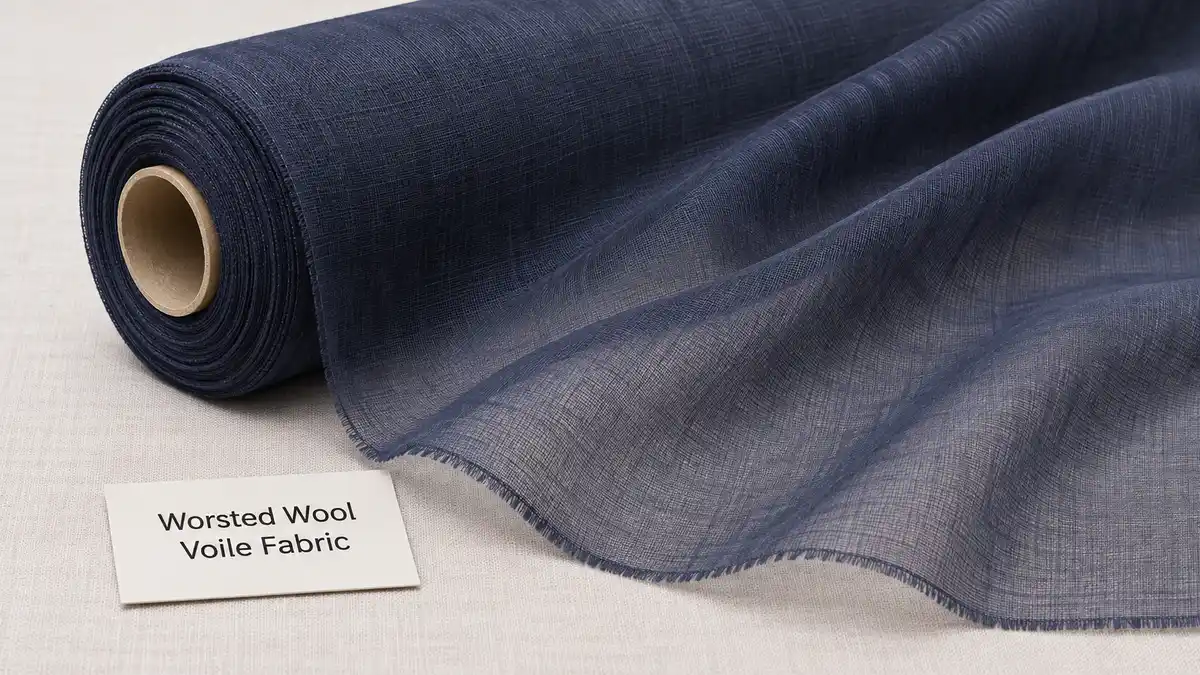
Specify combed wool content, every blending fibre, yarn count and twist, weave, finished weight, usable width and finish. Approve the fabric against both light and dark backgrounds to fix the intended transparency. Record whether it will be lined, and approve drape and skin contact using a sewn sample.
Agree checks for seam slippage, snagging, dimensional stability and colour transfer for the intended garment and care method. Test after the proposed cleaning process, since finishing can change the open structure and handle. Textile labels must show fibre content, including fur and other animal parts; compare the proposed label with the fibre test.
Worked duty example
Illustrative example, not a quote: Illustrative order: 1,500 square metres of worsted wool voile under 5112 11 00 00, invoiced at £28,000 free on board, with £1,500 of freight and insurance to the UK. The customs value is £29,500. Duty at 8% is £2,360. Import VAT at 20% is charged on the customs value plus duty, £31,860, so it is £6,372. Import taxes total £8,732; a VAT-registered importer can usually reclaim the VAT, so the lasting cost is the £2,360 of duty. The import duty and VAT guide explains each step.
Inspection checklist
Construction: compare openness, yarn regularity, twist appearance and usable width with the approved sample; check for bowing and skew.
Surface and shade: inspect against contrasting backgrounds for missing threads, thick yarns, snags and stains; compare shade across and between rolls.
Performance: sew a sample seam and check yarn movement, snagging and dimensional change after the agreed care process.
Rolls and identity: reconcile lengths, weights, fibre labels and dye-lot references with the packing list; check for dampness and crushing.
Working out your own order? Send us the product on WhatsApp and we reply the same working day: WhatsApp us
What goes wrong
A voile sample can look suitable while bulk cloth arrives denser, harsher or more transparent. Changes in yarn twist, weave density or finishing alter drape and seam behaviour. Keep an approved sample and inspect bulk fabric under the same lighting and backing conditions.
Open fabric can snag during handling or pull apart at seams; relaxation after cleaning can distort panels. Trial the intended seams, lining and care process before cutting bulk cloth. Separate rolls with visible shade differences rather than mixing them in the same garment.
Cambridge China Bridge sources these products for UK businesses, checking the factory and the documents before shipment. See factory verification. For repeat volumes, see container programmes.
Frequently asked questions
What is the UK import duty on worsted wool voile from China?
The supplied heading 5112 lines carry 8%, except the other-fabrics branch containing more than 10% silk by weight, which carries 6%. No anti-dumping or countervailing duty is recorded.
Does wool voile need a CITES permit?
The tariff flags CITES. Identify any animal fibres by species and ask your customs broker to confirm the permits or notifications needed for protected fibres in the China shipment.
What should I put in a wool voile specification?
State fibre blend, yarn count and twist, weave, finished weight, usable width, transparency and finish. Approve drape and seam behaviour with a sewn sample.
How do I check wool voile before cutting?
Inspect shade and weave faults against contrasting backgrounds, reconcile roll lengths and test seam slippage and dimensional stability using the intended care process.