Sourcing worsted wool hopsack fabric from China
Worsted wool hopsack fabric from China carries UK duty of 6% to 8% under heading 5112, depending on composition. Textile labels must show fibre content; any protected animal-hair blend needs a CITES check. Specify the basket weave, usable width and stability after cleaning. Cambridge China Bridge sources worsted wool hopsack fabric.
Buying from China for a business? How our UK China sourcing agent service works · China sourcing agent for small orders and first imports
Duty by fibre blend and fabric weight
Read from the UK Trade Tariff on 9 November 2026, heading 5112 covers woven fabrics of combed wool or combed fine animal hair. Worsted wool hopsack falls within this family when its composition qualifies. The basket weave does not have a separate tariff line: fibre composition and, where applicable, weight determine the code.
The supplied tariff lines carry 8% duty for goods from China, except the other-blends line containing more than 10% silk, which carries 6%. No anti-dumping or countervailing measures or suspensions are listed. CITES import and export controls appear throughout; 5112 19 00 00 also flags cat and dog fur controls. Cat and dog fur and products containing it are banned from import and export.
For CITES-listed animal-hair blends from China, obtain the applicable UK and Chinese permits, use a designated port and present the documents at the border. Confirm the species-specific requirements with your customs broker before shipping. Confirm the commodity code using the fibre report and fabric weight. See the worsted wool serge guide for the wider heading.
| Goods | Commodity code | Duty | Anti-dumping or countervailing duty on China |
|---|---|---|---|
| Hopsack with at least 85% wool or fine animal hair, up to 200 g/m² | 5112 11 00 00 | 8% | None |
| Hopsack with at least 85% wool or fine animal hair, over 200 g/m² | 5112 19 00 00 | 8% | None |
| Worsted hopsack mixed mainly or solely with man-made filaments | 5112 20 00 00 | 8% | None |
| Worsted hopsack mixed mainly with man-made staple fibres, up to 200 g/m² | 5112 30 10 00 | 8% | None |
| Worsted hopsack mixed mainly with man-made staple fibres, over 200 g/m² | 5112 30 80 00 | 8% | None |
| Other worsted hopsack containing more than 10% silk by weight | 5112 90 10 00 | 6% | None |
Specify the hopsack weave and jacket performance
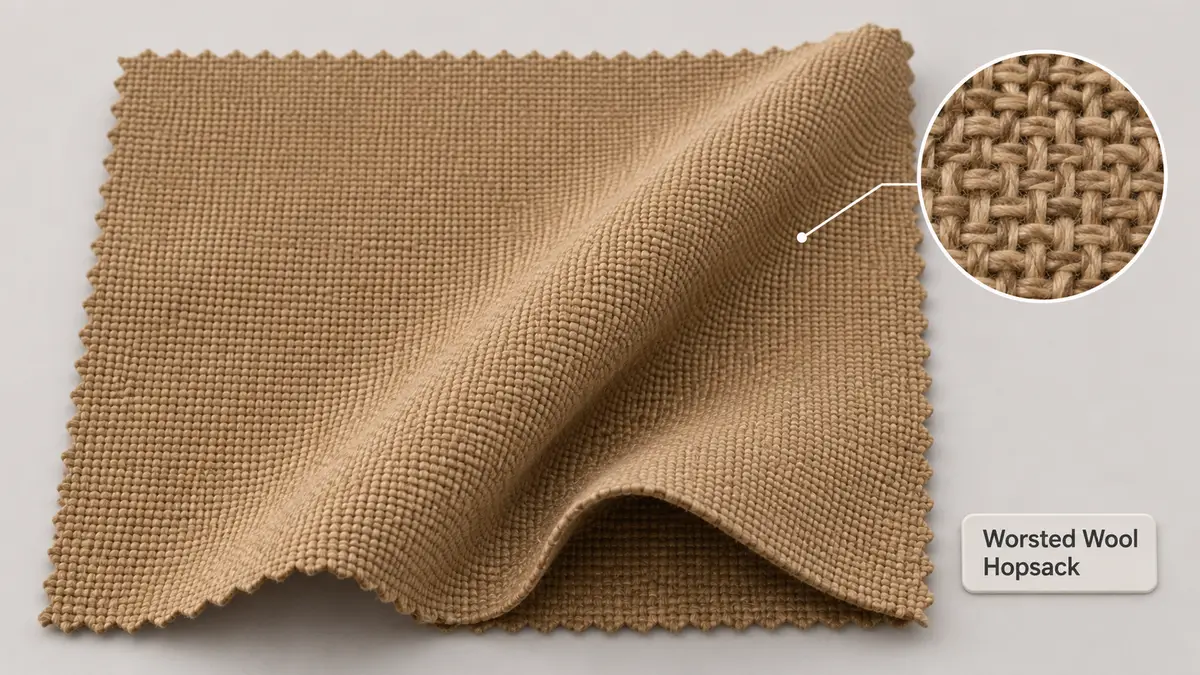
Specify combed wool content, every blend fibre, yarn count and ply, basket-weave construction, fabric weight, usable width, shade and finish. Approve a swatch that shows both the weave and handle. Agree whether the cloth is intended for lined or unlined jackets, and assess opacity, drape and snagging against that use.
Agree checks for pilling, rubbing colour fastness, seam slippage and dimensional stability after the intended cleaning process. Make a trial garment to assess seam opening, pressing and surface distortion. Textile labels must show fibre content. Keep the composition report with the approved sample and arrange testing support where needed.
Worked duty example
Illustrative example, not a quote: Illustrative order: 5,000 m² of wool hopsack at 180 g/m²; FOB value and freight are illustrative, not a quotation under 5112 11 00 00, invoiced at £60,000 free on board, with £1,500 of freight and insurance to the UK. The customs value is £61,500. Duty at 8% is £4,920. Import VAT at 20% is charged on the customs value plus duty, £66,420, so it is £13,284. Import taxes total £18,204; a VAT-registered importer can usually reclaim the VAT, so the lasting cost is the £4,920 of duty. The import duty and VAT guide explains each step.
Inspection checklist
Composition: compare the lot's fibre report, labels and order specification; identify any animal-hair blend by species.
Weave and surface: inspect for missing yarns, uneven basket structure, snags, slubs, bowing and skew against the approved swatch.
Shade and dimensions: compare shade within and between rolls; measure usable width, weight and piece lengths against the packing list.
Performance and arrival condition: check cleaning shrinkage, pilling and seam behaviour on lot samples; inspect rolls for dampness, mould and crushing before cutting.
Working out your own order? Send us the product on WhatsApp and we reply the same working day: WhatsApp us
What goes wrong
An open hopsack structure can snag or allow yarns to move at seams. A heavier finish can disguise a looser construction in the sample, while bulk cloth differs in handle or opacity. Compare production cloth with the retained sample and run sewing and pressing trials before releasing it for cutting.
Shade changes between rolls and shrinkage after cleaning can spoil jacket production. Undeclared blend fibres also undermine the agreed specification and fibre labels. Keep rolls traceable by lot, separate suspect pieces and resolve the discrepancy before mixing them into a cutting batch.
Cambridge China Bridge sources these products for UK businesses, checking the factory and the documents before shipment. See factory verification. For repeat volumes, see container programmes.
Frequently asked questions
What is the UK import duty on worsted wool hopsack from China?
The supplied tariff snapshot shows 8% on most heading 5112 lines and 6% on the other-blends line containing more than 10% silk. No anti-dumping or countervailing measures are listed.
Does hopsack weave have its own commodity code?
The supplied lines divide worsted fabric by fibre composition and, where applicable, weight rather than the hopsack name. Obtain the composition report and measured fabric weight before choosing a code.
Why does the tariff flag CITES for wool hopsack?
The heading also covers fine animal hair, including protected species. Identify any animal-hair blend and confirm whether CITES documentation applies; the flag alone does not establish the requirement for your cloth.
What should I test before cutting hopsack jacket fabric?
Check composition, weight, usable width, shade, pilling, rubbing fastness and cleaning shrinkage. Sew and press a trial garment to assess seam slippage, snagging and distortion.