Sourcing wooden boot jacks from China
The relevant wooden boot-jack tariff lines carry 0% UK duty from China, with no trade remedy or suspension recorded. Consumer products sold in Great Britain must be safe in normal or reasonably foreseeable use; check the timber species for CITES controls. Cambridge China Bridge sources wooden boot jacks.
UK duty and material classification
Read from the UK Trade Tariff on 8 October 2026, heading 4421 covers other articles of wood. For finished wooden boot jacks, confirm the general other-articles line against the actual construction. Bamboo and fibreboard have separate lines. The table repeats the general line for different boot-jack designs; these are not separate tariff subdivisions. See wooden dowel pins and the wider heading. See our guide to sourcing wooden artists' easels.
The relevant lines show 0% duty for China, no anti-dumping or countervailing duty, and no suspension. The general line attaches CITES import control and an import prohibition on goods for torture and repression. Confirm the latter's applicability with your customs broker. CITES-protected plant products entering Great Britain need a permit or certificate; check the species before shipment. The supplied lines also list cultural-object export licensing and torture-related export restrictions; confirm these if re-exporting.
Give your broker the species, material construction, photographs and details of any lining or fittings to confirm the commodity code. A factory's description of the item as a wooden accessory is insufficient to settle classification.
| Goods | Commodity code | Duty | Anti-dumping or countervailing duty on China |
|---|---|---|---|
| Solid-wood boot jacks, subject to classification confirmation | 4421 99 99 99 | 0% | None |
| Bamboo boot jacks, subject to classification confirmation | 4421 91 00 00 | 0% | None |
| Fibreboard boot jacks, subject to classification confirmation | 4421 99 10 00 | 0% | None |
Specify the heel opening and standing surface
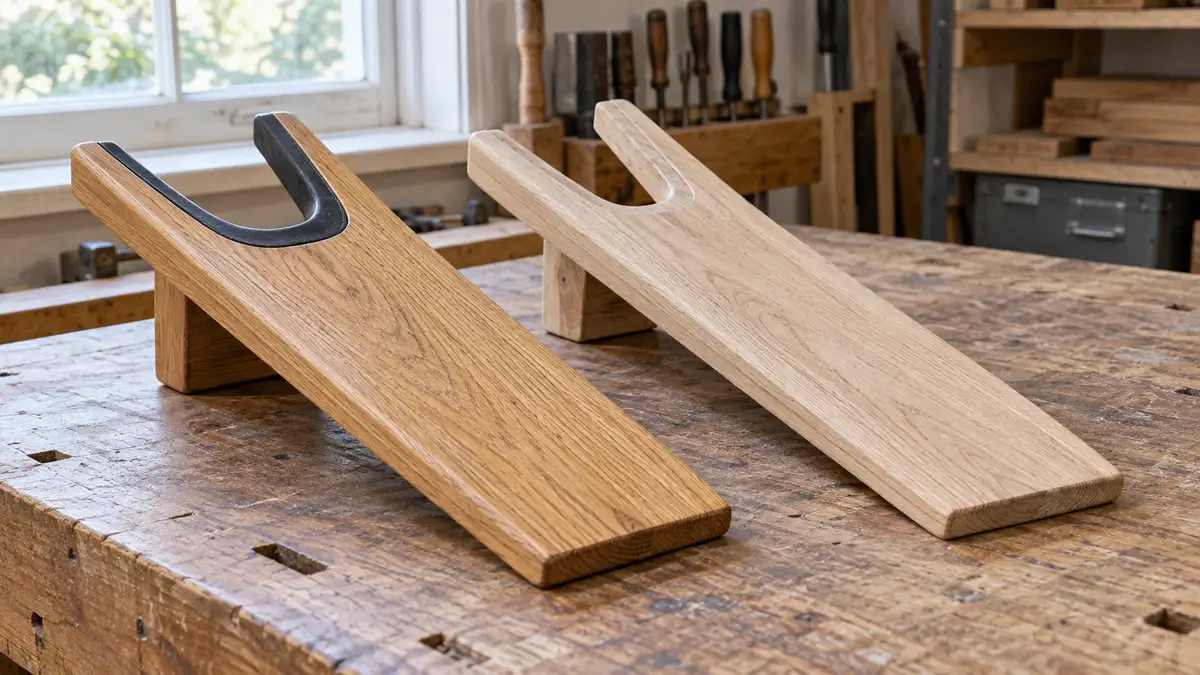
Agree the timber species, grain direction, board thickness, heel-opening profile, support height and standing area. Send the factory representative boots and approve a sample that releases the heel without gripping the upper or scraping its finish. Specify the lining material, adhesive, edge rounding and underside grip. For wooden shoehorns, see our wooden shoehorn sourcing guide.
General product safety rules in Great Britain require consumer products to be safe in normal or reasonably foreseeable use. Translate that into sample checks for slipping, tipping, splitting and exposed sharp edges. Agree whether the boot jack is intended for indoor use or wet boots, then assess the finish and lining under those conditions.
Worked duty example
Illustrative example, not a quote: Illustrative order: 3,000 wooden boot jacks; FOB and freight values are hypothetical. under 4421 99 99 99, invoiced at £22,000 free on board, with £3,500 of freight and insurance to the UK. The customs value is £25,500. Duty at 0% is £0. Import VAT at 20% is charged on the customs value plus duty, £25,500, so it is £5,100. With no duty, the only import tax is the VAT, which a VAT-registered importer can usually reclaim. The import duty and VAT guide explains each step.
Inspection checklist
Heel fit: try representative boots on production samples; check release, lining coverage and marks left on the boot.
Stability: place the jack on the intended floor surfaces and use it as instructed; check rocking, sliding and support movement.
Wood and finish: inspect the fork for cracks, knots and splinters; compare species, dimensions and finish with the approved sample.
Packing and arrival: check for damp cartons, mould, warped boards and detached pads; repeat the functional checks during inspection.
Working out your own order? Send us the product on WhatsApp and we reply the same working day: WhatsApp us
What goes wrong
A narrow fork grips the boot upper, while a wide opening lets the heel escape. Thin fork arms or weak grain can split during use. A loose support makes the board rock, and poor underside grip lets it slide as the wearer pulls backwards.
Lining can peel or transfer colour onto boots, and damp wood can warp inside the carton. Approve the opening with actual boots, test the lining after wet use, and compare production samples with the retained sample before accepting the shipment.
Cambridge China Bridge sources these products for UK businesses, checking the factory and the documents before shipment. See factory verification. For repeat volumes, see container programmes.
Frequently asked questions
What is the UK import duty on wooden boot jacks from China?
The relevant wooden, bamboo and fibreboard lines show 0% duty, with no trade remedy or suspension recorded. Confirm the code for the actual construction.
Do wooden boot jacks need CITES documents?
CITES-protected plant products entering Great Britain need a permit or certificate. Identify the timber species and confirm the applicable documents before shipment.
What should I specify for a wooden boot jack?
Specify the timber species, heel opening, board thickness, support height, standing area, lining and underside grip. Approve the design using representative boots.
How do I inspect wooden boot jacks on arrival?
Check heel release, stability, cracks around the fork, splinters, lining adhesion and damp packing. Try production samples on the floor surfaces buyers will use.