Sourcing wooden shoehorns from China
Wooden and bamboo shoehorns within heading 4421 carry 0% UK duty from China on the relevant lines, with no recorded trade remedy. Importers are responsible for consumer safety; CITES-listed timber needs import permission. Cambridge China Bridge sources wooden shoehorns.
Duty and classification for wooden shoehorns
Read from the UK Trade Tariff on 30 September 2026, heading 4421 covers other articles of wood. Finished wooden shoehorns are candidates for 4421 99 99 99; bamboo versions are candidates for 4421 91 00 00. Both supplied lines carry 0% duty from China, with no recorded anti-dumping or countervailing duty and no suspension. The table separates product variants sharing a code.
The supplied tariff attaches CITES import control to 4421 99 99 99. Where the timber is a CITES specimen, an import permit is needed for Great Britain. Ask for the species before ordering. Both candidate lines also attach a torture-and-repression import prohibition, a cultural-goods export licence control and torture-and-repression export restrictions. Ask your customs broker to confirm whether these attached controls require any declaration or document for the actual goods.
Confirm the material and finished construction through finding your commodity code, rather than copying a supplier's code. The wider heading is discussed in our wooden boot jacks guide. For the illustrative order, use the import duty and VAT guide; import VAT is separate from the ordinary duty.
| Goods | Commodity code | Duty | Anti-dumping or countervailing duty on China |
|---|---|---|---|
| Short wooden shoehorns, subject to classification confirmation | 4421 99 99 99 | 0% | None |
| Bamboo shoehorns, subject to classification confirmation | 4421 91 00 00 | 0% | None |
Specify the heel curve and handle
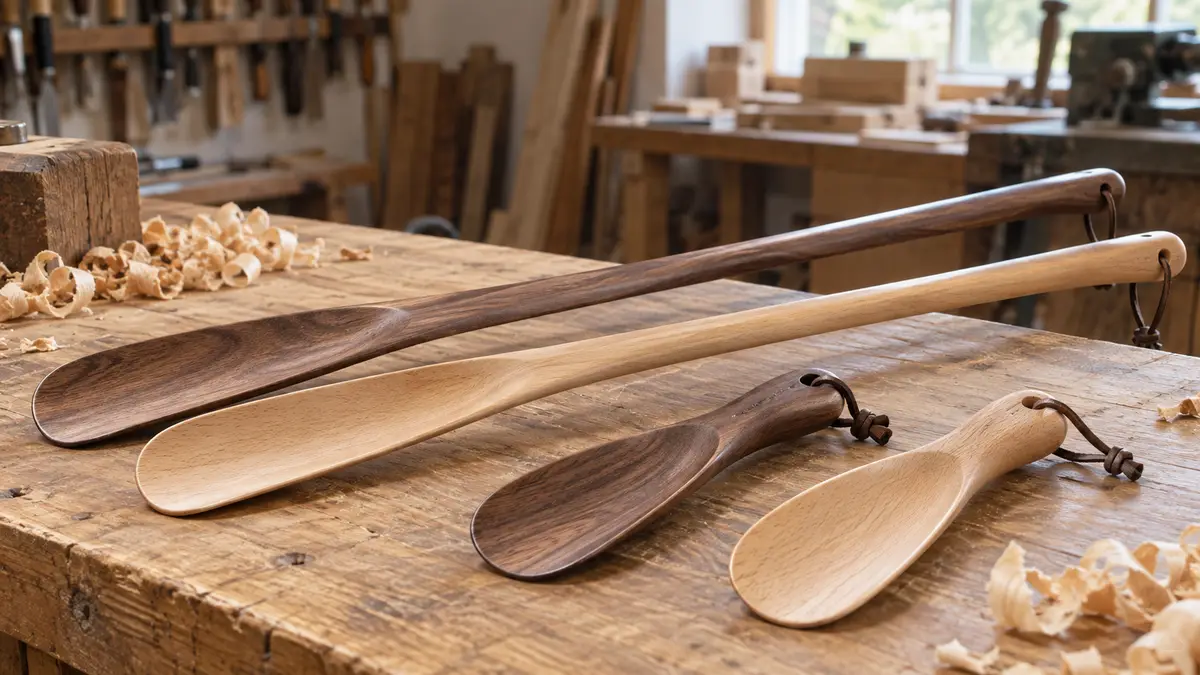
Specify the timber species, solid or laminated construction, overall length, blade width, heel curve and tip thickness. Agree a smooth rounded edge and a handle that remains comfortable when guiding the heel into a shoe. Approve the shape on representative footwear rather than judging a flat photograph.
Record the finish, colour range, hanging-hole position and cord attachment if supplied. Keep an approved sample for comparisons with production. Businesses importing or selling consumer products are responsible for their safety. For shoehorns, make splinters, sharp edges and breakage during intended use explicit checks in the buying specification.
Worked duty example
Illustrative example, not a quote: 2,000 wooden shoehorns; illustrative order, with illustrative whole-pound values under 4421 99 99 99, invoiced at £3,500 free on board, with £1,120 of freight and insurance to the UK. The customs value is £4,620. Duty at 0% is £0. Import VAT at 20% is charged on the customs value plus duty, £4,620, so it is £924. With no duty, the only import tax is the VAT, which a VAT-registered importer can usually reclaim. The import duty and VAT guide explains each step.
Inspection checklist
Surface: feel the blade, rim, tip and hanging hole for splinters, rough grain and sharp coating ridges; rub the finish with a clean cloth to check colour transfer.
Shape: compare length, curve, width and tip thickness with the approved sample; try sampled shoehorns with representative shoes to check that they guide the heel without snagging.
Strength: repeat the agreed use test on production samples; inspect the narrow neck, grain direction and laminated joints for cracks or separation.
Arrival: open cartons from different parts of the shipment and check for mould, warping, chipped tips and scuffed finishes. Compare results with the inspection plan.
Working out your own order? Send us the product on WhatsApp and we reply the same working day: WhatsApp us
What goes wrong
A thick tip catches the shoe lining, an unsuitable heel curve presses into the foot, and rough edges snag socks. Weak grain at the neck can split during use. Damp packing can leave mould or warped handles, while unprotected pieces rub through their finish in transit. Agree rejection criteria and individual protection before shipment.
A trade name such as rosewood is insufficient for checking the actual species. Get the species identity and ask your broker to confirm CITES status and applicable documentation before committing to the timber choice. Do not accept a change of species or construction without reviewing the sample and classification.
Cambridge China Bridge sources these products for UK businesses, checking the factory and the documents before shipment. See factory verification. For repeat volumes, see container programmes.
Frequently asked questions
What is the UK import duty on wooden shoehorns from China?
The supplied tariff records 0% for 4421 99 99 99 and bamboo line 4421 91 00 00, with no trade remedy or suspension on either. Confirm the finished product's classification.
Do wooden shoehorns need CITES paperwork?
The tariff attaches CITES control to the candidate wooden-article line. CITES specimens need an import permit for Great Britain. Confirm the species and applicable documents before ordering.
What should I specify for a wooden shoehorn?
Specify species, construction, length, blade width, heel curve, tip thickness, edge rounding, finish and any hanging attachment. Approve a sample using representative shoes.
What should I check when wooden shoehorns arrive?
Check for splinters, sharp rims, cracks at the neck, separated laminations, mould, warping and finish damage. Compare shape and performance with the approved sample.