Sourcing wire-rod rolling mills from China
Wire-rod rolling mills and relevant rolls and parts from China carry 0% UK duty, with no trade remedies listed in the supplied tariff data. Before placing a complete mill on the Great Britain market, confirm the applicable machinery safety and CE or UKCA marking requirements with the relevant authority. Cambridge China Bridge sources wire-rod rolling mills.
Buying from China for a business? How our UK China sourcing agent service works · China sourcing agent for small orders and first imports
Duty on wire-rod mills, rolls and parts
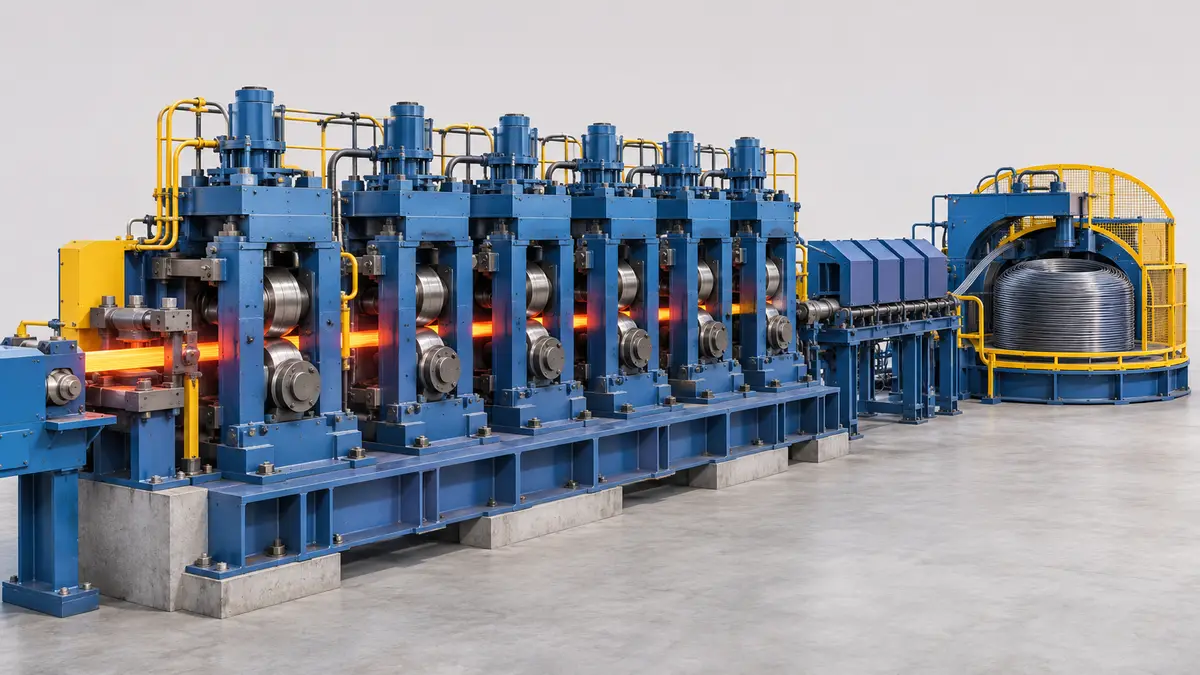
Heading 8455 covers metal-rolling mills and their rolls and parts. For a hot wire-rod mill, consider the hot or combination hot and cold rolling mill line, 8455 21 00 00. Replacement rolls have separate lines according to material and manufacture. The table includes equipment and spares relevant to this product family.
Read from the UK Trade Tariff on 3 October 2026, all lines in the supplied heading data carried 0% duty for goods from China. No anti-dumping or countervailing duties, suspensions or attached import controls were listed. Import VAT is normally 20%. The worked order is illustrative and uses replacement rolls rather than a complete production line.
Confirm the commodity code using the equipment specification and shipment contents. Motors, gearboxes and drives may be classified separately; wire-drawing machines fall outside this heading. See the rolling mills and mill rolls guide for the wider heading.
| Goods | Commodity code | Duty | Anti-dumping or countervailing duty on China |
|---|---|---|---|
| Hot or combination hot and cold rolling mills | 8455 21 00 00 | 0% | None |
| Cast-iron rolls for rolling mills | 8455 30 10 00 | 0% | None |
| Open-die forged steel hot-rolling work rolls and back-up rolls | 8455 30 31 00 | 0% | None |
| Other rolls for rolling mills | 8455 30 90 00 | 0% | None |
| Other parts of metal-rolling mills | 8455 90 00 00 | 0% | None |
Specify the wire-rod process and line boundaries
State the steel grades, incoming billet dimensions, finished rod diameters, dimensional tolerances, surface acceptance criteria and required output. Ask for the rolling pass schedule, stand arrangement, guide design, finishing block specification and roll material. Agree how output will be measured with your material, including rejected rod and stoppages.
Define whether the supply includes drives, control cabinets, lubrication, cooling equipment, shears, laying equipment and coil handling. Match foundation drawings, electrical supply, cooling water and control interfaces to your site. Agree who integrates the line and signs the declaration for the assembled machine.
For a complete mill supplied in Great Britain, confirm with the relevant authority the applicable requirements under the Supply of Machinery (Safety) Regulations 2008, including essential safety requirements, conformity assessment, a technical file, a declaration of conformity and CE or UKCA marking. CE marking remains recognised indefinitely in Great Britain. Obtain instructions and conformity information in English.
Worked duty example
Illustrative example, not a quote: Illustrative order: 12 replacement hot-rolling work rolls for a wire-rod mill under 8455 30 31 00, invoiced at £180,000 free on board, with £9,000 of freight and insurance to the UK. The customs value is £189,000. Duty at 0% is £0. Import VAT at 20% is charged on the customs value plus duty, £189,000, so it is £37,800. With no duty, the only import tax is the VAT, which a VAT-registered importer can usually reclaim. The import duty and VAT guide explains each step.
Inspection checklist
Trial output: witness rolling with the agreed steel grade and feedstock. Record rod dimensions, ovality, surface condition, output, rejects and interruptions against the purchase specification.
Rolls and guides: compare groove profiles, guide alignment, roll dimensions and bearing seats with approved drawings. Check material records, hardness maps and ultrasonic reports against agreed acceptance criteria.
Drives and services: check motor and gearbox identification, lubrication delivery, cooling connections, leakage, vibration and the supplied control settings. On arrival, reconcile crates and spare parts with the packing list and inspect exposed surfaces for corrosion.
Safety and documents: check guards, emergency stops, conformity marking, the declaration and English instructions before shipment and after installation. Unsafe work equipment must not be used. Arrange quality inspection around the agreed acceptance checks.
Working out your own order? Send us the product on WhatsApp and we reply the same working day: WhatsApp us
What goes wrong
A trial with a different steel grade or a reduced rolling speed may conceal inadequate drive capacity or unstable guide settings. Poor pass matching, guide alignment or roll run-out can produce out-of-round rod, surface damage and interruptions. Require recorded results against your specification rather than accepting a video of the mill running.
Unclear line boundaries leave cooling, coil handling or control integration unfinished at the buyer's site. Replacement rolls can also fail early through internal defects or unsuitable hardness profiles. Resolve drawing discrepancies, missing safety documents and the responsibility for integration before shipment.
Cambridge China Bridge sources these products for UK businesses, checking the factory and the documents before shipment. See factory verification. For machinery and equipment, see machinery imports.
Frequently asked questions
What is the UK import duty on wire-rod rolling mills from China?
The supplied tariff data shows 0% duty for wire-rod rolling mills and relevant rolls and parts under heading 8455, with no anti-dumping or countervailing duties listed.
Does a wire-rod rolling mill need UKCA marking?
Before placing a complete mill on the Great Britain market, confirm the applicable CE or UKCA marking and machinery safety requirements with the relevant authority. CE marking remains recognised indefinitely.
How should I test a Chinese wire-rod mill before shipment?
Witness a trial using your agreed steel grade and feedstock. Measure rod dimensions, ovality, surface condition and output, and record rejects and stoppages against the purchase specification.
What should I specify for replacement wire-rod mill rolls?
Specify material, groove profile, dimensions, hardness scale and depth, bearing seats and run-out. Request material records, a hardness map and ultrasonic results against agreed acceptance criteria.