Sourcing weak-base anion resins from China
Weak-base anion exchange resins from China carry 0% UK duty under 3914 00 00 90, with no listed trade remedy. Match the grade to its intended use: public water supply needs the specified approval route, while food processing needs food-contact documentation. Cambridge China Bridge sources weak-base anion exchange resins.
Buying from China for a business? How our UK China sourcing agent service works · China sourcing agent for UK manufacturers and engineering firms
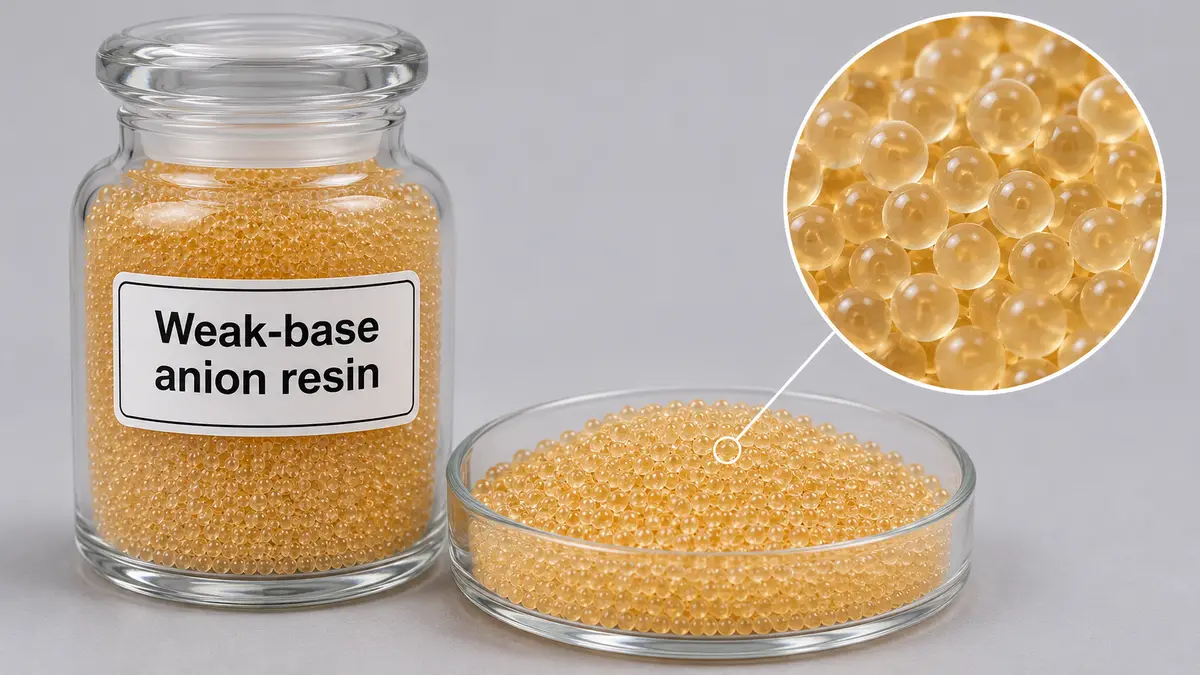
UK duty on weak-base anion exchange resins
Read from the UK Trade Tariff on 23 November 2026, heading 3914 covers polymer-based ion exchangers in primary forms. Weak-base anion exchange resins fall within the other line, 3914 00 00 90, subject to confirmation of their composition and form. Its duty for goods from China is 0%, with no anti-dumping or countervailing duty and no listed suspension. The supplied facts contain only this relevant commodity line.
The tariff attaches waste import and export controls. Waste shipment controls apply only when the material is waste. For Chinese resin waste entering England under notification controls, the exporter applies to the dispatch country's competent authority for consent; shipment can start only after consent from the Environment Agency and the other authorities involved. Confirm waste classification, admissibility and the shipment requirements with your customs broker before ordering spent resin.
Provide the supplier's composition, datasheet and description of the shipped form when confirming the commodity code. Filled cartridges and vessels are classified separately from loose resin. For another resin family within this heading, see strong-base anion exchange resins.
| Goods | Commodity code | Duty | Anti-dumping or countervailing duty on China |
|---|---|---|---|
| Weak-base anion exchange resins in primary forms | 3914 00 00 90 | 0% | None |
Specify weak-base chemistry and usable capacity
Specify the polymer matrix, gel or macroporous structure, amine functionality and shipped form, including whether the resin is supplied in free-base form. Agree total exchange capacity, working capacity under your operating conditions, water retention, particle size distribution and wet settled volume. Ask the supplier to state the test method and conditioning procedure behind each result.
Give the factory your feed composition, treatment objective, regeneration procedure and existing grade. Compare samples under the same conditions rather than accepting an equivalent-grade claim. Include rinse-water colour, odour and leachables in the acceptance specification.
For public water supply in England and Wales, confirm the applicable approval route with the relevant drinking water regulator and water company. For food or drinks processing, obtain a food-contact declaration and migration or leachables evidence. Ask the relevant food safety authority to confirm whether the plastics food-contact regulation applies to ion exchange resins and what food-contact obligations apply.
Worked duty example
Illustrative example, not a quote: Illustrative trial consignment of weak-base anion exchange resin in 25 litre bags under 3914 00 00 90, invoiced at £2,000 free on board, with £1,500 of freight and insurance to the UK. The customs value is £3,500. Duty at 0% is £0. Import VAT at 20% is charged on the customs value plus duty, £3,500, so it is £700. With no duty, the only import tax is the VAT, which a VAT-registered importer can usually reclaim. The import duty and VAT guide explains each step.
Inspection checklist
Identity: check the grade, matrix, amine functionality and shipped form against the approved sample and batch analysis.
Capacity: sample across the consignment and compare exchange capacity, water retention and wet settled volume using the agreed conditioning and test methods.
Beads: check wet particle size distribution, cracked beads, broken beads and fines; retain a sample for comparison with later deliveries.
Packing and rinse: check sealed bags or drums, moisture condition, batch labels and storage history. Rinse a sample and compare colour and odour with the agreed acceptance specification.
Working out your own order? Send us the product on WhatsApp and we reply the same working day: WhatsApp us
What goes wrong
A replacement grade can match the advertised total capacity yet deliver different working capacity because its functionality, shipped form or conditioning differs. A change in moisture content can also distort comparisons based on delivered weight. Compare conditioned samples and record the basis used for each capacity result.
Dried or cracked beads, excess fines and persistent rinse colour or odour can undermine an otherwise acceptable batch certificate. Agree arrival checks and a retained sample before dispatch. Use the quality inspection guide to define the inspection brief.
Cambridge China Bridge sources these products for UK businesses, checking the factory and the documents before shipment. See factory verification. For repeat volumes, see container programmes.
Frequently asked questions
What is the UK import duty on weak-base anion exchange resin from China?
The supplied tariff facts read on 23 November 2026 show 0% duty under 3914 00 00 90, with no listed anti-dumping or countervailing duty.
Can I replace my existing weak-base resin with a Chinese equivalent?
Compare matrix, amine functionality, shipped form, working capacity and rinse behaviour. Test conditioned samples with your feed and regeneration procedure before accepting an equivalent grade.
What paperwork should I request for food-processing resin?
Request a food-contact declaration and migration or leachables evidence covering the intended use.
Does the tariff waste control apply to new resin?
Waste shipment controls apply only if the material is waste. Confirm the status of spent or recovered resin with your customs broker before agreeing shipment.