Sourcing UPS from China
Uninterruptible power supplies and the related converter lines listed here carry 0% UK duty from China. Confirm applicable electrical safety and electromagnetic compatibility requirements for mains-powered units with the relevant authority before sale in Great Britain. Check battery runtime under the intended load. Cambridge China Bridge sources uninterruptible power supplies.
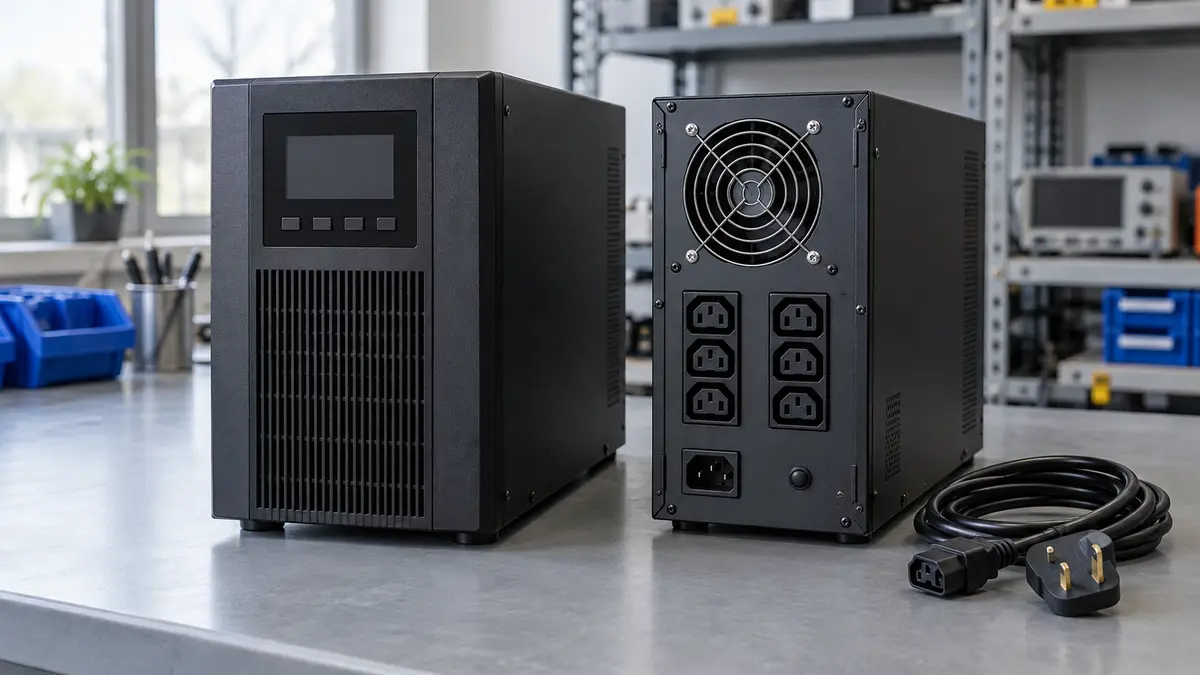
UK duty on uninterruptible power supplies
Heading 8504 covers electrical transformers, static converters and inductors. For a complete uninterruptible power supply, ask your customs broker to assess the other static converters line against the actual design. The table also includes separately imported chargers, inverters and converter parts; these are not interchangeable classifications for complete units. For wireless chargers, see our wireless charging pad sourcing guide.
Read from the UK Trade Tariff on 8 October 2026, every listed line carries 0% duty for goods from China. The supplied tariff record shows no anti-dumping or countervailing duty, suspensions or attached import controls for these lines. Import VAT at 20% still applies.
Confirm the commodity code using the circuit description, battery arrangement and supplied configuration. See power supplies, transformers and inverters for the wider heading.
| Goods | Commodity code | Duty | Anti-dumping or countervailing duty on China |
|---|---|---|---|
| Other static converters: candidate line for complete uninterruptible power supplies | 8504 40 95 90 | 0% | None |
| Separately imported battery chargers, other | 8504 40 60 90 | 0% | None |
| Separately imported inverters, other | 8504 40 87 90 | 0% | None |
| Parts of static converters | 8504 90 90 00 | 0% | None |
Specify the load and battery runtime
Specify standby, line-interactive or online operation, continuous output in watts and volt-amperes, output waveform, input range and outlet arrangement. Describe the equipment being protected and its starting load. Agree the runtime at that load, transfer behaviour, recharge performance, bypass arrangement and shutdown software before approving a sample.
Identify battery chemistry, maker, capacity, replacement access and whether batteries are included. Ask for safety and electromagnetic compatibility reports and a declaration of conformity matching the exact model. Confirm technical-documentation and CE or UKCA marking requirements for the mains equipment with the relevant authority. Also confirm whether the external power supply efficiency rules described in our wider guide apply to the supplied uninterruptible power supply configuration.
For Great Britain, check importer identification on the product or packaging under the hazardous-substance rules. Equipment must come with clear English instructions. If you are an electrical equipment producer, annual registration is required. For battery producer registration, confirm the battery category and quantity; the registration route depends on both.
Worked duty example
Illustrative example, not a quote: Illustrative order: 50 uninterruptible power supplies for office equipment under 8504 40 95 90, invoiced at £12,000 free on board, with £800 of freight and insurance to the UK. The customs value is £12,800. Duty at 0% is £0. Import VAT at 20% is charged on the customs value plus duty, £12,800, so it is £2,560. With no duty, the only import tax is the VAT, which a VAT-registered importer can usually reclaim. The import duty and VAT guide explains each step.
Inspection checklist
Identity: match the model, ratings, battery specification, circuit board and supplied leads to the approved sample and test reports. Check conformity marks and importer details.
Runtime: fully charge sampled bulk units, apply the agreed load and record operation until shutdown. Repeat after recharging; check alarms and reported battery status.
Transfer: interrupt and restore mains power while running representative equipment. Check for equipment resets, unstable output, failed restart and unexpected bypass operation.
Arrival: inspect for cracked housings, loose terminals, battery leakage and damaged connectors. Confirm outlet arrangements, manuals and replacement battery access. Arrange independent testing for electrical safety checks.
Working out your own order? Send us the product on WhatsApp and we reply the same working day: WhatsApp us
What goes wrong
A volt-ampere rating alone does not establish usable watt output or runtime. A sample tested with a light load may pass while the buyer’s equipment shuts down during transfer. Specify the acceptance load and runtime in the purchase documents, then test units taken from the bulk.
Battery substitutions, changed circuit boards and reports for another model can leave the delivered product different from the approved sample. Record the agreed components and require approval before substitutions. Check the delivered configuration again on arrival, especially battery condition after transport.
Cambridge China Bridge sources these products for UK businesses, checking the factory and the documents before shipment. See factory verification. For components and parts, see sourcing for manufacturers.
Frequently asked questions
What is the UK import duty on UPS units from China?
The selected heading 8504 lines carry 0% duty from China, with no anti-dumping or countervailing duty in the supplied tariff record. Import VAT at 20% still applies.
Which commodity code should I use for a UPS?
Ask your broker to assess 8504 40 95 90 for the complete unit against its design. Separately imported chargers, inverters and parts need their own classification.
Do UPS units need CE or UKCA marking?
Confirm CE or UKCA marking, technical-documentation and declaration-of-conformity requirements for the applicable mains equipment with the relevant authority. Check the safety and electromagnetic compatibility reports against the exact delivered model.
How do I check the claimed battery runtime?
Fully charge a bulk sample and run the agreed equipment load until shutdown. Record runtime, alarms and transfer behaviour, then recharge and repeat. Do not accept a runtime claim without its test load.