Sourcing common-mode chokes from China
Common-mode chokes and the selected core and parts lines carry 0% UK duty from China. Business-to-business components are outside the hazardous-substance rules, but a final assembly within scope must comply, including its components. Check impedance and heating in the intended circuit. Cambridge China Bridge sources common-mode chokes.
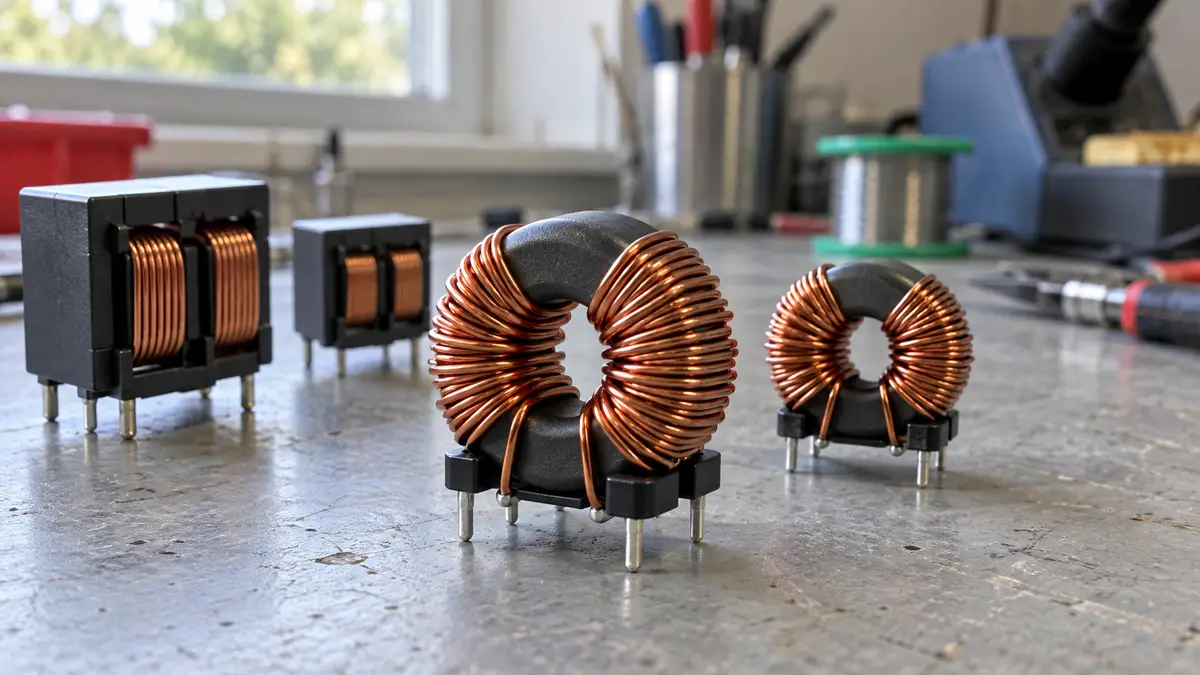
UK duty on common-mode chokes
Heading 8504 covers electrical transformers, static converters and inductors. For complete common-mode chokes, assess the other inductors line, 8504 50 00 00. The table also includes separately imported cores and other parts. These parts lines cover transformers as well as inductors; they are not alternative codes for a complete choke. For the reverse trade route, see exporting transformers to China.
Read from the UK Trade Tariff on 9 October 2026, all selected lines carry 0% duty for goods from China. The supplied tariff record lists no anti-dumping or countervailing duty, suspensions or attached import controls for these lines. Import VAT at 20% still applies.
Confirm the commodity code using the drawing, winding arrangement, core material and condition as imported. See power inductors for the wider inductor coverage.
| Goods | Commodity code | Duty | Anti-dumping or countervailing duty on China |
|---|---|---|---|
| Other inductors, including complete common-mode chokes | 8504 50 00 00 | 0% | None |
| Ferrite cores for transformers and inductors | 8504 90 11 00 | 0% | None |
| Steel laminations for transformers and inductors | 8504 90 13 10 | 0% | None |
| Other transformer and inductor parts, where applicable to choke components | 8504 90 17 00 | 0% | None |
Specify common-mode impedance and winding insulation
Specify common-mode impedance across the frequencies of concern, inductance and its measurement conditions, leakage inductance, winding resistance and rated current with an agreed temperature-rise test. State whether the choke is for a power line or signal line. Include winding connections, polarity, terminal layout, core material and mounting dimensions. Approve samples in the intended circuit, including their effect on wanted signals.
For mains applications, agree winding insulation, separation, dielectric test conditions and the operating environment with the equipment designer. Request material evidence for the wire enamel, bobbin, solder and coatings. In Great Britain, component parts sold business-to-business are outside the hazardous-substance regulations; when incorporated into a final assembly within scope, the assembly must comply, including its components.
Conformity marking depends on the supplied product and its use. Official electromagnetic compatibility guidance says separately marketed components may need individual assessment and marking, while a single marking covers many overall products. Have a testing specialist assess your configuration rather than treating a generic CE document as proof of choke performance.
Worked duty example
Illustrative example, not a quote: Illustrative order: 3,000 common-mode chokes under 8504 50 00 00, invoiced at £12,000 free on board, with £800 of freight and insurance to the UK. The customs value is £12,800. Duty at 0% is £0. Import VAT at 20% is charged on the customs value plus duty, £12,800, so it is £2,560. With no duty, the only import tax is the VAT, which a VAT-registered importer can usually reclaim. The import duty and VAT guide explains each step.
Inspection checklist
Electrical performance: measure common-mode impedance, inductance, leakage inductance and winding resistance under the agreed conditions. Compare bulk samples with the approved sample.
Heating and insulation: check temperature rise at the intended current and perform the agreed insulation tests through a competent laboratory. Check winding balance and connections.
Construction: inspect core cracks, damaged enamel, loose windings and bent terminals. Match core material, dimensions, pin layout and solderability to the approved drawing.
Arrival and traceability: check trays or reels for transport damage, moisture and mixed part numbers. Match batch identification to test records before stock release. Agree the checks through quality inspection.
Working out your own order? Send us the product on WhatsApp and we reply the same working day: WhatsApp us
What goes wrong
A choke can meet its headline inductance yet provide insufficient common-mode impedance at the troublesome frequencies. Changed winding layout or leakage inductance can also disturb wanted signals. Compare frequency-dependent performance in the actual circuit, rather than accepting inductance alone.
Core substitutions, thinner wire or damaged winding insulation can leave apparently identical parts with different heating or insulation performance. Record approved materials and require buyer approval before substitutions. Retain samples and compare delivered batches with them.
Cambridge China Bridge sources these products for UK businesses, checking the factory and the documents before shipment. See factory verification. For components and parts, see sourcing for manufacturers.
Frequently asked questions
What is the UK import duty on common-mode chokes from China?
The selected inductor, core and parts lines carry 0% duty from China. The supplied record lists no anti-dumping or countervailing duty. Import VAT at 20% still applies.
What commodity code should I use for a common-mode choke?
Assess 8504 50 00 00, other inductors, for a complete choke. Separately imported cores and parts have different lines. Confirm the actual construction and supplied configuration with your customs broker.
Does every common-mode choke need its own CE marking?
Do not assume so. Official guidance says some separately marketed components may need individual assessment and marking, while many products use an overall marking. Confirm the requirements for your configuration.
How do I check a common-mode choke before ordering?
Test impedance across the relevant frequencies, winding resistance, leakage inductance and heating in the intended circuit. Check insulation and terminal layout against the approved drawing.