Sourcing DC-DC converters from China
DC-DC converters from China fall within heading 8504, whose supplied lines all carry 0% UK duty. Confirm the exact code and assess electrical safety and electromagnetic compatibility against the voltage rating and intended use before selling in Great Britain. Cambridge China Bridge sources DC-DC converters.
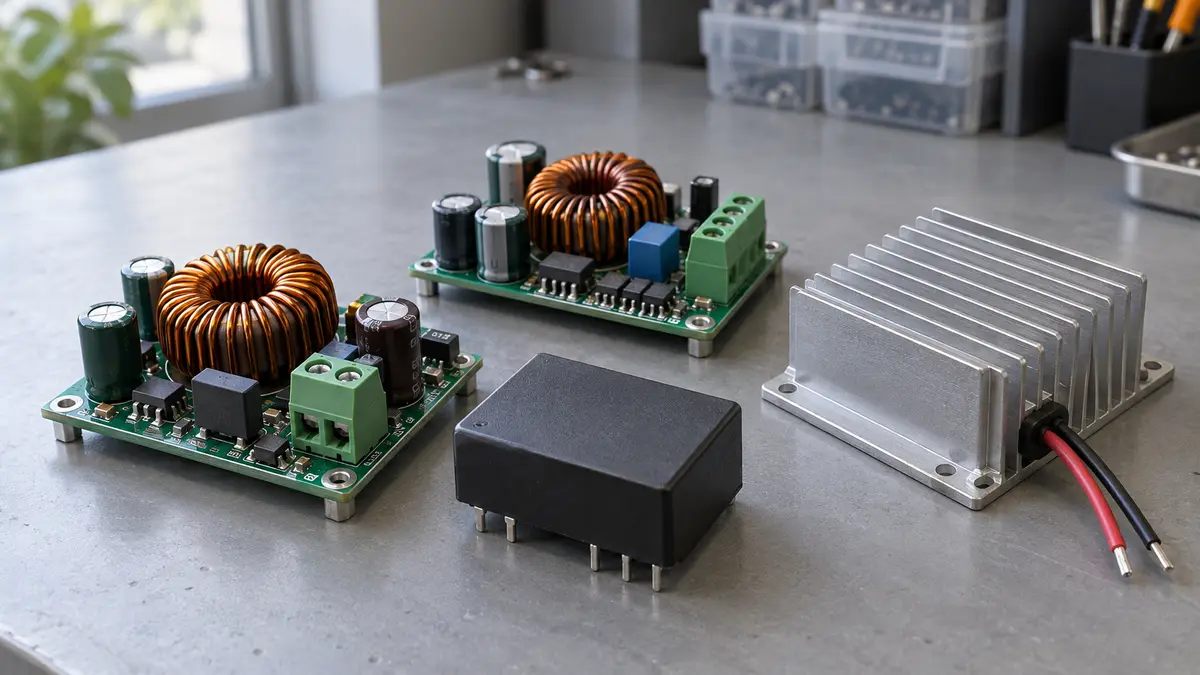
UK duty on DC-DC converters
Heading 8504 covers transformers, static converters and inductors. For a complete DC-DC converter, check other static converters under 8504 40 95 90 against the actual specification. The table also includes separately imported converter parts and manufacturing components; these are not alternative codes for a complete converter. For the reverse trade route, see exporting power converters to China.
Read from the UK Trade Tariff on 30 September 2026, all lines in the supplied heading data carry 0% duty for goods from China. The data records no anti-dumping or countervailing duties, suspensions or attached import controls. Import VAT at 20% still applies.
Confirm the commodity code using the input and output type, function and condition as imported. For products elsewhere in the heading, see power supplies, transformers and inverters. For servo drives, see our guide to sourcing servo drives from China.
| Goods | Commodity code | Duty | Anti-dumping or countervailing duty on China |
|---|---|---|---|
| Other static converters, including DC-DC converters subject to classification | 8504 40 95 90 | 0% | None |
| Parts of static converters, imported separately | 8504 90 90 00 | 0% | None |
| Other inductors, including separately imported converter inductors | 8504 50 00 00 | 0% | None |
| Transformers up to 1 kVA for use in manufacturing static converters | 8504 31 80 30 | 0% | None |
Specify voltage, isolation and cooling
State the input range, regulated output, continuous output current and whether the converter steps voltage down, up or both. Specify isolation, pin layout, mounting, polarity, ripple acceptance and protection behaviour. Ask for output capability at the intended ambient temperature and cooling arrangement, rather than relying on the headline power rating.
The Electrical Equipment (Safety) Regulations cover equipment designed or adapted for use between 75 and 1,500 volts direct current, subject to exclusions. Electromagnetic compatibility rules cover equipment liable to generate electromagnetic disturbance, with exceptions. Establish the applicable scope for the exact module and intended use.
Components sold separately can require their own conformity assessment and marking. For equipment within the hazardous-substance rules, importers are responsible for compliance. Request model-specific technical documentation, declarations and relevant test evidence; use testing and certification to resolve gaps before ordering.
Worked duty example
Illustrative example, not a quote: Illustrative order: 3,000 DC-DC converter modules; FOB value and freight are illustrative under 8504 40 95 90, invoiced at £12,000 free on board, with £800 of freight and insurance to the UK. The customs value is £12,800. Duty at 0% is £0. Import VAT at 20% is charged on the customs value plus duty, £12,800, so it is £2,560. With no duty, the only import tax is the VAT, which a VAT-registered importer can usually reclaim. The import duty and VAT guide explains each step.
Inspection checklist
Identity: compare delivered model, pin layout, polarity markings and circuit-board revision with the approved sample and supporting reports.
Output: test regulation and ripple across the agreed input range and load conditions, including start-up and sudden load changes.
Heat: run samples under the agreed continuous load and cooling conditions; check case temperature and any reduction in output capability.
Protection: verify agreed short-circuit, overload and reverse-polarity behaviour using a suitable test fixture. Record results through quality inspection.
Working out your own order? Send us the product on WhatsApp and we reply the same working day: WhatsApp us
What goes wrong
A converter can meet its nominal output on an open bench but overheat inside the buyer's enclosure. Undefined cooling conditions, insufficient filtering and changes to capacitors or magnetics can produce excessive ripple, shutdowns or interference. Agree the test setup and acceptance criteria before approving the sample.
A report for a different circuit-board revision does not demonstrate the performance of the delivered design. Compare the bulk goods with the approved sample and investigate substitutions before release. An isolated converter also needs an agreed isolation specification; the word alone does not describe the required performance.
Cambridge China Bridge sources these products for UK businesses, checking the factory and the documents before shipment. See factory verification. For components and parts, see sourcing for manufacturers.
Frequently asked questions
What is the UK import duty on DC-DC converters from China?
The supplied heading 8504 data shows 0% duty on every line, with no anti-dumping or countervailing duty. Confirm the exact commodity code. Import VAT at 20% still applies.
Which commodity code should I use for a DC-DC converter?
Check 8504 40 95 90, other static converters, for a complete unit. Separately imported parts and components can have different codes. Confirm classification from the actual function and specification.
Does a converter module need its own conformity marking?
Components sold separately can constitute finished products and may need individual conformity assessment and marking. Check the applicable rules against the exact product and intended use.
What should I test before accepting a converter shipment?
Check model identity, pin layout and polarity, then test output regulation, ripple, start-up, temperature and agreed protection behaviour under the intended load and cooling conditions.