Sourcing stepper motors from China
The listed motor lines carry 0% UK duty from China, so the recorded duty range is entirely zero. Match the motor's construction and output to its commodity description, and assess electrical safety and electromagnetic compatibility for the supplied configuration. Cambridge China Bridge sources stepper motors.
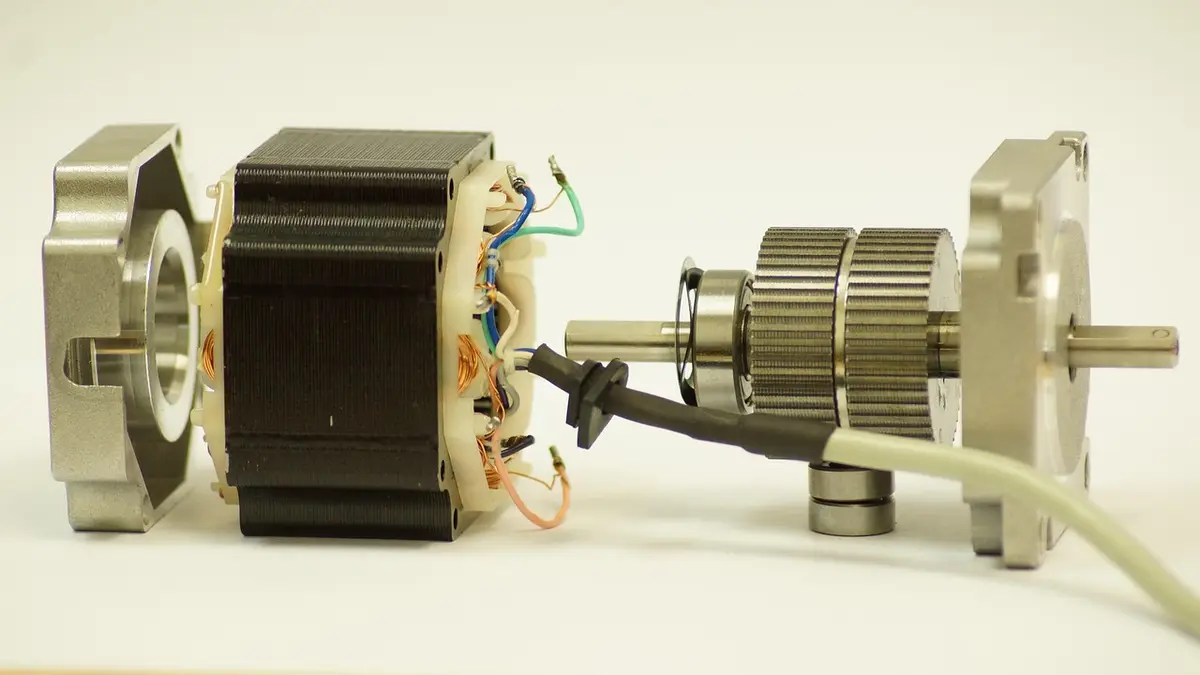
Duty and classification for stepper motors
Heading 8501 covers electric motors and generators, excluding generating sets. This guide concerns stepper motors. The table gives possible motor descriptions to investigate, rather than interchangeable codes for every stepper. A DC supply feeding a driver does not, by itself, establish the motor's classification. The specialised permanent-magnet line requires every element of its description to match.
Read from the UK Trade Tariff on 8 October 2026, the selected lines carried 0% duty for goods from China. The supplied records show no anti-dumping or countervailing duty, suspension or attached import control on these lines. Import VAT at 20% remains separate from duty.
Confirm the commodity code using the construction, winding arrangement and rated mechanical output, with the driver identified separately. Do not substitute holding torque or electrical input for output power. See the wider electric motor guide for other motor families. For shaded-pole motors, see our shaded-pole motor sourcing guide. For brushed DC motors, see our brushed DC motor sourcing guide. For induction motors, see our three-phase induction motor sourcing guide. For synchronous reluctance motors, see our synchronous reluctance motor sourcing guide.
| Goods | Commodity code | Duty | Anti-dumping or countervailing duty on China |
|---|---|---|---|
| Other synchronous motors, output not exceeding 18 W | 8501 10 10 90 | 0% | None |
| Other AC motors, output not exceeding 37,5 W | 8501 10 93 90 | 0% | None |
| Permanent-magnet DC motors with multi-phase windings, meeting the line specification | 8501 10 99 75 | 0% | None |
| Other multi-phase AC motors, output exceeding 750 W but not exceeding 7,5 kW | 8501 52 20 89 | 0% | None |
Specify torque at speed and driver compatibility
State the motor type, step angle, phase current, winding resistance and inductance, shaft dimensions, mounting drawing and connector pinout. Distinguish holding torque from running torque. Request a torque-speed curve identifying the driver, supply voltage, current setting and test conditions. For encoder-equipped motors, specify the feedback interface and how the controller handles lost position.
Agree whether the order includes a bare motor, an integrated driver or a complete motion assembly. For Great Britain, confirm with the relevant authority whether the Electrical Equipment (Safety) Regulations apply to each supplied item, providing its rated voltage. Assess the supplied configuration rather than assuming the motor and its mains-powered driver have identical obligations.
The electromagnetic compatibility rules cover electrical and electronic equipment liable to generate electromagnetic disturbance, subject to exceptions. Assess their application to the supplied motor and driver. Hazardous-substance rules cover electrical and electronic equipment, cables and spare parts, with exemptions. Request a documented scope assessment and model-specific supporting evidence through testing and certification.
Worked duty example
Illustrative example, not a quote: Illustrative batch of small synchronous stepper motors meeting this commodity description under 8501 10 10 90, invoiced at £2,500 free on board, with £400 of freight and insurance to the UK. The customs value is £2,900. Duty at 0% is £0. Import VAT at 20% is charged on the customs value plus duty, £2,900, so it is £580. With no duty, the only import tax is the VAT, which a VAT-registered importer can usually reclaim. The import duty and VAT guide explains each step.
Inspection checklist
Dimensions: measure shaft diameter, shaft flat, flange register, mounting holes and body length against the approved drawing; check that the coupling fits without forcing.
Windings and wiring: compare resistance and inductance between phases, verify connector pinout and cable identification, and check insulation resistance against the agreed test procedure.
Motion and temperature: run samples with the intended driver and load through acceleration, reversal and sustained operation; check missed steps, resonance, noise and winding temperature.
Batch consistency: compare labels, connectors, bearings and test records with the approved sample; inspect arrival cartons for bent shafts, damaged leads and moisture. Agree the sampling and tests in the inspection brief.
Working out your own order? Send us the product on WhatsApp and we reply the same working day: WhatsApp us
What goes wrong
A replacement can fit the mounting holes yet lose position because its inductance, phase current or running torque differs. Holding torque alone cannot show whether the motor will accelerate the intended load. A changed connector pinout can also make a working motor appear faulty.
Approve samples on the actual driver and mechanism before releasing production. Record winding, rotor, bearing and cable details, and require proposed changes to be submitted for approval. Keep an approved sample and retain arrival test results so repeat batches can be compared.
Cambridge China Bridge sources these products for UK businesses, checking the factory and the documents before shipment. See factory verification. For components and parts, see sourcing for manufacturers.
Frequently asked questions
What is the UK import duty on stepper motors from China?
The selected motor lines carry 0% duty from China in the supplied tariff records, with no anti-dumping or countervailing duty. Confirm the exact code; import VAT is separate.
Which commodity code should I use for a stepper motor?
Match its construction and rated mechanical output to the full tariff description. The table contains possible routes, not a universal stepper code. Identify any supplied driver separately.
Is holding torque enough to choose a stepper motor?
No. Request running torque across the intended speed range, with the driver, voltage and current settings stated. Test acceleration and reversal on your mechanism.
What should I test when stepper motors arrive?
Check mounting and shaft dimensions, phase resistance, connector pinout and insulation. Run samples under load with the intended driver and compare results with the approved sample.