Sourcing stainless steel funnels from China
Stainless steel kitchen funnels from China carry 0% UK duty under 7323 93 00 90, with no anti-dumping duty recorded. Food-contact materials must be safe and suitable for their intended use. Specify the outlet fit, steel material and cleanable seams before ordering. Cambridge China Bridge sources stainless steel kitchen funnels.
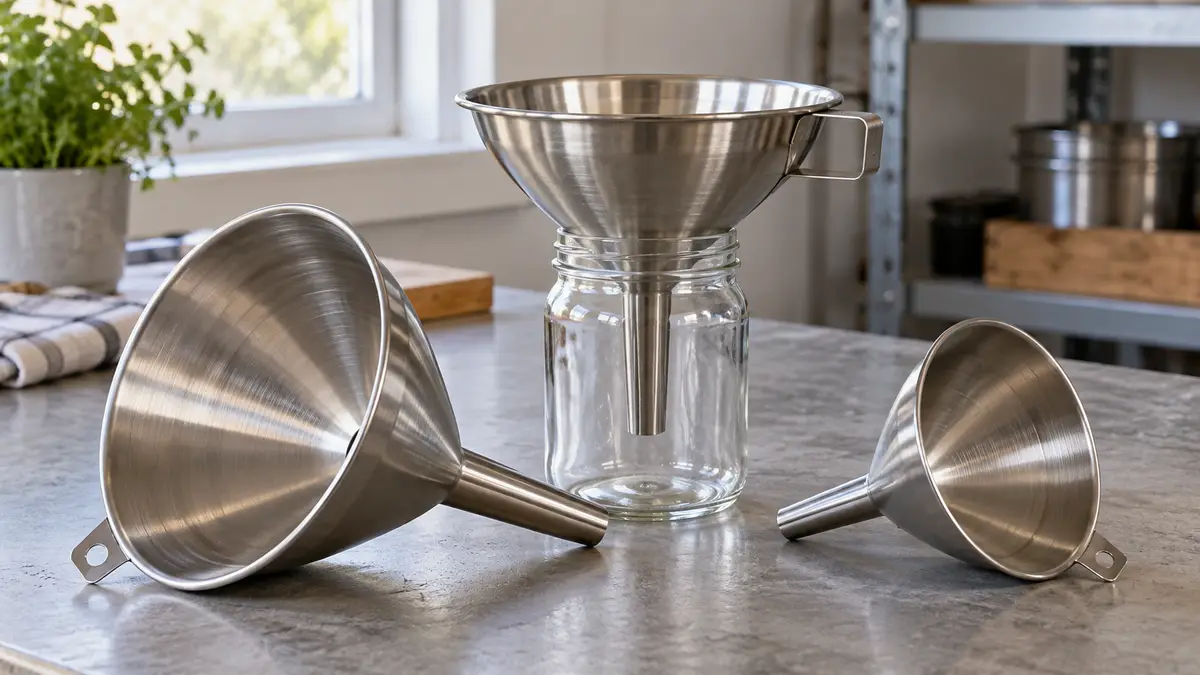
Duty on stainless steel kitchen funnels
Read from the UK Trade Tariff on 8 October 2026, heading 7323 covers iron or steel household and kitchen articles, alongside steel wool and scourers. Stainless steel kitchen funnels fall within the other stainless steel kitchenware line, 7323 93 00 90. The table shows funnel variants sharing this code. For wider kitchenware coverage, see stainless steel colanders. For household bins, see our stainless steel pedal bin sourcing guide. For kettles, see our stainless steel stovetop kettle guide.
The supplied tariff data records 0% duty for this line from China, with no anti-dumping or countervailing duty and no suspension. It attaches waste import and export controls. Waste shipment controls apply only where the material is waste. If a consignment from China is waste rather than usable kitchen funnels, confirm the applicable requirement with your customs broker before shipment.
Confirm the commodity code against the finished funnel's material, construction and intended use. The ironing-board trade remedy recorded elsewhere in this heading is not recorded against the funnel line.
| Goods | Commodity code | Duty | Anti-dumping or countervailing duty on China |
|---|---|---|---|
| Stainless steel kitchen funnels with narrow stems | 7323 93 00 90 | 0% | None |
Specify outlet fit and food-contact use
Specify the steel material, wall thickness, bowl diameter, stem length, outlet diameter and handle attachment. Send the factory the bottle or jar neck dimensions and agree a sample that sits securely while leaving a path for displaced air. State whether the funnel is for oils, dry ingredients, sauces or hot liquids.
Food-contact materials must be safe and suitable for their intended use. Ask for material identification and finished-product test evidence covering the foods, temperatures and cleaning methods you intend to claim. Include removable strainers, joints and any non-metal components in the assessment. Agree smooth internal seams and accessible surfaces for cleaning.
Worked duty example
Illustrative example, not a quote: 5,000 stainless steel kitchen funnels; illustrative order, not a quotation under 7323 93 00 90, invoiced at £7,500 free on board, with £900 of freight and insurance to the UK. The customs value is £8,400. Duty at 0% is £0. Import VAT at 20% is charged on the customs value plus duty, £8,400, so it is £1,680. With no duty, the only import tax is the VAT, which a VAT-registered importer can usually reclaim. The import duty and VAT guide explains each step.
Inspection checklist
Fit and flow: check the outlet against the agreed containers and pour representative ingredients to detect airlocks, drips and blockages.
Edges and joints: inspect the rim, stem opening and handle attachment for burrs, cracks, loose joints and leakage.
Material and finish: match material records to the batch; check for rust, polishing residue, scratches and trapped debris.
Cleaning and packing: remove and refit the strainer, inspect hidden seams after washing, and check that packing prevents crushed stems and dented bowls.
Working out your own order? Send us the product on WhatsApp and we reply the same working day: WhatsApp us
What goes wrong
A funnel may fit the bottle neck yet pour poorly because it seals the opening and traps air. Thin stems dent during transport, rough seams retain food, handles loosen and removable strainers lift out during pouring. Test the approved sample with the actual containers and ingredients, then repeat these checks on production goods.
A polished appearance does not establish material identity or suitability for the claimed food-contact use. Check that the supplier's evidence covers the delivered construction and accessories, rather than an unrelated steel sample. Arrange inspection around fit, cleanliness, joints and packing.
Cambridge China Bridge sources these products for UK businesses, checking the factory and the documents before shipment. See factory verification. For repeat volumes, see container programmes.
Frequently asked questions
What is the UK import duty on stainless steel kitchen funnels from China?
The supplied tariff data records 0% under 7323 93 00 90, with no anti-dumping or countervailing duty and no suspension.
What food-contact evidence should I ask the factory for?
Ask for material identification and finished-product test evidence covering your intended foods, temperatures and cleaning methods, including strainers and other components.
Why does a kitchen funnel pour slowly?
The stem may seal the container neck and trap air, or the outlet and strainer may be too restrictive for the ingredient. Test with your actual containers.
What should I check when kitchen funnels arrive?
Check outlet fit, flow, sharp edges, leaking seams, handle security, removable strainers, residue and transport dents against the approved sample.