Sourcing stainless steel mixing bowls from China
Stainless steel mixing bowls from China carry 0% UK duty under 7323 93 00 90, with no listed anti-dumping duty. Bowls must be safe for their intended food-contact use. Specify the steel, thickness, rim and nesting fit before production. Cambridge China Bridge sources stainless steel mixing bowls.
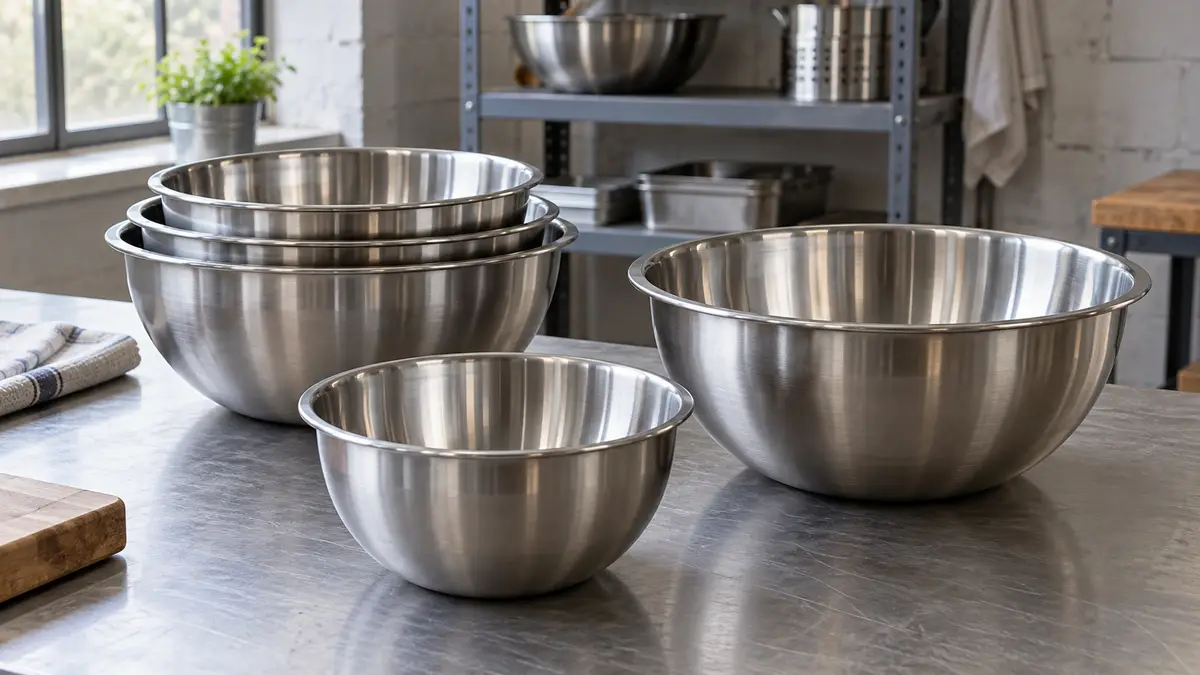
Duty on stainless steel mixing bowls
Read from the UK Trade Tariff on 8 October 2026, heading 7323 covers iron or steel household and kitchen articles. Stainless steel mixing bowls fall within the other stainless steel articles line, 7323 93 00 90. The bowl variants shown share this code. See the stainless steel stockpots guide for related kitchenware within the wider heading. For stovetop kettles, see our stainless steel stovetop kettle sourcing guide.
The supplied tariff record shows 0% duty for goods from China on this line, with no anti-dumping or countervailing duty, suspension or steel measure listed. It attaches import and export waste controls. Waste shipment controls apply only where the material is waste. For a shipment from China classed as waste, confirm the applicable requirements with your customs broker before dispatch.
Confirm the commodity code using the actual construction and materials, especially for bowls supplied with lids, grips or other components. Keep the drawing and material specification with the classification decision.
| Goods | Commodity code | Duty | Anti-dumping or countervailing duty on China |
|---|---|---|---|
| Plain stainless steel mixing bowls | 7323 93 00 90 | 0% | None |
Specify the bowl body, rim and nesting
Write down the steel grade, finished wall thickness, diameter, depth, usable capacity and base shape. Distinguish usable capacity from capacity filled to the rim. Agree the internal finish, rolled-rim profile and any pouring lip. For nesting sets, approve the assembled set and how easily each bowl separates.
Food-contact materials must be safe for their intended application. Ask a laboratory to agree suitable checks for the finished bowl against the foods, contact conditions and cleaning methods you intend to claim. Request material evidence and reports matching the supplied design. Include any food-contact coating or lid in the brief, and arrange testing support before production.
Worked duty example
Illustrative example, not a quote: Illustrative order of 3,000 plain stainless steel mixing bowls; FOB and freight values are illustrative, not a quote. under 7323 93 00 90, invoiced at £7,500 free on board, with £900 of freight and insurance to the UK. The customs value is £8,400. Duty at 0% is £0. Import VAT at 20% is charged on the customs value plus duty, £8,400, so it is £1,680. With no duty, the only import tax is the VAT, which a VAT-registered importer can usually reclaim. The import duty and VAT guide explains each step.
Inspection checklist
Material and thickness: compare material records with the agreed steel specification and measure finished thickness around the wall and base.
Rim and finish: check for sharp edges, split rolled rims, cracks, deep scratches and polishing residue inside the bowl.
Shape and nesting: check dimensions, capacity and base stability; separate nested bowls and look for trapped rims or rubbing marks.
Cleaning and packing: trial the agreed cleaning method, inspect for staining and retained water around the rim, and check protective separators on arrival. Use the approved sample at inspection.
Working out your own order? Send us the product on WhatsApp and we reply the same working day: WhatsApp us
What goes wrong
A bowl can match the sample diameter while having thinner walls, a shallower body or a base that rocks. Rolled rims can conceal splits or retain wash water, and nested sets can jam or scratch each other in transit. Compare production bowls with the approved sample after unpacking and cleaning.
A generic material report can describe different steel or omit a coating used on the delivered bowl. Check that the evidence matches the finished construction and intended use. Keep packing separators in the specification so the factory does not remove them after sample approval.
Cambridge China Bridge sources these products for UK businesses, checking the factory and the documents before shipment. See factory verification. For repeat volumes, see container programmes.
Frequently asked questions
What is the UK import duty on stainless steel mixing bowls from China?
The supplied tariff record shows 0% under 7323 93 00 90, with no listed anti-dumping or countervailing duty. Confirm the code for the actual product.
What food-contact evidence should I ask the factory for?
Ask for the steel specification and evidence matching the finished bowl and intended foods, contact conditions and cleaning methods. Agree the laboratory brief before production.
How do I check nesting mixing bowls?
Assemble and separate the complete set. Check for trapped rims, rocking bases and scratches after unpacking, and compare the fit with the approved sample.
Why does the tariff show waste controls for mixing bowls?
The tariff line includes waste-control entries. Waste shipment controls apply only if the material is waste; confirm the requirements with your broker if that classification is in question.