Sourcing stainless steel cable ties from China
Stainless steel cable ties from China carry 2% UK duty under the candidate code shown, with no recorded anti-dumping or countervailing duty. Confirm classification from the finished design. Ties intended or reasonably likely to be used by consumers must be safe. Cambridge China Bridge sources stainless steel cable ties.
Buying from China for a business? How our UK China sourcing agent service works · China sourcing agent for small orders and first imports
Duty and classification for stainless steel ties
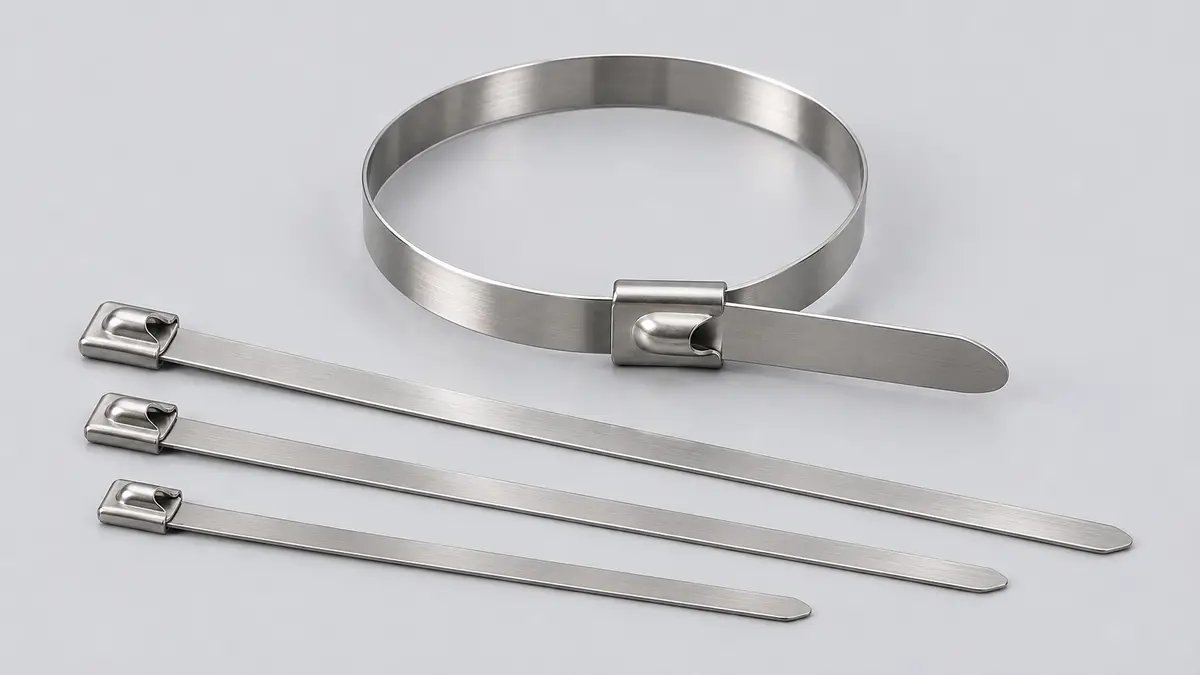
Heading 7326 covers other articles of iron or steel. For finished stainless steel strip cable ties, consider 7326 90 98 90 with your customs broker. The table repeats this candidate code for different designs; it does not establish separate classifications or guarantee that every coated or composite tie belongs here.
Read from the UK Trade Tariff on 8 December 2026, the candidate line carries 2% duty for goods from China, with no recorded anti-dumping or countervailing duty, steel measure or suspension. The tariff attaches an import prohibition and an export restriction concerning torture and repression goods. The official import notice lists banned goods by description. Ask your customs broker to confirm the requirements for your ties before shipment.
Confirm the commodity code using drawings, material details, coating composition, locking mechanism and intended use. Ask HMRC or your broker whether UK carbon border adjustment requirements apply. For a different tie material, see nylon cable ties.
| Goods | Commodity code | Duty | Anti-dumping or countervailing duty on China |
|---|---|---|---|
| Uncoated stainless steel cable ties, subject to classification | 7326 90 98 90 | 2% | None |
Specify the strip, locking head and installation
Specify the stainless steel material for both strip and locking head, strip width and thickness, usable length, bundle diameter range and locking mechanism. For coated ties, define the coating material, coverage and permitted damage after tightening. Request material records linked to the production batch and agree how the material will be checked.
Agree loop tensile strength and a test method using the finished tie around a representative bundle. Trial the intended tensioning and cutting tool, checking lock slip, cable damage and the remaining cut tail. For consumer-use ties supplied in Great Britain, general product safety rules apply. Keep drawings, test criteria and the approved sample as the inspection reference.
Worked duty example
Illustrative example, not a quote: Illustrative order of 5,000 uncoated stainless steel cable ties under 7326 90 98 90, invoiced at £5,000 free on board, with £700 of freight and insurance to the UK. The customs value is £5,700. Duty at 2% is £114. Import VAT at 20% is charged on the customs value plus duty, £5,814, so it is £1,162.80. Import taxes total £1,276.80; a VAT-registered importer can usually reclaim the VAT, so the lasting cost is the £114 of duty. The import duty and VAT guide explains each step.
Inspection checklist
Dimensions: measure strip width, thickness and usable length; check the head accepts the strip and fits the intended bundle.
Locking: tighten samples with the intended tool, apply the agreed loop load and check slipping, head opening or strip tearing.
Edges and coating: check burrs, sharp cut tails, damaged coating and exposed metal where the tie contacts cable insulation.
Arrival: compare carton contents and batch identification with the order; inspect for rust, bent heads, tangled strips and moisture.
Working out your own order? Send us the product on WhatsApp and we reply the same working day: WhatsApp us
What goes wrong
A straight strip pull test can miss a locking head that slips when formed into a loop. Excessive tension can damage cable insulation, while an incompatible cutting tool can leave an exposed sharp tail. Approve the tie, tool and representative bundle together, and agree the acceptance criteria before production.
A coating can split as the strip passes through the head, exposing rough edges at the contact point. Material substitutions and contaminated surfaces can undermine corrosion performance. Specify the service environment, agree a suitable corrosion assessment and separate suspect stock on arrival.
Cambridge China Bridge sources these products for UK businesses, checking the factory and the documents before shipment. See factory verification. For repeat volumes, see container programmes.
Frequently asked questions
What is the UK import duty on stainless steel cable ties from China?
The supplied snapshot shows 2% for candidate code 7326 90 98 90, with no anti-dumping or countervailing duty recorded. Confirm the code and attached controls with your broker.
Should I buy coated or uncoated stainless steel cable ties?
Choose against the cable surface and service environment. Trial coated ties for splitting during tightening and uncoated ties for edge contact and cable damage.
How do I check stainless steel cable tie strength?
Agree a finished-loop test around a representative bundle. Check locking-head slip, strip tearing and head opening using the intended installation tool.
Can I rely on a supplier's fire-resistant cable tie claim?
Ask for the test method, report and exact tie identification. Have the project designer assess the evidence for the intended support arrangement before approving the purchase.