Soft pet carrier duty: tote, backpack or trolley?
A soft pet carrier from China pays 2% UK duty when its outer surface is textile, whether tote, backpack or trolley style, and 8% when it is plastic sheeting; import VAT is 20%. Pick the design first, because it sets the code, then test the carrier loaded with the zips shut, not just the fabric swatch.
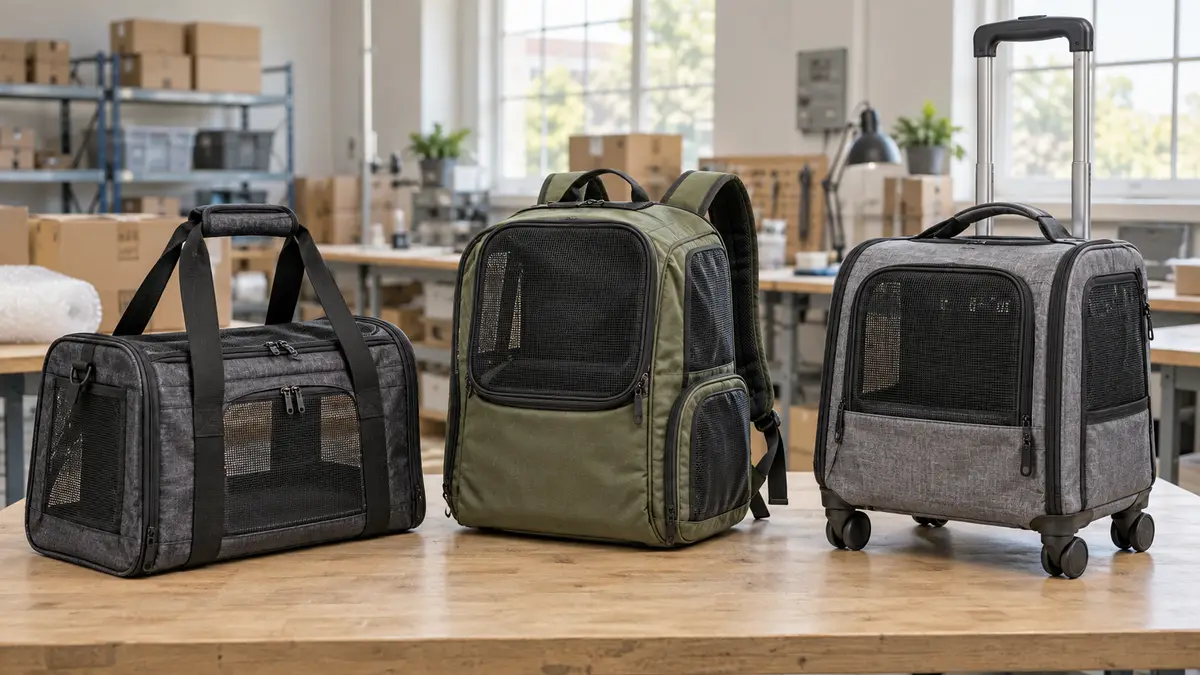
Pick the carrying design first: it sets the code
Soft pet carriers sit in heading 4202, and the line depends on how the carrier is built, not on the word pet. Read from the UK Trade Tariff on 9 October 2026, a textile-surfaced tote, sling or side-opening carrier is a candidate for 4202 92 98 90, a backpack-style carrier for 4202 92 91 90 and a trolley-style carrier with a textile outer for 4202 12 99 90. Each carried 2% on goods from China. The same designs with an outer surface of plastic sheeting carried 8%. Whether a design is a rucksack, a bag or a suitcase-like container is a classification judgement for your customs agent; see finding your commodity code.
The tariff showed no anti-dumping duty on China for these lines, and import VAT at 20%. The textile lines also carry a CITES import control. The tariff offers a declaration code, Y900, for goods that do not belong to a CITES-listed species, and a certificate code, C400, where a permit is needed. A plain fabric carrier should not need a permit, but if leather, fur or exotic-skin trim is added, ask your customs agent before ordering; official guidance requires a permit for species listed in Annex A, B or C.
| Design | Outer surface | Commodity code | Duty |
|---|---|---|---|
| Tote, sling or side-opening carrier | Textile | 4202 92 98 90 | 2% |
| Backpack-style carrier | Textile | 4202 92 91 90 | 2% |
| Trolley-style carrier | Textile | 4202 12 99 90 | 2% |
| Tote, sling or side-opening carrier | Plastic sheeting | 4202 92 19 00 | 8% |
| Backpack-style carrier | Plastic sheeting | 4202 92 11 00 | 8% |
| Trolley-style carrier | Plastic sheeting | 4202 12 19 00 | 8% |
Worked example: 300 backpack-style carriers
Illustrative example, not a quote: 300 textile backpack-style pet carriers under 4202 92 91 90, invoiced at £3,450 free on board, with £80 to move them to the port and £420 of freight and insurance to the UK. HMRC includes inland transport and associated costs in the country of export, so the customs value is £3,950. Duty at 2% is £79. Import VAT at 20% is charged on £4,029, so it is £805.80, and import taxes total £884.80. A VAT-registered importer can usually reclaim the VAT, so the lasting cost is the £79 of duty, about 26p a carrier. The same order with a plastic-sheeting outer would pay 8%: £316 of duty and £853.20 of VAT. The import duty and VAT guide explains each step.
Size it from the animal, not from the photograph
Give the factory the animal, not just the carrier size: the length, height and width of the largest animal the carrier is sold for, and the weight it must carry. Specify internal length, width and height with the base insert fitted and the roof up, because a soft roof that sags takes space the photograph shows. A common test is whether the animal can stand, turn round and lie down; check the transport operator's own conditions rather than assuming.
Specify ventilation by position rather than by breathable mesh: mesh on more than one side so air still moves when one side is against a seat or wall, mesh with finished edges, and openings that stay open when the carrier is loaded. Ask for a removable washable pad and a wipe-clean waterproof base, because soiling is normal use.
Load-test it with the zips shut
Fill the sample to the agreed carrying weight with sand bags or water bottles, not an animal. Carry it by the handles and the shoulder strap for the agreed time, set it on a seat, then check each strap anchor, seam and the base. Agree the weight, the time and the pass criteria in writing before the test.
For containment, close every zip and fasten every lock, clip or toggle, then try to open it from inside with a pushing and pulling movement. Look for a zip slider that creeps open, gaps beside the zip, mesh pulling from a seam, exposed wire ends and stiff frame ends. A claw and chew test on a spare piece of the mesh tells you more than the supplier's description.
Consumer carriers sold in Great Britain must be safe under the General Product Safety Regulations 2005. Keep the approved sample and the test notes, and ask for chemical checks on coatings, mesh and skin-contact straps through testing and certification.
Suitability claims not to repeat without evidence
Do not print airline approved, cabin size or car safe because a supplier's listing does. Each claim depends on someone else's conditions: an airline's published size and weight limits, or a vehicle's seat-belt arrangement. Ask the supplier for evidence for that specific use, such as a drawing or test report, and compare the finished sample with the operator's current published conditions yourself.
A carrier with a tether loop is not a vehicle restraint because of the loop. Describe what you can substantiate: the measured internal size, the maximum carrying load and the materials.
Working out your own order? Send us the product on WhatsApp and we reply the same working day: WhatsApp us
What goes wrong, and the sibling guides
The usual failures are a roof that sags after unpacking, zip sliders that creep open, strap stitching that pulls out, thin base inserts that bend under load, mesh that tears beside a seam and odour from a coated lining. Agree acceptance on the assembled carrier, not on a fabric swatch. A hard-shell carrier is a different product with its own code, covered in rigid plastic pet carriers; strap anchors and loaded zips are covered in bag and backpack loading trials.
Cambridge China Bridge sources these products for UK businesses. Inspection and factory checks are normally included in our quote; anything complex enough to need a third party is charged separately, agreed in advance. See factory verification, and sourcing for brands for own-brand ranges.
Frequently asked questions
What is the UK import duty on a soft pet carrier from China?
Read from the UK Trade Tariff on 9 October 2026, the candidate lines carried 2% for textile outer surfaces and 8% for plastic sheeting, with no anti-dumping duty on China. Import VAT is 20%.
Which commodity code applies to a fabric pet backpack?
4202 92 91 90 is a candidate for textile backpack-style carriers. A tote or sling is a candidate for 4202 92 98 90. Ask your customs agent to confirm it from the finished design and outer material.
Does a fabric pet carrier need a CITES permit?
The tariff attaches a CITES control to the textile lines, with a declaration code for goods that are not CITES-listed. A plain fabric carrier should not need a permit; ask your agent if leather, fur or exotic-skin trim is used.
How should I test a pet carrier before approving production?
Load the assembled sample to the agreed weight, carry it by handle and strap, close and try every zip and lock, and check seams, mesh and base afterwards. Agree the pass criteria in writing first.