Sourcing sainfoin hay from China
Sainfoin hay from China carries 0% UK duty, but cannot currently be imported into Great Britain under the published hay import arrangements: China is absent from the authorised origins. Zero duty does not grant import permission. Cambridge China Bridge checks whether a product can be imported before any order is placed.
Buying from China for a business? How our UK China sourcing agent service works · China sourcing agent for small orders and first imports
Zero duty, but China is not an authorised origin
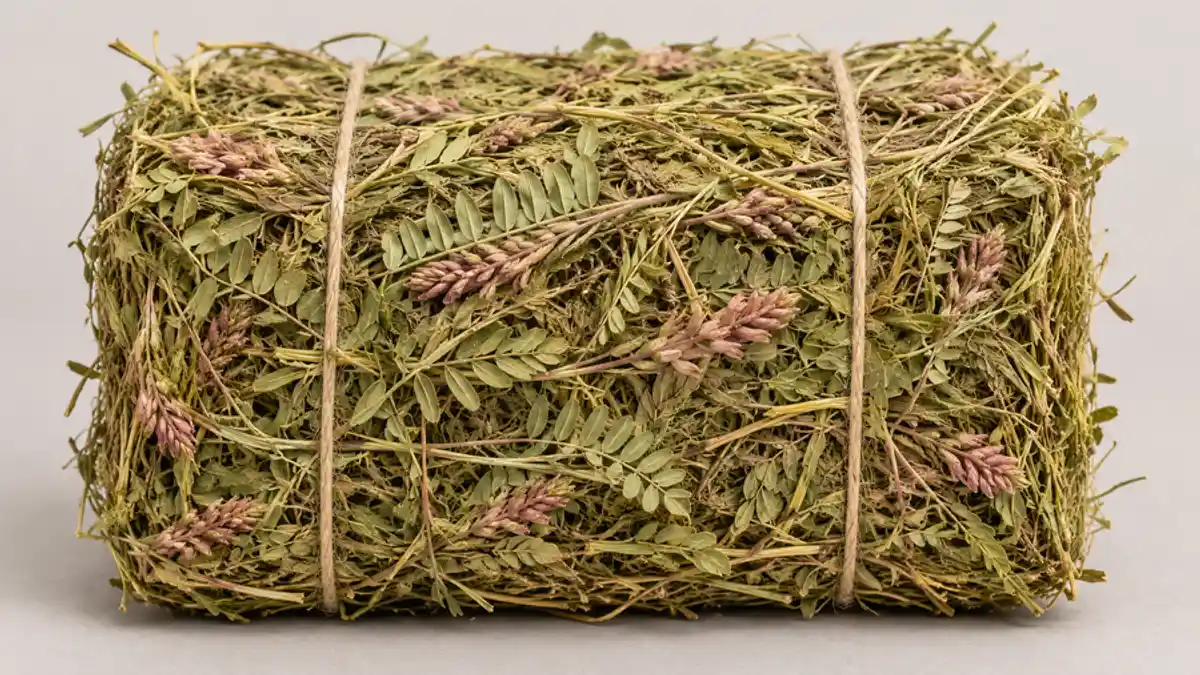
Read from the UK Trade Tariff on 29 September 2026, heading 1214 covers hay and other forage products, including sainfoin. The hay line, 1214 90 90 20, carries 0% duty for goods from China, with no anti-dumping or countervailing measure and no suspension recorded. It carries an import prohibition and an organic-products import control. The table shows different supply forms under the same hay line, rather than separate tariff classifications.
The official hay guidance limits imports to authorised origins. China is absent from the linked country list, so Chinese-origin sainfoin hay cannot currently be imported into Great Britain under these arrangements. This conclusion follows from the guidance and authorisation read together. Organic certification does not resolve the origin restriction. Businesses trading organic products must be certified by an approved UK control body; ask that body and your customs broker to confirm the attached organic import control before considering any future shipment.
Confirm the species and actual product form using our commodity-code guide. Do not describe sainfoin hay as lucerne meal or pellets merely to use another tariff line. See the wider forage guide. The worked figures are illustrative arithmetic only, not a quotation or a proposed import from China.
| Goods | Commodity code | Duty | Anti-dumping or countervailing duty on China |
|---|---|---|---|
| Sainfoin hay in small bales | 1214 90 90 20 | 0% | None |
Specify sainfoin identity and bale condition
Resolve import eligibility before requesting production or paying a deposit. For a sourcing brief, specify sainfoin rather than a generic mixed hay, the growing origin, harvest stage, leaf retention, stem condition and intended animal use. Agree how botanical identity and admixture will be checked against a retained sample.
Specify bale format, net weight, binding, packaging and storage conditions. Agree moisture, dust, foreign-material and mould acceptance criteria without relying on photographs alone. Request representative samples and lot-linked analysis for the nutritional characteristics your customer needs. These are purchasing specifications, not a route around the import restriction.
Worked duty example
Illustrative example, not a quote: 20 tonnes of baled sainfoin hay, illustrative calculation only; not a shipment permitted from China into Great Britain under 1214 90 90 20, invoiced at £2,500 free on board, with £2,500 of freight and insurance to the UK. The customs value is £5,000. Duty at 0% is £0. Import VAT at 20% is charged on the customs value plus duty, £5,000, so it is £1,000. With no duty, the only import tax is the VAT, which a VAT-registered importer can usually reclaim. The import duty and VAT guide explains each step. This assumes the goods are standard-rated for VAT. Most food for human consumption is zero-rated, and animal feed can be too, in which case no import VAT is due, so check the rate for your product in HMRC's VAT Notice 701/14.
Inspection checklist
Origin: check the growing location against the supplier's records before approving any order; China is absent from the published authorised origins.
Identity: open representative bales and compare leaves, stems and seed heads with the retained sainfoin sample; record other grasses and weeds.
Condition: check moisture inside the bale, musty odour, visible mould, excessive dust, leaf loss and signs of heating.
Packing: check bale weights, broken bindings, damaged wrapping, wet patches and lot identification. Use these checks for any future permitted supply, rather than treating them as approval to ship from China.
Working out your own order? Send us the product on WhatsApp and we reply the same working day: WhatsApp us
What goes wrong
The main purchasing mistake is treating a zero duty rate as import permission. Under the published arrangements, Chinese-origin sainfoin hay is not an eligible Great Britain import. The official guidance says consignments that fail import requirements may be rejected and re-exported or destroyed. Stop the purchasing process until eligibility is resolved.
Quality disputes arise when mixed hay is supplied as sainfoin, leaves are lost during handling, or damp bale centres are hidden by dry outer layers. Agree a sampling method and record the condition of opened bales. Keep supplier samples and inspection records together so a description or condition dispute can be assessed.
Cambridge China Bridge sources these products for UK businesses, checking the factory and the documents before shipment. See factory verification. For repeat volumes, see container programmes.
Frequently asked questions
What is the UK import duty on sainfoin hay from China?
The supplied tariff record shows 0% under 1214 90 90 20, with no trade remedy or suspension. The line also carries an import prohibition; zero duty does not mean the goods may enter.
Can I import Chinese sainfoin hay into Great Britain?
Not under the current published hay import arrangements. China is absent from the authorised origins. Resolve eligibility with the Animal and Plant Health Agency and your customs broker before ordering.
Does organic certification make Chinese hay importable?
No. Organic certification does not resolve the origin restriction. Businesses trading organic products also need certification by an approved UK control body.
What should I check in a sainfoin hay sample?
Check botanical identity, other plants, leaf retention, coarse stems, moisture, mould, dust and foreign material. Open bales rather than judging only their outer surfaces.