Sourcing rubber vulcanising presses from China
Rubber vulcanising presses and relevant machinery parts from China carry 0% UK duty across the selected lines, with no listed trade remedies. Machinery must be safe before it is placed on the Great Britain market or put into service. Cambridge China Bridge sources rubber vulcanising presses.
Buying from China for a business? How our UK China sourcing agent service works · China sourcing agent for UK manufacturers and engineering firms
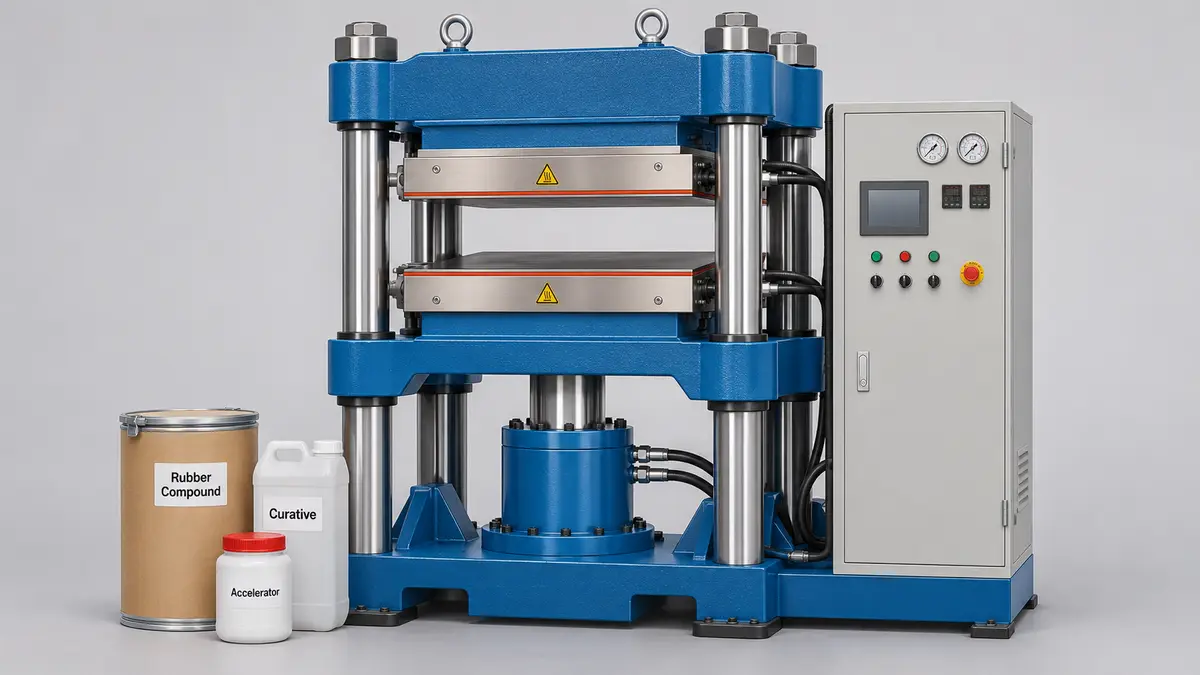
Zero duty on presses and relevant parts
Read from the UK Trade Tariff on 30 September 2026, heading 8477 covers machinery for working rubber or plastics and manufacturing products from those materials. Its presses line is relevant to rubber moulding presses; tyre and inner-tube moulding machinery has a separate line.
All selected lines carry 0% duty for goods from China. The supplied tariff data lists no anti-dumping or countervailing duties, suspensions or import controls for these lines. The ozone-depleting-substance restriction attached to foam-product machinery elsewhere in the heading is not attached to these selected lines.
Confirm the commodity code using the press function, the product it makes and whether the shipment contains complete machines or separately supplied parts. For related rubber-processing machinery within this heading, see rubber two-roll mills.
| Goods | Commodity code | Duty | Anti-dumping or countervailing duty on China |
|---|---|---|---|
| Rubber moulding and vulcanising presses, excluding tyre and inner-tube machinery | 8477 59 10 00 | 0% | None |
| Machinery for moulding or retreading pneumatic tyres or forming inner tubes | 8477 51 00 00 | 0% | None |
| Cast iron or cast steel parts for rubber-working machinery | 8477 90 10 00 | 0% | None |
| Other parts for rubber-working machinery | 8477 90 80 00 | 0% | None |
Specify the mould, platens and curing process
Give the factory your rubber compound, mould drawing and intended cured product. Specify platen dimensions, daylight opening, stroke, clamping force, mould weight and loading method. Agree how the factory will demonstrate force at the mould rather than relying only on a hydraulic gauge reading.
Choose electric or steam heating and agree temperature uniformity across the working platen area, curing sequence, pressure holding and venting. Confirm the electrical supply, installation connections, controller language, recipe access and spare seals, heaters and sensors. Arrange a factory acceptance inspection using your mould and compound.
Ask the supplier for its conformity assessment route, declaration of conformity, CE or UKCA marking details and English operating and maintenance instructions. Have the documents reviewed for the actual press configuration.
Worked duty example
Illustrative example, not a quote: Two rubber vulcanising presses; illustrative order, not a quotation under 8477 59 10 00, invoiced at £64,000 free on board, with £5,000 of freight and insurance to the UK. The customs value is £69,000. Duty at 0% is £0. Import VAT at 20% is charged on the customs value plus duty, £69,000, so it is £13,800. With no duty, the only import tax is the VAT, which a VAT-registered importer can usually reclaim. The import duty and VAT guide explains each step.
Inspection checklist
Curing trial: run the agreed mould and compound, record platen temperatures and pressure holding, and examine cured parts for uneven cure, trapped air and flash.
Geometry and hydraulics: check platen parallelism, mould alignment, opening clearance, hydraulic leaks and pressure drift during the agreed holding cycle.
Safeguarding: have a competent machinery assessor check access to the closing mould, hot surfaces, guards, interlocks and emergency stops through the operating sequence.
Arrival and documents: inspect platens for rust and transport damage, compare the machine identity with its declaration, and check manuals, diagrams, controller access and the supplied spare parts.
Working out your own order? Send us the product on WhatsApp and we reply the same working day: WhatsApp us
What goes wrong
A press can reach its displayed temperature while the mould heats unevenly. Poor platen parallelism or falling hydraulic pressure can leave excess flash or inconsistent parts. Make acceptance depend on measured conditions and cured samples from the agreed mould and compound.
Loading access may conflict with guarding, controllers may arrive without usable English screens, and replacement seals may be difficult to identify. Agree the loading arrangement, software access and spare-part identifiers before shipment, then repeat the agreed checks after installation.
Cambridge China Bridge sources these products for UK businesses, checking the factory and the documents before shipment. See factory verification. For machinery and equipment, see machinery imports.
Frequently asked questions
What is the UK import duty on rubber vulcanising presses from China?
The supplied tariff data shows 0% duty for presses under 8477 59 10 00 and the selected tyre machinery and parts lines, with no listed anti-dumping or countervailing duty.
Which commodity code covers a rubber vulcanising press?
8477 59 10 00 is the presses line to check for rubber moulding presses. Machinery for moulding or retreading pneumatic tyres or forming inner tubes has the separate line 8477 51 00 00.
How should I test a rubber vulcanising press before shipment?
Use your mould and rubber compound. Record platen temperature distribution, pressure holding and the curing sequence, then inspect the cured parts against agreed acceptance criteria.
What should I ask for with the press?
Ask for the declaration of conformity, marking details, English manuals, hydraulic and electrical diagrams, controller access and identifiable spare parts. Match the documents to the supplied machine.