Sourcing rubber protective aprons from China
Rubber protective aprons from China carry 4% ordinary UK duty, with a 0.00 % suspension for qualifying protective unisex garments. Aprons sold as personal protective equipment in Great Britain need conformity assessment and appropriate marking. Cambridge China Bridge sources rubber protective aprons.
Duty and the protective garment suspension
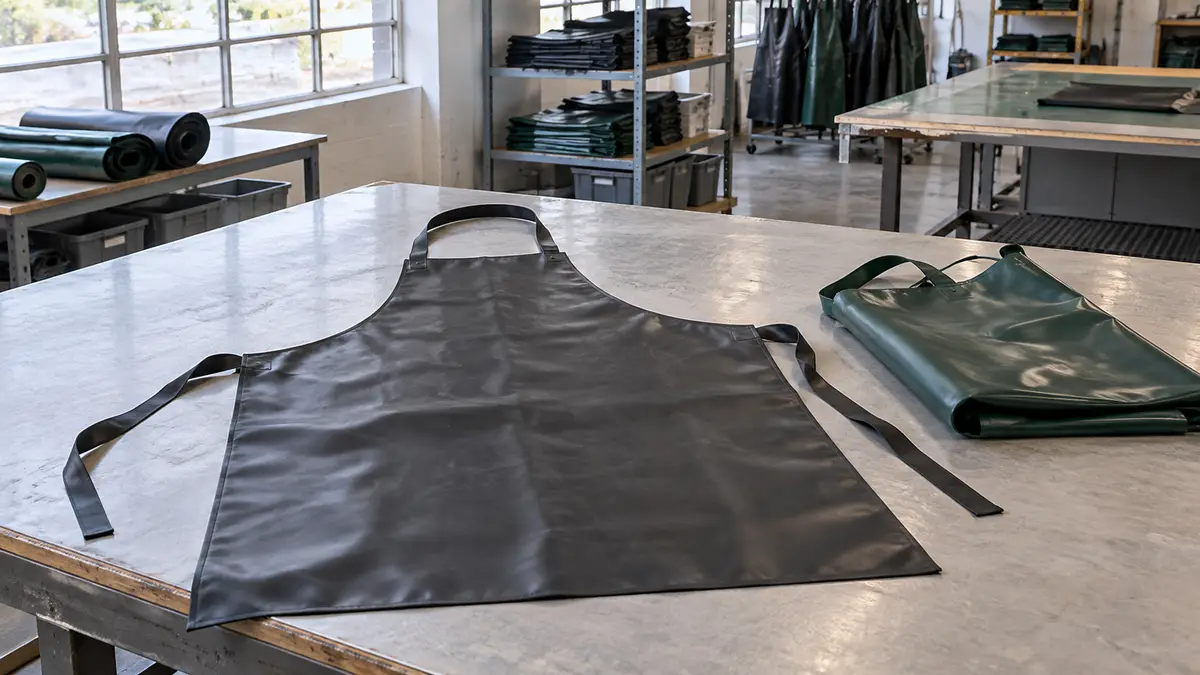
Read from the UK Trade Tariff on 29 September 2026, heading 4015 covers apparel and clothing accessories of vulcanised rubber other than hard rubber. Rubber protective aprons fall within the other articles line, 4015 90 00 00, subject to confirmation of their construction. The table shows apron variants sharing that commodity line. See our rubber cleaning gloves guide for the wider heading. For sleeve purchasing, see our electrical insulating rubber sleeve sourcing guide. For swimming accessories in this heading, see our rubber swimming cap sourcing guide.
The ordinary duty for goods from China is 4%. An autonomous suspension of 0.00 % applies only to protective unisex garments made of rubber sheeting, textile-reinforced rubber or textile-backed rubber falling under this code. Its footnote excludes mixtures, preparations or products made up of different components containing these products. The supplied tariff record lists no anti-dumping or countervailing duty and no attached import controls for this line.
Ask your customs broker to confirm suspension eligibility for the actual apron before using the suspended rate in a costing. Supply material composition, construction details, photographs and intended use when confirming your commodity code.
| Goods | Commodity code | Duty | Anti-dumping or countervailing duty on China |
|---|---|---|---|
| Rubber-sheet protective aprons | 4015 90 00 00 | 4% | None |
Specify the rubber and the protection claimed
Specify the rubber compound, sheet thickness and tolerance, any textile reinforcement or backing, apron coverage, neck adjustment, waist ties and attachment method. Identify the liquids, cleaning chemicals and working conditions involved. Agree cleaning instructions and an approved sample; a waterproof sheet alone does not demonstrate protection against the buyer's chemicals. For hand protection, see our guide to sourcing chemical-resistant gauntlets. For jackets, see our unlined rubber chemical-protective jacket sourcing guide.
For aprons intended to protect the wearer against health or safety risks in Great Britain, the personal protective equipment rules apply. Conformity assessment follows the risk category. Most new personal protective equipment must carry UKCA or CE marking and be supplied with a declaration of conformity and English instructions. The importer must check that the manufacturer has carried out the appropriate assessment and drawn up technical documentation.
Request evidence matching the finished apron, its material and the claimed protection, rather than a report for unrelated rubber sheet. Arrange testing and certification support before approving production.
Worked duty example
Illustrative example, not a quote: Illustrative order of 2,000 rubber protective aprons, using the ordinary duty rate under 4015 90 00 00, invoiced at £5,000 free on board, with £2,000 of freight and insurance to the UK. The customs value is £7,000. Duty at 4% is £280. Import VAT at 20% is charged on the customs value plus duty, £7,280, so it is £1,456. Import taxes total £1,736; a VAT-registered importer can usually reclaim the VAT, so the lasting cost is the £280 of duty. The import duty and VAT guide explains each step.
Inspection checklist
Material: compare thickness, backing, flexibility and surface finish with the approved sample. Look for pinholes, cracks, exposed reinforcement and separation between layers.
Coverage and fastenings: check apron dimensions, neck adjustment and waist ties. Pull attachment points against the agreed inspection method and check for tearing or sharp fittings.
Protection evidence: match the delivered model and material to the declaration, test evidence and stated use. An arrival splash check does not replace conformity assessment.
Identification and instructions: check appropriate conformity marking, English instructions and the importer's name and postal address. For Chinese imports, importer details belong on the apron, or on its packaging where indicating them on the apron is not possible.
Working out your own order? Send us the product on WhatsApp and we reply the same working day: WhatsApp us
What goes wrong
A changed compound or thinner sheet can alter flexibility and resistance to the intended liquid. Tie attachments can tear, backing can separate and tightly folded stock can arrive with damaged creases. Compare production samples with the approved apron and inspect stock before distribution.
Another failure is paperwork that describes a different model or protection claim. Agree the exact intended use and evidence before ordering, then match the delivered goods to that file. Record defects and batch details using an agreed inspection plan.
Cambridge China Bridge sources these products for UK businesses, checking the factory and the documents before shipment. See factory verification. For repeat volumes, see container programmes.
Frequently asked questions
What is the UK import duty on rubber protective aprons from China?
The ordinary rate for 4015 90 00 00 is 4%. Qualifying protective unisex garments have a 0.00 % suspension. Ask your broker to confirm eligibility for the actual construction.
Do rubber protective aprons need CE or UKCA marking?
Most new aprons supplied as personal protective equipment in Great Britain need UKCA or CE marking, a declaration of conformity and English instructions. Confirm the assessment route for the intended protection.
What should I specify to a Chinese apron factory?
Specify rubber compound, thickness tolerance, reinforcement or backing, coverage, adjustable straps, tie attachments, cleaning method and the liquids or chemicals against which protection is claimed.
Can I rely on a rubber sheet test report?
Ask for evidence matching the finished apron and its protection claim. Check whether the report covers the supplied material and model, including backing and attachment construction.