Sourcing chemical-resistant gauntlets from China
Chemical-resistant rubber gauntlets from China have a 2% base UK duty, with a conditional 0.00% suspension. Before sale in Great Britain, check protective-equipment conformity assessment and documents, and match chemical-resistance evidence to the intended substances. Cambridge China Bridge sources chemical-resistant rubber gauntlets.
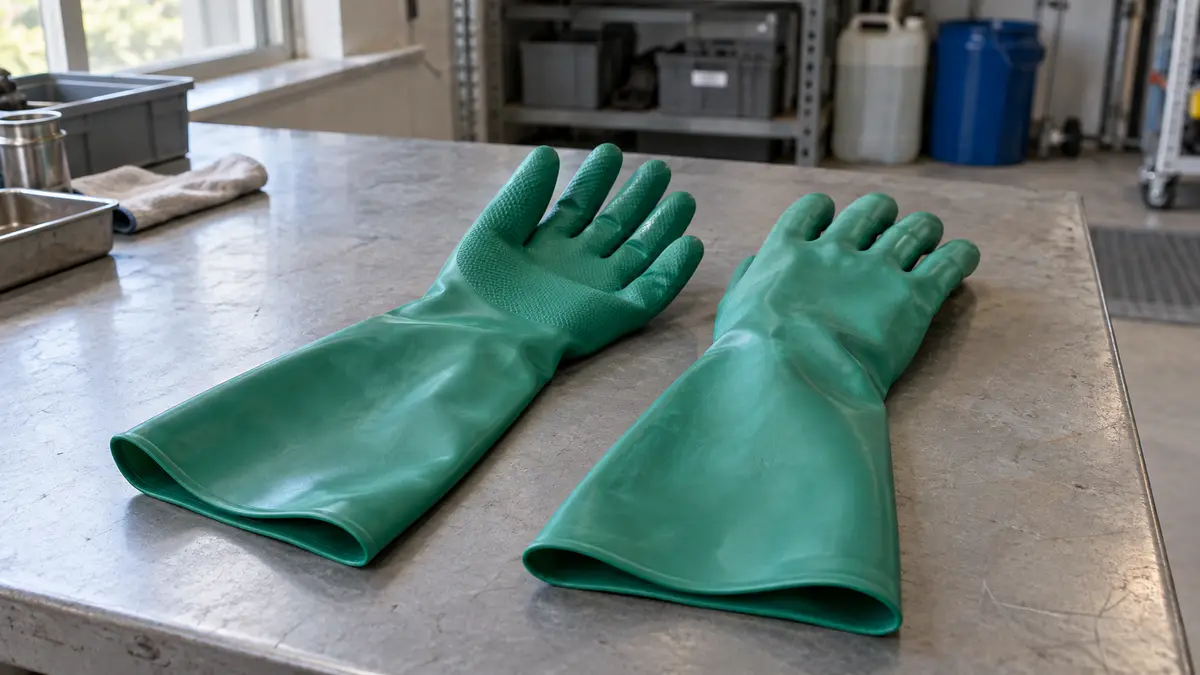
Duty on chemical-resistant rubber gauntlets
Read from the UK Trade Tariff on 29 September 2026, heading 4015 covers apparel and clothing accessories of vulcanised rubber other than hard rubber. Non-medical rubber gauntlets are relevant to the other-gloves line, 4015 19 00 00. The table shows purchasing variants sharing this commodity line, rather than separate tariff classifications.
The China base duty is 2%, with a conditional autonomous tariff suspension at 0.00 % for other rubber gloves under this code. The suspension excludes mixtures, preparations or products made up of different components containing these products. Ask your customs broker to confirm eligibility for the actual construction. The supplied record lists no anti-dumping or countervailing duty and no attached import controls for this line.
Confirm rubber composition, lining, construction and intended use through finding your commodity code. For the wider heading, see rubber household cleaning gloves. Sharing a commodity code does not establish chemical protection.
| Goods | Commodity code | Duty | Anti-dumping or countervailing duty on China |
|---|---|---|---|
| Unlined nitrile rubber chemical-resistant gauntlets | 4015 19 00 00 | 2% | None |
Specify the chemicals and gauntlet construction
Specify the substances and mixtures handled, their concentrations, working temperature, splash or immersion contact and expected exposure duration. Agree the rubber compound, lining, palm and fingertip thickness, cuff length, size dimensions and grip texture. Approve samples for fit, dexterity and compatibility with sleeves. No glove material protects against every substance indefinitely. For jackets, see our unlined rubber chemical-protective jacket sourcing guide.
Request model-specific chemical-resistance reports covering breakthrough time, permeation and degradation. Permeation can occur without visible holes. For mixtures, request testing of the actual mixture rather than treating results for its separate ingredients as sufficient. Use testing and certification support to check the proposed claims and testing scope.
For sale in Great Britain, check the manufacturer's protective-equipment conformity assessment, technical documentation, applicable CE or UKCA marking, declaration of conformity and identification marks. Confirm with the relevant market surveillance authority where importer identification and postal address should appear and what English instructions and safety information are required. Confirm how protective-equipment rules apply to chemical-protection gauntlets rather than assuming they are treated in the same way as private-use dishwashing gloves.
Worked duty example
Illustrative example, not a quote: Illustrative order: 2,000 pairs of unlined nitrile rubber chemical-resistant gauntlets; base-duty calculation before any suspension under 4015 19 00 00, invoiced at £5,000 free on board, with £2,000 of freight and insurance to the UK. The customs value is £7,000. Duty at 2% is £140. Import VAT at 20% is charged on the customs value plus duty, £7,140, so it is £1,428. Import taxes total £1,568; a VAT-registered importer can usually reclaim the VAT, so the lasting cost is the £140 of duty. The import duty and VAT guide explains each step.
Inspection checklist
Rubber integrity: check sampled palms, fingertips, finger webs and cuffs for pinholes, cuts, cracks, thin areas and embedded particles using an agreed inspection and leak-test method.
Dimensions and handling: compare cuff length, thickness, size, lining coverage and grip texture with the approved specification; check donning, removal, tackiness and loose flock.
Chemical evidence: match the supplied compound and exact glove model to the reports and claimed substances; commission agreed production-sample testing rather than relying on appearance.
Identity and documents: check paired sizes, batch references, conformity marking, importer details, declaration and English instructions against the approved artwork and documents.
Working out your own order? Send us the product on WhatsApp and we reply the same working day: WhatsApp us
What goes wrong
A supplier may substitute a different rubber compound or thinner glove while retaining the original chemical-resistance claim. Documents can identify another model, and tests on pure chemicals can be presented as evidence for an untested mixture. Match the delivered product to its reports before release.
Thin fingertips, torn cuffs, shedding lining and gloves stuck together can make production differ from the approved sample. A glove can also pass a leak check while lacking evidence for chemical permeation performance. Agree rejection criteria and testing before ordering, and isolate discrepant stock while the supplier and laboratory resolve the findings.
Cambridge China Bridge sources these products for UK businesses, checking the factory and the documents before shipment. See factory verification. For repeat volumes, see container programmes.
Frequently asked questions
What is the UK import duty on chemical-resistant rubber gauntlets from China?
The supplied record gives 4015 19 00 00 a 2% base duty and a conditional 0.00% suspension for other rubber gloves. Ask your broker to confirm eligibility for the exact construction.
Do chemical-resistant rubber gauntlets need CE or UKCA marking?
For sale in Great Britain, check the applicable CE or UKCA route, protective-equipment conformity assessment, declaration and technical documents. A printed mark alone does not establish chemical resistance.
Which rubber should I specify for chemical gauntlets?
Choose against the actual substances, concentrations and contact conditions. Request data for the exact glove model and testing for mixtures. No rubber protects against all chemicals indefinitely.
Can a leak test prove chemical resistance?
No. Permeation can occur through glove material without visible holes. Leak checks help find defects; request separate chemical-resistance evidence matching the supplied model and intended substances.