Sourcing refrigeration expansion valves from China
For refrigeration expansion valves from China, the candidate lines have a single ordinary duty rate of 2%. Confirm classification by function and assess the pressure-equipment rules before supplying the valve in Great Britain. Cambridge China Bridge sources refrigeration expansion valves.
Buying from China for a business? How our UK China sourcing agent service works · China sourcing agent for small orders and first imports
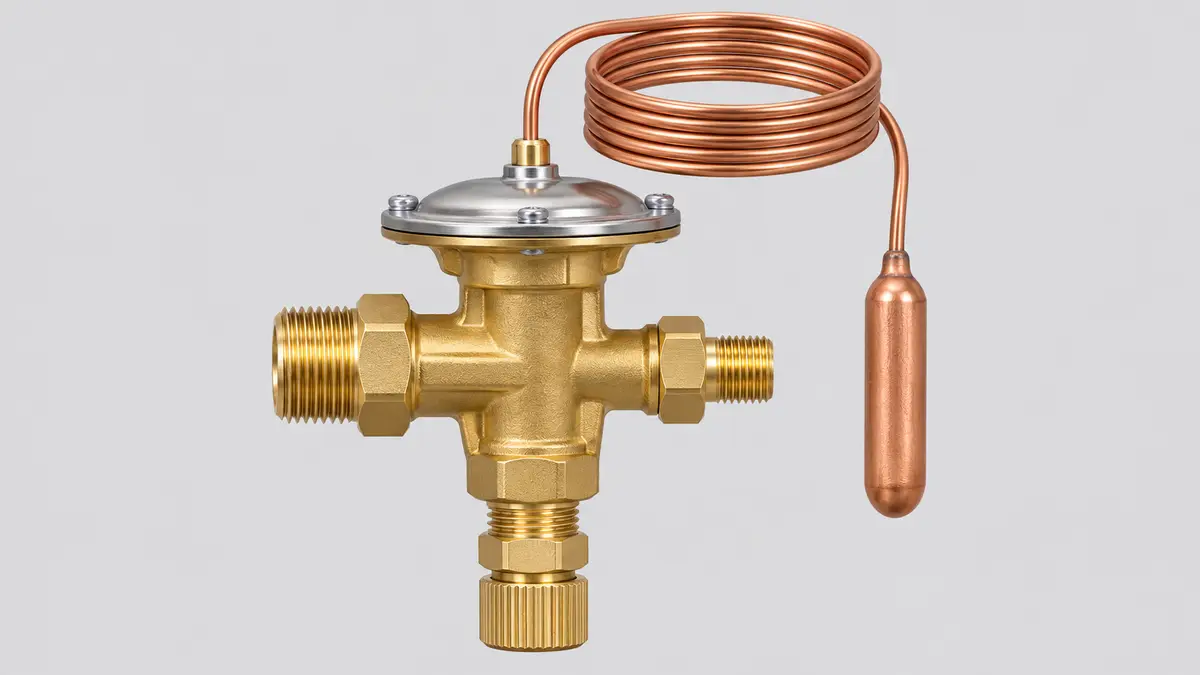
Classify the expansion valve by its function
Heading 8481 covers taps, cocks, valves and similar appliances for pipes and vessels. This guide concerns refrigeration expansion valves. The table gives candidate classifications, not interchangeable codes. Establish whether the valve is a temperature regulator, another process-control valve or another type. A pressure drop across an expansion valve alone does not establish a pressure-reducing-valve classification. See the solenoid valves guide for wider heading coverage.
Read from the UK Trade Tariff on 12 December 2026, the selected lines carry 2% ordinary duty for goods from China, with no anti-dumping or countervailing measures or attached import controls recorded. Conditional 0.00 % suspensions appear on 8481 80 59 90 and 8481 10 99 90. They cover a specified engine idle-air control valve and a specified electromagnetic pressure-reducing valve respectively, rather than refrigeration expansion valves generally.
Send your broker the operating principle, control arrangement, materials, drawings and application when confirming the commodity code. Check the full description and suspension conditions for the actual model before declaring it. Budget import VAT separately using the UK import duty and VAT guide.
| Goods | Commodity code | Duty | Anti-dumping or countervailing duty on China |
|---|---|---|---|
| Temperature regulators: candidate line for thermostatic expansion valves | 8481 80 51 00 | 2% | None |
| Other process-control valves: candidate for electronic expansion valves | 8481 80 59 90 | 2% | None |
| Other valves: candidate where the expansion valve fits this residual description | 8481 80 99 90 | 2% | None |
| Other pressure-reducing valves of other materials: check the operating function | 8481 10 99 90 | 2% | None |
Specify the refrigerant, capacity and control arrangement
State the refrigerant and lubricant, cooling capacity at the intended evaporating and condensing conditions, liquid temperature and available pressure differential. Specify the operating pressure and temperature envelope, body and seal materials, flow direction, connection dimensions and brazed or flared joints. Ask for selection data for those conditions rather than accepting a capacity figure without its test conditions.
For thermostatic valves, specify internal or external equalisation, sensing-bulb charge, capillary arrangement, superheat setting and replaceable orifice identification. For electronic valves, agree the actuator, drive sequence, supply characteristics, connector, controller compatibility and behaviour on power loss. State whether the controller is included. Keep the approved valve, actuator and controller combination together in the purchase specification.
For Great Britain, confirm with the relevant authority how pressure-equipment rules apply to the valve's maximum allowable pressure and intended use, including any exclusions. HSE defines pressure accessories as devices with an operational function and pressure-bearing housings. Obtain a documented assessment for the actual valve and its applicable compliance documents. Confirm with the relevant authority whether pressure-equipment importer duties require English instructions to accompany the goods. Assess electrical-equipment scope for electronic models.
Worked duty example
Illustrative example, not a quote: Illustrative small-business batch of thermostatic refrigeration expansion valves, subject to confirmation of classification under 8481 80 51 00, invoiced at £8,000 free on board, with £1,200 of freight and insurance to the UK. The customs value is £9,200. Duty at 2% is £184. Import VAT at 20% is charged on the customs value plus duty, £9,384, so it is £1,876.80. Import taxes total £2,060.80; a VAT-registered importer can usually reclaim the VAT, so the lasting cost is the £184 of duty. The import duty and VAT guide explains each step.
Inspection checklist
Identity: match the model, refrigerant designation, orifice, actuator and connection drawings to the approved specification. Reconcile batch identification and test records.
Cleanliness and condition: inspect capped ports, sealing faces and internal passages for moisture, particles and damage. Check the sensing bulb and capillary for crushing, kinks or loose attachment.
Performance: witness agreed external-leakage and functional tests. Check capacity and superheat response under representative conditions; for electronic valves, check travel, controller response and power-loss behaviour.
Arrival checks: gauge connections, inspect packaging damage and corrosion, and compare supplied instructions and accessories with the order. Record results against the agreed inspection plan.
Working out your own order? Send us the product on WhatsApp and we reply the same working day: WhatsApp us
What goes wrong
A valve selected from a nominal capacity alone can starve the evaporator or feed too much refrigerant under the actual operating conditions. The wrong orifice, bulb charge or equalisation arrangement can produce unstable superheat. Compare selection data with the intended system before approving the sample.
Moisture or machining debris can obstruct the metering passage, while a damaged capillary can prevent correct thermostatic operation. An electronic valve can fit the pipework yet fail to work with the intended controller. Agree cleanliness, protective caps and functional acceptance criteria before production, and require approval before component substitutions.
Cambridge China Bridge sources these products for UK businesses, checking the factory and the documents before shipment. See factory verification. For machinery and equipment, see machinery imports.
Frequently asked questions
What is the UK import duty on refrigeration expansion valves from China?
The selected candidate lines carry 2% ordinary duty, with no recorded anti-dumping or countervailing duty. Listed suspensions are narrowly specified and do not cover refrigeration expansion valves generally.
Which commodity code should I use for an expansion valve?
Confirm its operating function and construction. The table contains candidate lines, not interchangeable choices. Give your broker the drawings, control principle and intended application.
Do refrigeration expansion valves need English instructions?
Confirm with the relevant authority whether pressure-equipment importer duties in Great Britain require English instructions to accompany the goods. Obtain a documented assessment of the actual model before supply.
What should I test before accepting expansion valves?
Check refrigerant compatibility, connections, cleanliness, external leakage and response under the intended operating conditions. For electronic models, verify the valve with the specified controller.