Sourcing Raw Camel Hides from China
Raw camel hides under 4103 90 00 00 attract 0% UK duty from China. Confirm animal-health admissibility before ordering: fresh, salted, dried and pickled hides have different import conditions. Agree preservation records and usable hide quality. Cambridge China Bridge sources raw camel hides.
Buying from China for a business? How our UK China sourcing agent service works · China sourcing agent for small orders and first imports
Duty and import controls for raw camel hides
Read from the UK Trade Tariff on 29 September 2026, heading 4103 covers other raw hides and skins, including preserved hides that have not been tanned, parchment-dressed or further prepared. The table shows preservation variants within the same relevant commodity line, rather than separate tariff codes. See the raw deerskins guide for the wider heading.
The supplied tariff record gives 4103 90 00 00 a duty of 0% for China, with no anti-dumping or countervailing duty or suspension recorded. It attaches veterinary control, a restriction on entry into free circulation, CITES import and export controls, cat and dog fur import and export controls, and seal-product import control. Ask your customs broker to confirm which measures and documents apply to the identified camel species and preservation method.
Fresh or chilled hides require an origin authorised for fresh meat of the same species. Do not assume a Chinese supplier's offer establishes eligibility. For preserved hides, ask the Animal and Plant Health Agency to confirm the applicable route before committing. Use finding your commodity code to check the description against the actual processing state.
| Goods | Commodity code | Duty | Anti-dumping or countervailing duty on China |
|---|---|---|---|
| Wet-salted raw camel hides | 4103 90 00 00 | 0% | None |
Specify preservation and usable camel hide
Specify the scientific species name, animal origin, hide supplier and intended tannery use. Agree whole hides or splits, hair-on or dehaired condition, trimming, thickness range, usable area and how area or weight will be measured. Separate salt, water and packaging weight from the agreed purchasing basis.
Describe the actual preservation process rather than accepting 'raw' or 'treated' alone. Request treatment records and agree the condition expected on arrival. Veterinary guidance distinguishes untreated hides, which have undergone only cutting, chilling or freezing, from preserved hides. Ask your broker to identify the applicable certificate or commercial document and verify establishment approval where required.
For consignments subject to veterinary checks, arrange advance notification through the official import notification system and entry through an appropriate border control post. Do not remove the goods before the common health entry document has been validated. Check CITES status using the exact species identity; listed specimens require the applicable permit.
Worked duty example
Illustrative example, not a quote: Illustrative trial consignment of wet-salted camel hides, subject to import eligibility under 4103 90 00 00, invoiced at £2,019 free on board, with £1,715 of freight and insurance to the UK. The customs value is £3,734. Duty at 0% is £0. Import VAT at 20% is charged on the customs value plus duty, £3,734, so it is £746.80. With no duty, the only import tax is the VAT, which a VAT-registered importer can usually reclaim. The import duty and VAT guide explains each step.
Inspection checklist
Identity: match species, preservation description, supplier and batch references across the hides, packing list and supporting documents.
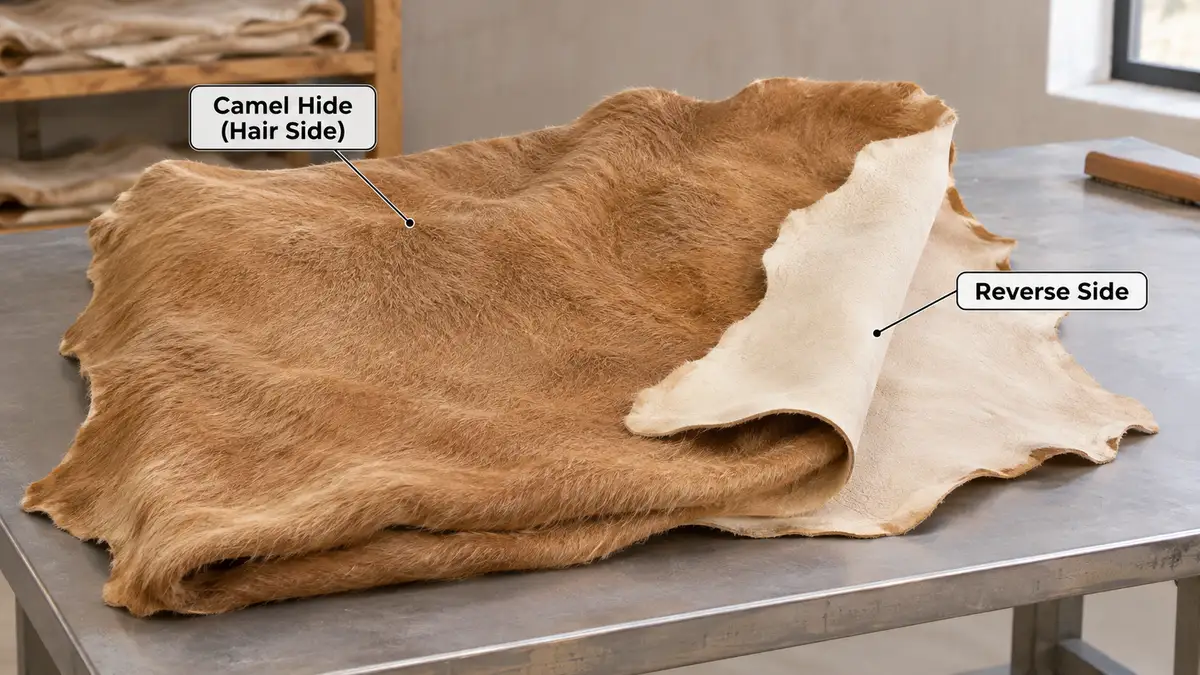
Usable area: unfold representative hides and compare trimming, holes, scars, brands and flaying cuts with the agreed grading photographs.
Preservation: check for uneven salt coverage, damp pockets, mould, insect damage, hair slip and signs of decay against the agreed acceptance criteria.
Packing and measurement: check leaking bundles, wet packaging, hide counts and the agreed separation of hide weight from salt, water and packaging.
Working out your own order? Send us the product on WhatsApp and we reply the same working day: WhatsApp us
What goes wrong
A supplier may describe salted hides as untreated, or use 'raw' for hides that have already been tanned. Customs descriptions and animal-health treatment categories serve different purposes. Get the processing history checked before shipment; a duty-free tariff line does not establish that a particular consignment is admissible.
Poor flaying and excessive trimming reduce cutting yield, while uneven preservation can leave damage hidden inside folded bundles. Agree defect photographs and a receiving inspection procedure before purchase. Keep affected bundles identifiable while you obtain the supplier's response.
Cambridge China Bridge sources these products for UK businesses, checking the factory and the documents before shipment. See factory verification. For repeat volumes, see container programmes.
Frequently asked questions
What is the UK import duty on raw camel hides from China?
The supplied tariff record gives 4103 90 00 00 a duty of 0% for China. No anti-dumping or countervailing duty or suspension is recorded. Import controls still need checking.
Can I import fresh camel hides from China?
Do not assume eligibility. Fresh or chilled hides must originate where fresh meat of the same species is authorised. Ask the Animal and Plant Health Agency to confirm the China-specific position before ordering.
Are salted camel hides still classified as raw hides?
Heading 4103 includes salted hides that have not been tanned or further prepared. Their animal-health treatment status is a separate check; the word 'raw' does not settle the import conditions.
What should I check when camel hides arrive?
Match batch identity and documents, then check usable area, trimming, flaying cuts, scars, preservation, mould, hair slip and leaking bundles. Compare actual hide weight with the agreed treatment of salt and water.