Sourcing raw goatskins from China
Raw goatskins from China carry 0% UK customs duty under 4103 90 00 00. Veterinary controls still apply: establish the import route from the skin's treatment and intended use before ordering. Do not assume fresh and salted skins have the same entry conditions. Cambridge China Bridge sources raw goatskins.
Buying from China for a business? How our UK China sourcing agent service works · China sourcing agent for small orders and first imports
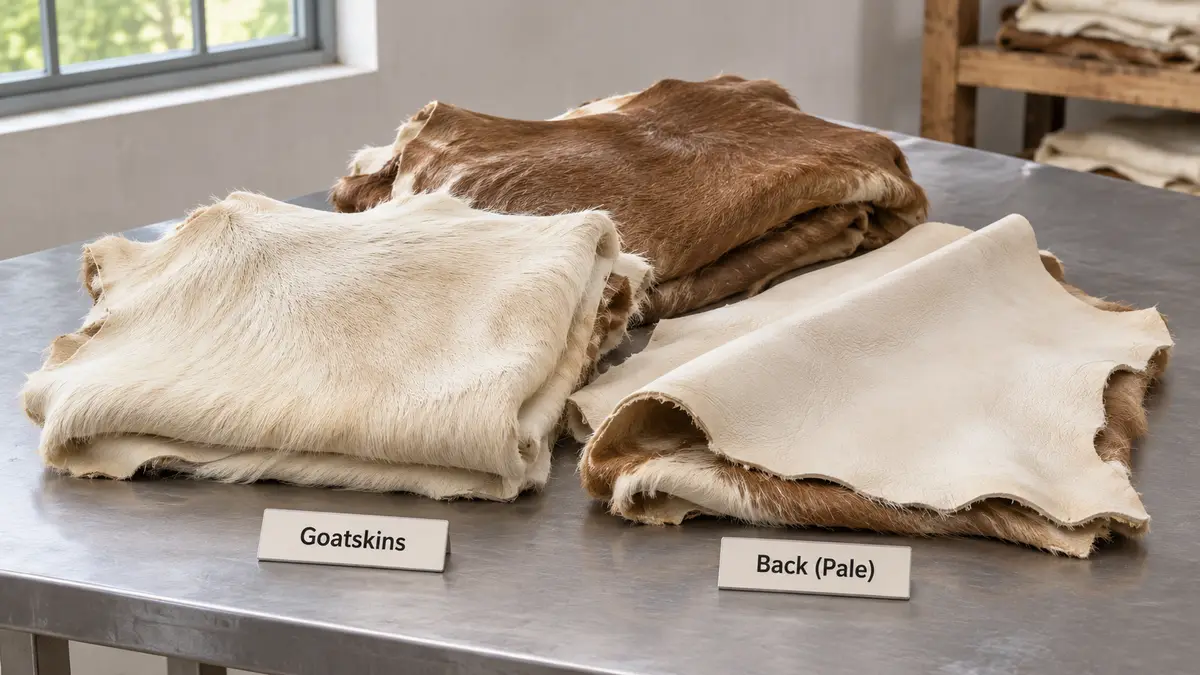
Raw goatskin duty and import controls
Heading 4103 covers other raw hides and skins, including preserved skins, but excludes tanned, parchment-dressed or further-prepared material. The table shows different goatskin forms under the same supplied commodity line. For the wider product family, see other raw skins.
Read from the UK Trade Tariff on 29 September 2026, the China duty is 0%, with no anti-dumping duty, countervailing duty or suspension recorded. The line attaches veterinary control, a restriction on entry into free circulation, CITES import and export controls, cat and dog fur import and export controls, and seal-product import control. Ask your customs broker to confirm their application to the declared goat species and treatment, including the tariff's common health entry document requirement.
APHA states that treated skins outside its specified treatment exemptions require an appropriate health certificate. For consignments subject to veterinary checks, entry is through an approved border control post. CITES specimens need an import permit. Confirm the exact species, preservation process and intended use before finding your commodity code; a duty-free classification does not establish permission to import.
| Goods | Commodity code | Duty | Anti-dumping or countervailing duty on China |
|---|---|---|---|
| Fresh or chilled raw goatskins | 4103 90 00 00 | 0% | None |
Specify preservation and usable skin area
Specify goat species, country of animal origin, hair-on or dehaired condition, whole or split skins, preservation method and intended tanning process. Agree how usable area will be assessed and which flay cuts, holes, scars and damaged edges are acceptable. Ask for photographs of both the grain and flesh sides of representative skins.
Request batch records showing treatment, storage and separation history. APHA's treated-ruminant separation route requires skins to be kept separate after treatment for 21 days. Have the broker assess the complete route before shipment. Confirm fresh or chilled goatskin eligibility separately rather than treating preservation methods as interchangeable.
Worked duty example
Illustrative example, not a quote: Illustrative trial consignment of wet-salted goatskins for a small tannery under 4103 90 00 00, invoiced at £4,103 free on board, with £1,523 of freight and insurance to the UK. The customs value is £5,626. Duty at 0% is £0. Import VAT at 20% is charged on the customs value plus duty, £5,626, so it is £1,125.20. With no duty, the only import tax is the VAT, which a VAT-registered importer can usually reclaim. The import duty and VAT guide explains each step.
Inspection checklist
Identity: match species, preservation description and batch references across the skins, packing list and supporting documents.
Condition: inspect for hair slip, mould, putrefaction, flesh residue and uneven preservation, including inside folded skins.
Usable area: unfold representative skins and compare holes, flay cuts, scars and trimming with the agreed acceptance sample.
Packing: check bundle counts, leakage, damaged wrapping and readable batch identification; record arrival condition before unpacking the remainder.
Working out your own order? Send us the product on WhatsApp and we reply the same working day: WhatsApp us
What goes wrong
A supplier's description of 'raw goatskin' can conceal different preservation processes or material that has already been tanned. Obtain the actual process record before choosing the commodity code or asking the broker to assess entry requirements. For APHA's controlled fresh or chilled route, production must take place in an establishment approved to export to Great Britain.
A sound-looking outer skin can hide deterioration inside a compressed bundle. Salt and moisture can also distort comparisons based on gross weight. Agree acceptance by condition and usable area, retain batch photographs and separate suspect bundles while the supplier and tannery assess them.
Cambridge China Bridge sources these products for UK businesses, checking the factory and the documents before shipment. See factory verification. For repeat volumes, see container programmes.
Frequently asked questions
What is the UK import duty on raw goatskins from China?
The supplied tariff line 4103 90 00 00 has 0% duty for China. No anti-dumping duty, countervailing duty or suspension is recorded. Veterinary and species-related controls still need checking.
Can I import fresh goatskins from China?
Do not place an order until your broker has confirmed eligibility for the goat species, origin and untreated condition with APHA. A 0% tariff rate does not establish permission to import.
Do salted goatskins need a health certificate?
APHA requires an appropriate health certificate for treated skins outside its specified treatment exemptions. Ask your broker to confirm the route for the supplier's actual preservation process.
What should I check when raw goatskins arrive?
Check batch identity, hair slip, mould, deterioration inside folds, salt distribution and usable area. Photograph flay cuts, holes and damaged edges against the agreed acceptance sample.