Sourcing railway lever frames from China
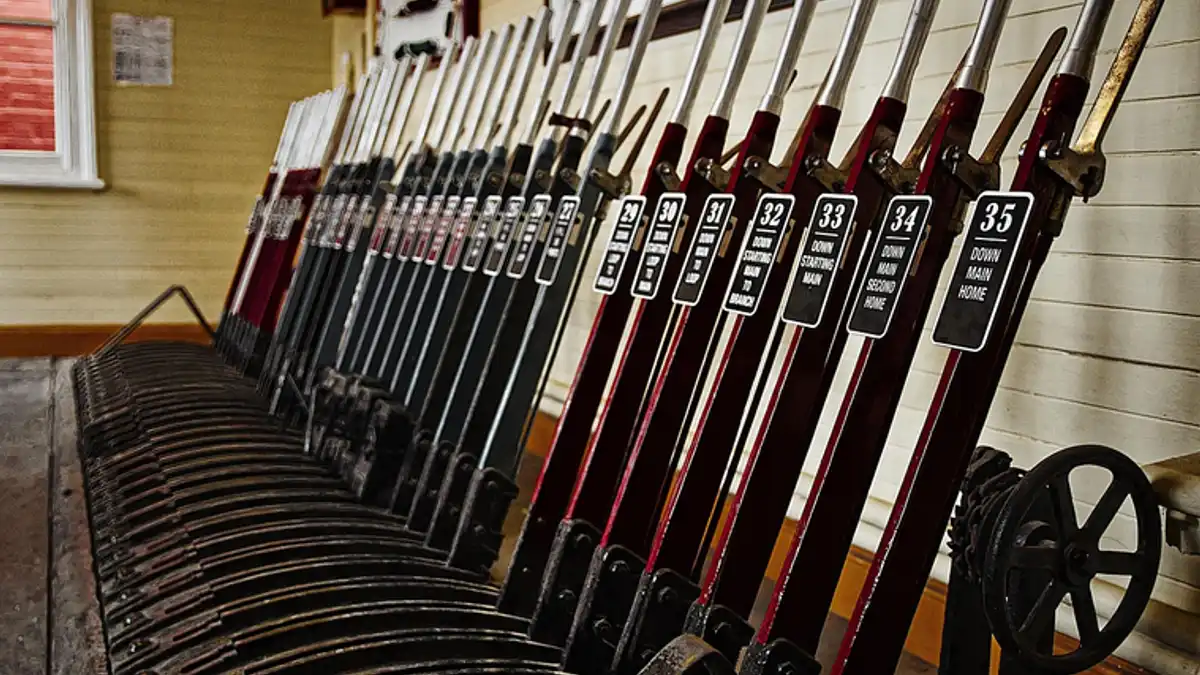
Railway interlocking lever frames and their dedicated mechanical parts from China carry 0% UK duty under heading 8608, with no listed trade remedies. Suppliers must supply safe work equipment; agree the railway's acceptance route and locking tests before ordering. Cambridge China Bridge sources railway interlocking lever frames.
Buying from China for a business? How our UK China sourcing agent service works · China sourcing agent for small orders and first imports
UK duty on railway interlocking lever frames
Read from the UK Trade Tariff on 4 October 2026, heading 8608 covers track fixtures and mechanical, including electromechanical, signalling and safety equipment and their parts. Railway interlocking lever frames fall within this mechanical signalling family. All table entries use the single supplied commodity line, 8608 00 00 00, carrying 0% duty for goods from China. The supplied record lists no anti-dumping or countervailing duty and no suspension.
The tariff attaches a DCMS export licence measure. Official guidance states that importing objects of cultural interest into Great Britain has no licensing requirement under that cultural-object regime. For an historic frame, ask your customs broker to confirm how the attached measure affects the declaration and any onward export.
Confirm the commodity code against the assembly drawing, function and supplied parts before shipment. Describe whether the order contains a complete mechanical frame or dedicated replacement components. For the wider heading, see mechanical railway point machines.
| Goods | Commodity code | Duty | Anti-dumping or countervailing duty on China |
|---|---|---|---|
| Mechanical railway interlocking lever frames | 8608 00 00 00 | 0% | None |
Specify the locking table and existing frame interfaces
Supply the signalling layout, lever schedule, locking table and assembly drawings. Define lever positions, normal and reverse movement, permitted sequences and movements that must remain blocked. Specify the frame pattern, lever spacing, mounting centres, rod or wire connections, operating travel, materials, finishes and access for adjustment and lubrication.
For replacement parts, provide measured interfaces and an agreed reference component. Specify pivot fits, latch engagement, locking-bar profiles and permissible wear against the buyer's drawings. Ask the factory to demonstrate the assembled locking sequence, including attempts to move conflicting levers, and record the results against the agreed locking table.
Suppliers must supply safe work equipment. Confirm with Network Rail whether railway signalling equipment for the national network requires product acceptance. Where the project falls within the structural-subsystem authorisation regime, authorisation is required before first use. Agree the applicable route with the railway before manufacture, and use factory verification to check the supplier's machining, assembly and test capability.
Worked duty example
Illustrative example, not a quote: 40 replacement lever assemblies for railway interlocking frames, illustrative only under 8608 00 00 00, invoiced at £12,000 free on board, with £1,600 of freight and insurance to the UK. The customs value is £13,600. Duty at 0% is £0. Import VAT at 20% is charged on the customs value plus duty, £13,600, so it is £2,720. With no duty, the only import tax is the VAT, which a VAT-registered importer can usually reclaim. The import duty and VAT guide explains each step.
Inspection checklist
Locking: witness permitted and prohibited lever movements against the agreed locking table, including intermediate positions and release sequences.
Fit and movement: measure mounting centres, pivot fits, connection interfaces and travel; check latch engagement, backlash and operating effort against the specification.
Materials and identification: match material records, component markings, lever labels and drawing revisions to the order; inspect machined edges and locking surfaces.
Arrival condition: check the frame for distortion, displaced locking bars, corrosion and damaged handles; repeat the agreed movement checks after unpacking. Record findings using the quality inspection guide.
Working out your own order? Send us the product on WhatsApp and we reply the same working day: WhatsApp us
What goes wrong
A frame can move freely yet have the wrong locking relationship. Check for reversed normal and reverse positions, incorrect locking-bar profiles, incomplete latch engagement and excessive clearance. A replacement lever can also fit the frame but have an incompatible connection or operating travel.
Transport distortion, paint on mating surfaces and corrosion can change movement after factory testing. Specify restraint and corrosion protection for shipment, retain the witnessed test record, and resolve discrepancies against the drawings before installation. Confirm the railway's acceptance evidence before committing to production.
Cambridge China Bridge sources these products for UK businesses, checking the factory and the documents before shipment. See factory verification. For machinery and equipment, see machinery imports.
Frequently asked questions
What is the UK import duty on railway lever frames from China?
The supplied tariff record gives 0% duty under 8608 00 00 00 for goods from China, with no listed anti-dumping or countervailing duty.
Do railway interlocking lever frames need railway acceptance?
Confirm with Network Rail whether equipment for the national network requires product acceptance. Agree the railway's approval route before ordering and identify any project-level authorisation needed.
Can a Chinese factory copy an existing lever frame?
Provide drawings, measured interfaces and the locking table. Require witnessed tests of permitted and prohibited movements; matching the frame's appearance does not establish the locking function.
Does zero duty mean there is no import VAT?
No. The standard import VAT rate is 20%. See UK import duty and VAT for the calculation method.