Sourcing railway wagon retarders from China
Railway wagon retarders from China carry 0% UK duty under heading 8608, with no listed trade remedy. Where supplied as machinery for Great Britain, they must be safe before being placed on the market or put into service. Agree track fit and braking tests before ordering. Cambridge China Bridge sources railway wagon retarders.
Buying from China for a business? How our UK China sourcing agent service works · China sourcing agent for small orders and first imports
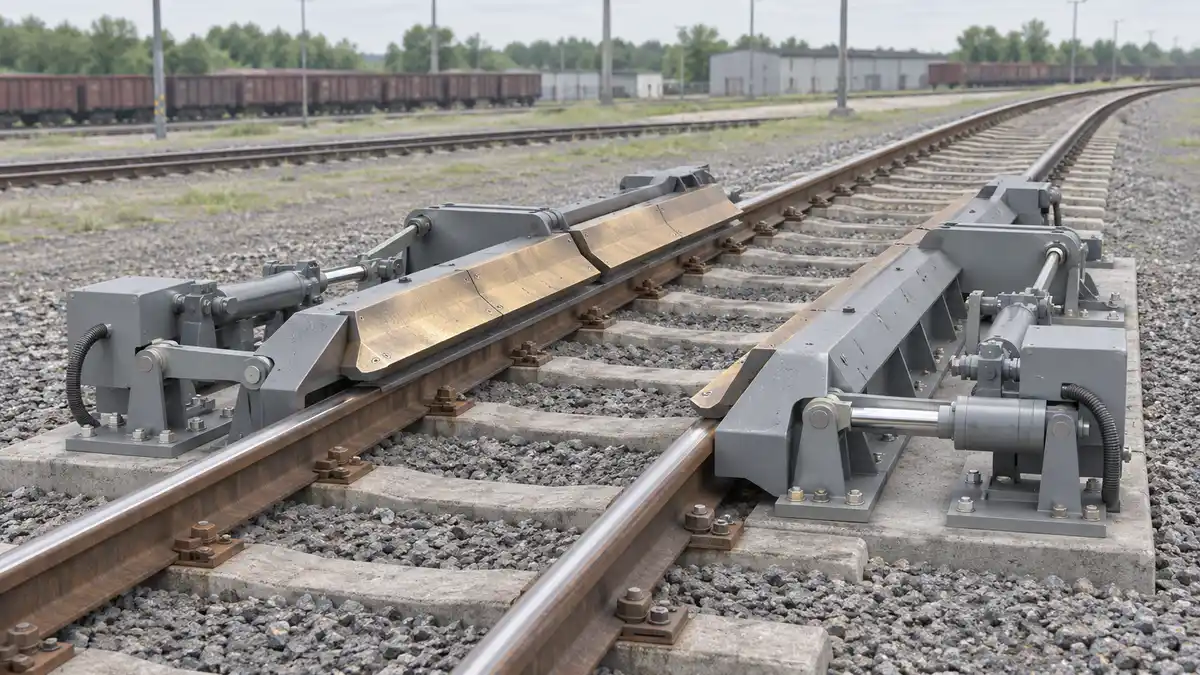
Duty on railway wagon retarders
Read from the UK Trade Tariff on 4 October 2026, heading 8608 covers railway track fixtures and fittings, mechanical and electromechanical safety or traffic control equipment, and their parts. Its supplied commodity line, 8608 00 00 00, carries 0% duty for goods from China. No anti-dumping or countervailing duty or suspension is listed. The table describes buying examples within that shared line, rather than separate tariff subdivisions.
The tariff record attaches a DCMS Export Licence control. Official guidance states that importing objects of cultural interest into Great Britain has no licensing requirements. Ask your customs broker to confirm how the tariff flag applies to your shipment, particularly for historic equipment or onward export.
Send the broker drawings, operating descriptions and a parts list to confirm the commodity code, especially when importing loose actuators or control cabinets. For another track fixture within the wider heading, see railway buffer stops.
| Goods | Commodity code | Duty | Anti-dumping or countervailing duty on China |
|---|---|---|---|
| Track-mounted railway wagon retarders | 8608 00 00 00 | 0% | None |
Specify track fit and braking behaviour
State whether you need a complete track-mounted retarder or replacement parts. Specify rail profile, track gauge, wheel contact geometry, mounting drawings, wagon loading conditions, entry speed and required exit speed. For actuated equipment, define the hydraulic or pneumatic supply, control interfaces, release behaviour and response to loss of power or pressure.
Where the equipment falls within machinery supply rules for Great Britain, it must be safe before being placed on the market or put into service. Ask the supplier for conformity documents, installation instructions and test records for the exact configuration. Agree with the receiving railway engineer how braking performance, clearances and maintenance access will be demonstrated.
Worked duty example
Illustrative example, not a quote: Illustrative replacement batch of track-mounted wagon retarders under 8608 00 00 00, invoiced at £30,000 free on board, with £1,600 of freight and insurance to the UK. The customs value is £31,600. Duty at 0% is £0. Import VAT at 20% is charged on the customs value plus duty, £31,600, so it is £6,320. With no duty, the only import tax is the VAT, which a VAT-registered importer can usually reclaim. The import duty and VAT guide explains each step.
Inspection checklist
Track fit: measure mounting centres, rail clearances and wheel contact positions against the agreed drawings; trial-fit replacement parts before accepting the batch.
Braking and release: witness the agreed performance test across the specified wagon loading and speed conditions; check repeatability, full release and behaviour after loss of power or pressure.
Materials and condition: match material and heat-treatment records to marked components; inspect contact surfaces, welds, seals and corrosion protection before shipment and on arrival.
Installation: agree an inspection with the receiving engineer. HSE says equipment requiring inspection should not be used unless that inspection has taken place. Keep arrival checks separate from installed performance checks; see quality inspection explained.
Working out your own order? Send us the product on WhatsApp and we reply the same working day: WhatsApp us
What goes wrong
A retarder can match the catalogue description but miss the receiving track's rail profile or wheel clearance. Uneven contact, sticking pivots, actuator leakage or incomplete release can undermine the agreed braking behaviour. Replacement wear parts can also fit their bolt holes while having the wrong contact geometry or material.
Resolve drawing differences before production and define the test conditions before accepting performance claims. Inspect exposed rods, contact surfaces and mounting faces for transport damage on arrival. Confirm the installed assembly's operation with the receiving engineer before accepting it for service.
Cambridge China Bridge sources these products for UK businesses, checking the factory and the documents before shipment. See factory verification. For machinery and equipment, see machinery imports.
Frequently asked questions
What is the UK import duty on railway wagon retarders from China?
The supplied tariff record lists 0% duty under 8608 00 00 00, with no anti-dumping or countervailing duty and no suspension.
Are wagon retarders classified as rolling stock brakes?
This guide covers track-mounted retarders under heading 8608. Brakes fitted to rolling stock belong to a different product family. Give your broker drawings and an operating description to confirm classification.
What should I put in a wagon retarder specification?
Include rail profile, track gauge, wheel contact geometry, mounting details, wagon loading conditions, entry and exit speeds, actuation supply and release behaviour.
Can I accept a retarder after checking it in its crate?
Crate checks can establish condition and identity, but cannot demonstrate installed braking performance. Agree track-fit and operating tests with the receiving railway engineer.