Sourcing railway point rodding from China
Mechanical railway point rodding from China carries 0% UK duty under heading 8608, with no listed anti-dumping or countervailing duty. For national-network signalling, confirm with Network Rail whether product acceptance is needed, and agree the acceptance route and drawing before ordering. Cambridge China Bridge sources mechanical railway point rodding.
Buying from China for a business? How our UK China sourcing agent service works · China sourcing agent for small orders and first imports
Duty and the shared commodity code
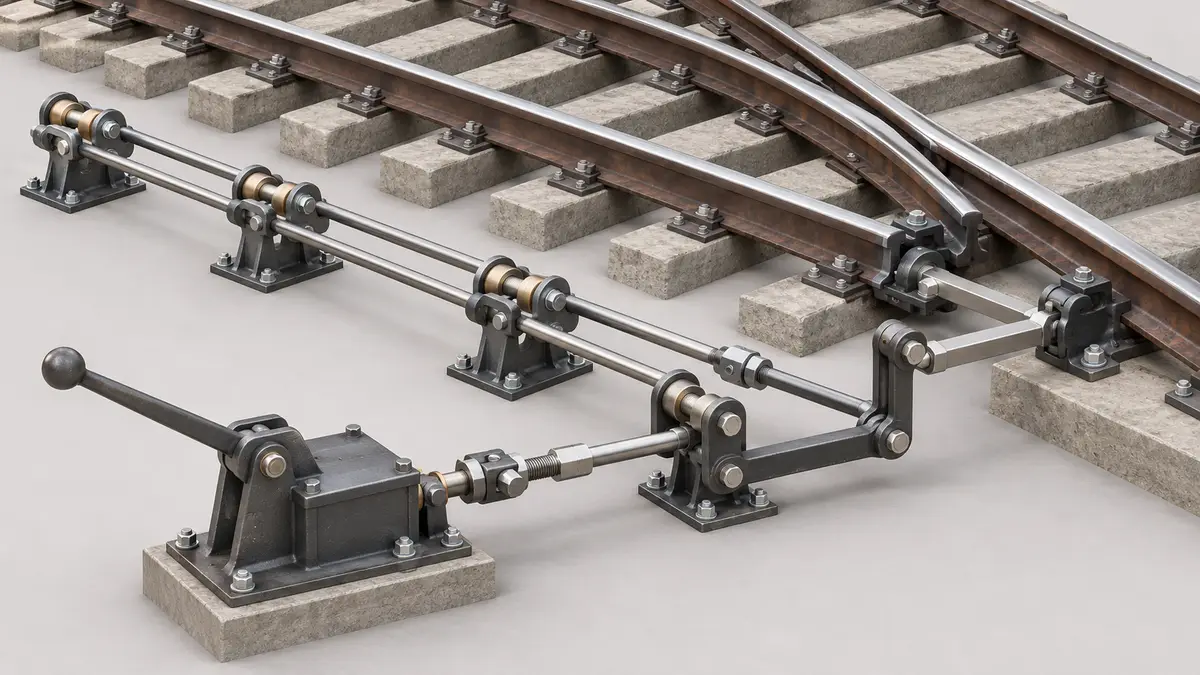
Read from the UK Trade Tariff on 4 October 2026, heading 8608 covers railway track fixtures and fittings, mechanical signalling and safety equipment, and their parts. Mechanical point rodding transmits movement between a lever mechanism and the points. The table presents dedicated rodding components under the same tariff line, rather than separate commodity codes.
Goods from China under 8608 00 00 00 carry 0% duty. The supplied tariff record lists no anti-dumping or countervailing duty and no suspension. It attaches a cultural-object export-licence control. Official guidance says cultural objects have no import licensing requirement into Great Britain; ask your customs broker to confirm how the listed control applies to your shipment.
Confirm the commodity code using drawings and the component's dedicated railway function, especially for loose rods or general-purpose hardware. See the wider mechanical point machines guide and the UK duty and VAT guide.
| Goods | Commodity code | Duty | Anti-dumping or countervailing duty on China |
|---|---|---|---|
| Mechanical railway point rodding assemblies | 8608 00 00 00 | 0% | None |
Specify the rodding run and its interfaces
Supply the railway's drawing revision and a component schedule. Specify rod section, material, straightness, joint design, pin and hole fits, crank geometry, roller arrangement, mounting interfaces and corrosion protection. Agree the required movement, loads, adjustment range and lubrication access with the railway's engineer. Ask for a trial assembly using representative mating parts.
For national-network signalling, confirm with Network Rail whether product acceptance is required. Agree the buyer's acceptance route before ordering. Where the installation forms part of a structural subsystem within the interoperability regime, that subsystem must meet essential requirements when placed into service. Ask the project engineer to identify the requirements relevant to this rodding supply.
Worked duty example
Illustrative example, not a quote: 120 point-rodding assemblies, illustrative order under 8608 00 00 00, invoiced at £30,000 free on board, with £1,600 of freight and insurance to the UK. The customs value is £31,600. Duty at 0% is £0. Import VAT at 20% is charged on the customs value plus duty, £31,600, so it is £6,320. With no duty, the only import tax is the VAT, which a VAT-registered importer can usually reclaim. The import duty and VAT guide explains each step.
Inspection checklist
Rods and joints: check section, straightness, joint alignment and adjustment against the drawing; inspect threads and trial-fit connectors without forcing them.
Cranks and pivots: check handedness, hole centres, pin fit, retention and free movement through the specified travel; look for fouling and excessive play.
Rollers and supports: check mounting dimensions, roller alignment and free rotation; inspect lubrication access and confirm that the rod remains supported throughout movement.
Material and arrival condition: match material records and part identification to the order; inspect coatings, bent rods, damaged threads and missing fittings after unpacking. Agree the scope through the quality inspection guide.
Working out your own order? Send us the product on WhatsApp and we reply the same working day: WhatsApp us
What goes wrong
A rod can match the section drawing yet fail to fit the existing joints. Wrong crank handedness reverses the intended layout, misaligned rollers cause binding, and loose pin fits introduce lost movement. Coating inside mating surfaces can prevent assembly, while poor packing leaves long rods bent.
Approve a representative assembly and record its movement before production. Identify each component against the drawing schedule and protect rod ends during shipment. Keep receipt inspection separate from the railway engineer's decision to accept the installation for service.
Cambridge China Bridge sources these products for UK businesses, checking the factory and the documents before shipment. See factory verification. For machinery and equipment, see machinery imports.
Frequently asked questions
What is the UK import duty on mechanical point rodding from China?
The supplied tariff record shows 0% duty under 8608 00 00 00, with no listed anti-dumping or countervailing duty.
Does mechanical railway point rodding need railway approval?
For national-network signalling, confirm with Network Rail whether product acceptance is needed. Agree the intended railway's acceptance route and drawing before ordering rodding.
Can I order replacement rodding from a sample?
Use the sample alongside an agreed drawing. Check rod section, joint fit, crank handedness, pin dimensions and required travel against the existing installation.
What should I check when point rodding arrives?
Check straightness, joint fit, crank geometry, roller movement, coating damage and part identification. Trial-assemble representative components against the agreed drawing.