Sourcing paperboard takeaway boxes from China
Paperboard takeaway food boxes from China carry 0% UK duty across the relevant heading 4819 lines. Packaging used for food must be suitable for food use. Specify the board, coating and intended food contact before approving samples. Cambridge China Bridge sources paperboard takeaway food boxes.
Buying from China for a business? How our UK China sourcing agent service works · China sourcing agent for small orders and first imports
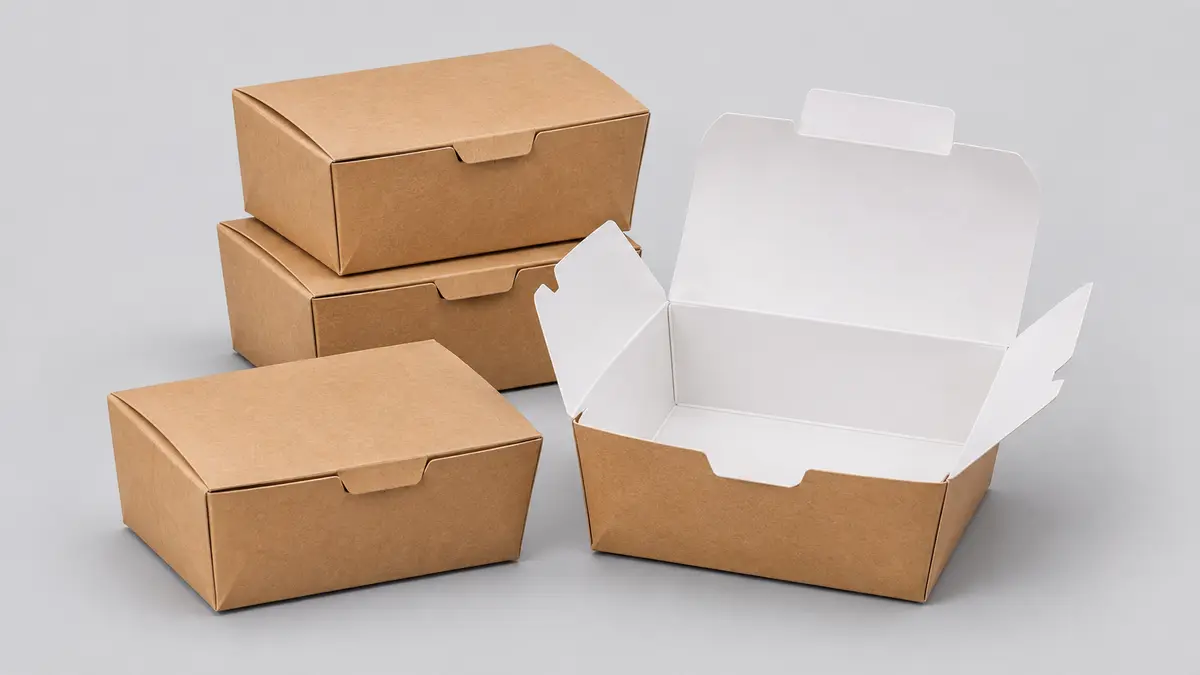
Duty depends on the box construction
Heading 4819 covers paper and paperboard packing containers alongside office and shop storage articles. For takeaway food boxes, distinguish non-corrugated folding cartons from corrugated boxes. The repeated folding-carton code in the table represents different box formats within the same tariff line.
Read from the UK Trade Tariff on 14 December 2026, all supplied heading 4819 lines carry 0% duty for goods from China. The supplied data lists no anti-dumping or countervailing duties, suspensions or attached import controls. Import VAT is 20%; see UK import duty and VAT.
Confirm the commodity code using the finished sample, board construction and coating details. Do not classify solely from a supplier's description of a food box. For the wider heading, see corrugated pizza boxes.
| Goods | Commodity code | Duty | Anti-dumping or countervailing duty on China |
|---|---|---|---|
| Non-corrugated folding takeaway meal boxes | 4819 20 00 00 | 0% | None |
| Corrugated paperboard takeaway food boxes | 4819 10 00 00 | 0% | None |
Specify the box around the meal
Specify internal dimensions, usable depth, board composition and grammage, coating material, folded corners, glue joints, lid closure and ventilation. State whether boxes arrive flat or erected. Give the factory the intended foods, filling temperature, contact duration and delivery conditions. Approve samples filled with the actual meal, including sauces and greasy components.
Packaging used to pack food must be suitable for food use. Ask for material specifications and supporting food-contact test reports matching the finished box, including its coating, inks and adhesive. Have a laboratory assess the evidence against the intended use through testing and certification. Request separate evidence for any proposed microwave or freezer use.
For virgin-fibre board, ask the relevant authority or customs broker whether UK timber due diligence applies before placing it on the GB market. Request pulp sources, species and countries of harvest. Check whether your business has packaging producer responsibility obligations, and obtain weights split by material; see packaging responsibility.
Worked duty example
Illustrative example, not a quote: 5,000 folding paperboard takeaway food boxes, illustrative order under 4819 20 00 00, invoiced at £4,000 free on board, with £1,200 of freight and insurance to the UK. The customs value is £5,200. Duty at 0% is £0. Import VAT at 20% is charged on the customs value plus duty, £5,200, so it is £1,040. With no duty, the only import tax is the VAT, which a VAT-registered importer can usually reclaim. The import duty and VAT guide explains each step.
Inspection checklist
Assembly and closure: erect production boxes and check folds, locking tabs, hinges and lid fit. Fill them with the intended meal and check that the closure stays engaged during handling.
Grease and moisture: hold filled samples under the agreed service conditions. Check corners and seams for leakage, grease staining, softened bases and coating separation.
Cleanliness and print: check for loose fibres, dust, foreign matter, mould and unusual odour. Compare artwork with the approved sample and examine food-contact surfaces for transferred ink.
Delivery condition: inspect outer cartons for dampness and crushing, then compare samples from different cartons with the approved box and material specification. Record findings for quality inspection.
Working out your own order? Send us the product on WhatsApp and we reply the same working day: WhatsApp us
What goes wrong
A box can close neatly when empty but spring open around a full meal. Sauce can escape through folded corners even when the board surface resists grease. Steam may soften the lid or make fried food soggy. Test filling, closing, carrying and opening together before approving the design.
A substituted coating or board grade can change leakage, odour and stiffness. A supplier's generic food-contact report may describe another material or use. Match the documents to the ordered construction, retain the approved sample and investigate changes before accepting production.
Cambridge China Bridge sources these products for UK businesses, checking the factory and the documents before shipment. See factory verification. For repeat volumes, see container programmes.
Frequently asked questions
What is the UK import duty on paperboard takeaway boxes from China?
The supplied heading 4819 data shows 0% duty for goods from China, with no listed trade remedies, suspensions or attached import controls. Import VAT is 20%. Confirm the code from the box construction.
Which commodity code covers folding takeaway boxes?
Non-corrugated folding paperboard boxes fall under 4819 20 00 00; corrugated boxes fall under 4819 10 00 00. Confirm classification using the finished sample and material details.
What food-contact evidence should I ask the factory for?
Request the board and coating specifications and supporting reports matching the finished box and intended foods, contact duration and temperature. Ask a laboratory to assess the evidence rather than relying on a generic certificate.
How do I check whether takeaway boxes will leak?
Fill production samples with the intended hot, greasy or sauced meal. Hold and carry them under the agreed service conditions, then inspect folded corners, seams and the base for leaks, staining and softening.