Sourcing nylon braided ropes from China
Nylon braided ropes from China carry 8% UK duty across the relevant lines, with no listed trade remedies. Businesses importing or selling consumer rope are responsible for its safety; for lifting and climbing uses, confirm applicable requirements with the relevant authority. Cambridge China Bridge sources nylon braided ropes.
Buying from China for a business? How our UK China sourcing agent service works · China sourcing agent for small orders and first imports
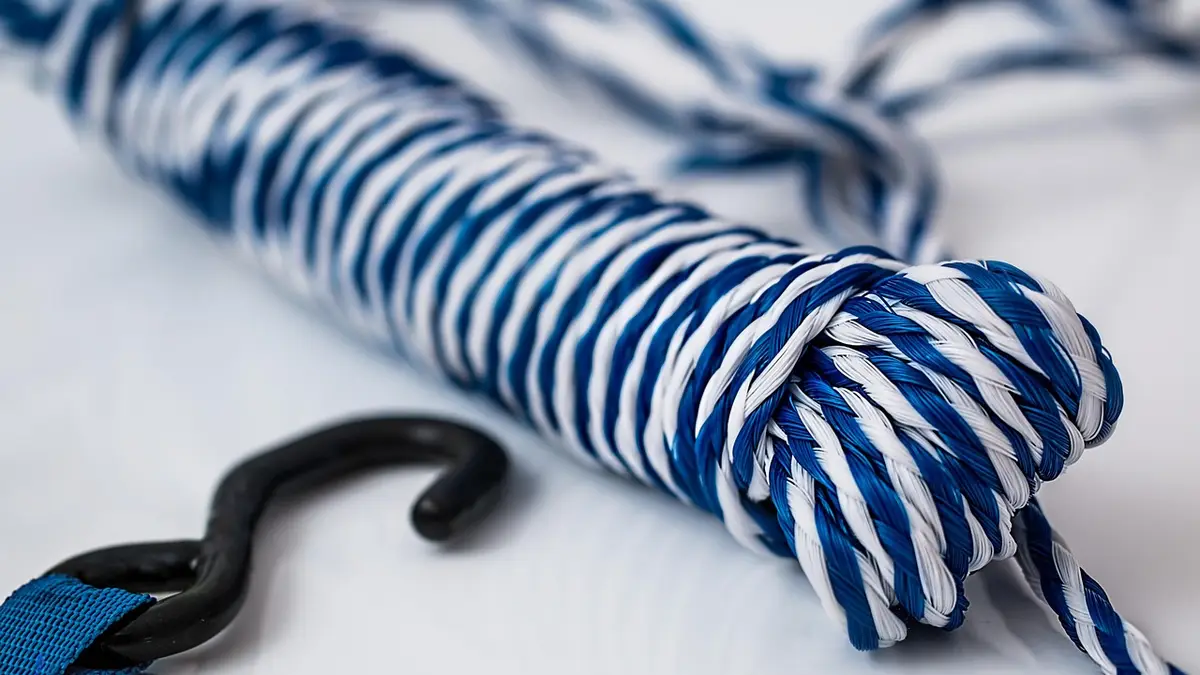
Nylon braid construction and weight decide the code
Heading 5607 covers twine, cordage, ropes and cables, including braided products and products coated or sheathed with rubber or plastics. For nylon braided ropes, the relevant lines distinguish twine from other rope and separate products weighing more than 5 g per metre from those weighing 5 g per metre or less.
Read from the UK Trade Tariff on 2 October 2026, the relevant nylon lines carry 8% duty for goods from China. The supplied tariff record lists no anti-dumping or countervailing duties, suspensions or attached import controls for these lines. The surgical-twine suspension elsewhere in this heading does not apply to nylon braided rope.
Confirm the commodity code using the fibre composition, braid construction, measured weight per metre and finished form. Do not assume a rope made into an article with fittings stays in this heading. For related products within the wider heading, see our polyester mooring rope guide.
| Goods | Commodity code | Duty | Anti-dumping or countervailing duty on China |
|---|---|---|---|
| Braided nylon twine weighing more than 5 g per metre | 5607 50 11 10 | 8% | None |
| Braided nylon rope weighing more than 5 g per metre | 5607 50 11 90 | 8% | None |
| Nylon twine weighing 5 g per metre or less, including braided twine | 5607 50 30 10 | 8% | None |
| Nylon rope weighing 5 g per metre or less, including braided rope | 5607 50 30 90 | 8% | None |
Specify the nylon core, cover and breaking force
State whether both the core and cover are nylon, and describe the braid construction rather than relying on a photograph. Agree diameter under a defined reference tension, weight per metre, reel or coil length, minimum breaking force, elongation under the intended load, colour and end finish. Specify whether tests use dry or wet-conditioned samples so reports can be compared.
ISO 1140 covers polyamide rope requirements; ISO 2307 covers measurements including linear density and breaking force. Put the agreed tests and acceptance criteria in the order. Businesses importing or selling consumer rope are responsible for its safety. For rope sold as a lifting accessory, confirm declaration and working load limit marking requirements with the relevant authority; for climbing and work-at-height ropes, confirm applicable personal protective equipment requirements. Agree the intended use before requesting testing and certification.
Worked duty example
Illustrative example, not a quote: Illustrative wholesale order: 12 tonnes of braided nylon rope under 5607 50 11 90, invoiced at £24,000 free on board, with £3,000 of freight and insurance to the UK. The customs value is £27,000. Duty at 8% is £2,160. Import VAT at 20% is charged on the customs value plus duty, £29,160, so it is £5,832. Import taxes total £7,992; a VAT-registered importer can usually reclaim the VAT, so the lasting cost is the £2,160 of duty. The import duty and VAT guide explains each step.
Inspection checklist
Material: check core and cover fibre identification against the approved sample and specification, rather than accepting appearance as proof of nylon.
Dimensions: measure coil length, diameter under the agreed reference tension and weight per metre; compare reel labels with the measured results.
Performance: review batch breaking-force and elongation results under the agreed conditioning; pull-test supplied splices and terminations.
Finish: check braid consistency, exposed core, snagged yarns, loose ends and colour transfer when wet; match batch labels and intended-use documents to the delivered rope.
Working out your own order? Send us the product on WhatsApp and we reply the same working day: WhatsApp us
What goes wrong
A rope can match the sample colour and diameter yet contain a different core or less material per metre. Short coils, uneven braid, low breaking force, slipping splices and wet colour transfer are useful rejection checks. Compare the delivered batch with the written specification, not just the supplier's catalogue description.
A breaking-force report alone does not establish suitability for lifting or climbing. Missing declarations, working load markings or use-specific certificates can leave the intended application unsupported. Keep suspect batches separate while you resolve material, test or documentation discrepancies.
Cambridge China Bridge sources these products for UK businesses, checking the factory and the documents before shipment. See factory verification. For repeat volumes, see container programmes.
Frequently asked questions
What is the UK import duty on nylon braided ropes from China?
The relevant nylon rope and twine lines carry 8% duty.
Which commodity code covers braided nylon rope?
Braided nylon rope weighing more than 5 g per metre, other than twine, is listed under 5607 50 11 90. Lighter rope is listed under 5607 50 30 90. Confirm the material and finished form before declaring.
What should I ask the nylon rope factory to test?
Agree fibre identification, length, diameter, weight per metre, breaking force and elongation. Define sample conditioning and test supplied splices or terminations as well as the rope itself.
Can ordinary nylon braided rope be sold for lifting or climbing?
Do not rely on an ordinary rope test report. For lifting accessories, confirm declaration and working load limit marking requirements with the relevant authority; for climbing and work-at-height ropes, confirm applicable personal protective equipment requirements.