Sourcing polyester mooring ropes from China
Braided polyester mooring ropes from China carry 8% UK duty across the relevant polyester lines, with no listed trade remedies. Mooring ropes sold to consumers in Great Britain must be safe in normal or reasonably foreseeable use. Specify breaking force and test the supplied construction. Cambridge China Bridge sources braided polyester mooring ropes.
Buying from China for a business? How our UK China sourcing agent service works · China sourcing agent for small orders and first imports
Polyester rope carries 8% duty
Read from the UK Trade Tariff on 2 October 2026, heading 5607 covers twine, cordage, ropes and cables, including braided products. Braided polyester rope measuring more than 5 g per metre falls within 5607 50 11 90; polyester rope at or below that weight falls within 5607 50 30 90. The twine entries in the table are classification comparisons, rather than interchangeable codes for mooring rope.
The listed polyester lines carry 8% duty for goods from China. The supplied tariff data lists no anti-dumping or countervailing duties, suspensions or attached import controls for these lines. The heading's suspension for specified surgical twine does not cover polyester mooring rope.
Confirm the commodity code using fibre composition, braid construction and measured mass per metre. Ask your customs broker to review finished ropes with fittings or other making-up rather than assuming the bulk-rope code applies. See the wider rope, twine and cordage guide for neighbouring products.
| Goods | Commodity code | Duty | Anti-dumping or countervailing duty on China |
|---|---|---|---|
| Braided polyester rope over 5 g per metre | 5607 50 11 90 | 8% | None |
| Polyester rope at or below 5 g per metre | 5607 50 30 90 | 8% | None |
| Braided polyester twine over 5 g per metre, for classification comparison | 5607 50 11 10 | 8% | None |
| Polyester twine at or below 5 g per metre, for classification comparison | 5607 50 30 10 | 8% | None |
Specify the braid, breaking force and eye splice
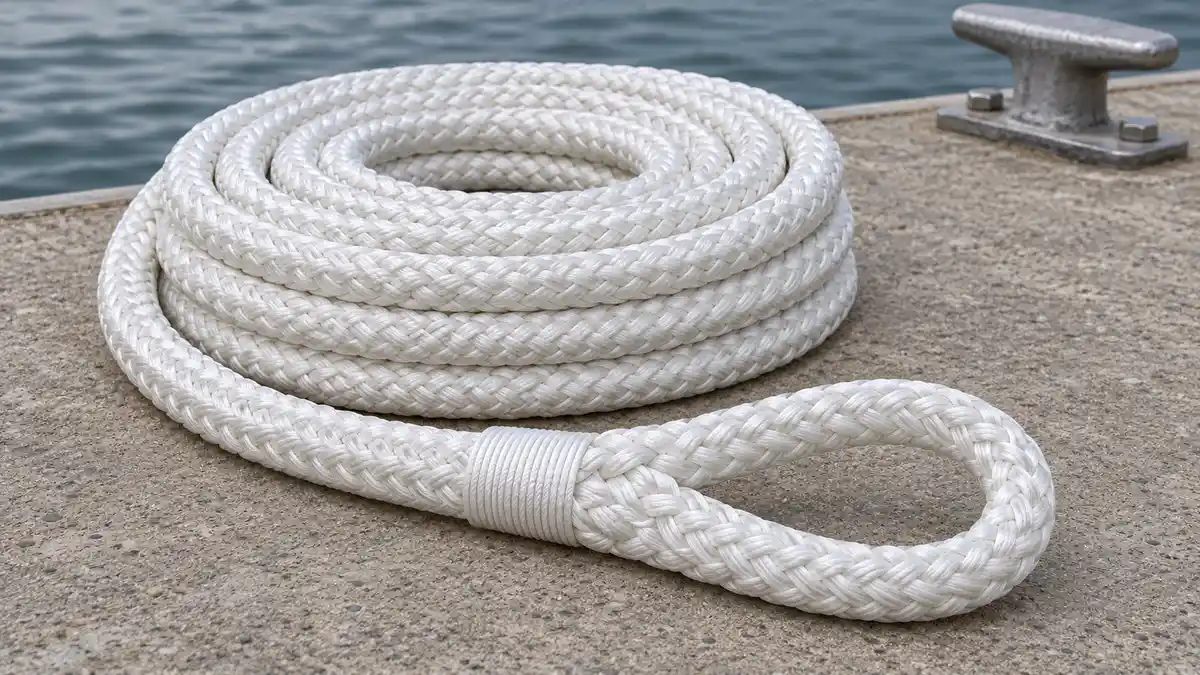
Specify polyester in both the core and cover where that is the intended construction. Describe whether the rope has a braided core and braided cover or another agreed braid. Record diameter, mass per metre, coil length, colour, minimum breaking force and elongation under an agreed load. Define whether strength testing covers bare rope or the finished spliced assembly.
For an eye splice, agree eye dimensions, the splice method, protective sleeve and end finishing against an approved sample. Request batch-linked breaking-force results using ISO 2307 and an agreed test of the supplied termination. Do not accept a report for a different diameter or construction.
Mooring rope supplied for consumer use in Great Britain must be safe in normal or reasonably foreseeable use under the General Product Safety Regulations 2005. Agree intended-use information and instructions with the supplier. Rope offered for lifting needs a separate compliance assessment; use the site's wider guide to prepare questions for the relevant authority about any declaration and working-load marking requirements.
Worked duty example
Illustrative example, not a quote: Illustrative order: 8 tonnes of braided polyester mooring rope in coils under 5607 50 11 90, invoiced at £24,000 free on board, with £3,000 of freight and insurance to the UK. The customs value is £27,000. Duty at 8% is £2,160. Import VAT at 20% is charged on the customs value plus duty, £29,160, so it is £5,832. Import taxes total £7,992; a VAT-registered importer can usually reclaim the VAT, so the lasting cost is the £2,160 of duty. The import duty and VAT guide explains each step.
Inspection checklist
Material and braid: check core and cover composition against the order, examine cut samples for substituted fibres, and compare braid tightness and surface finish with the approved sample.
Dimensions: measure coil length, mass per metre and diameter under the agreed reference tension. Check that batch labels match the packing list and test reports.
Strength and splices: review batch-linked breaking-force results and test sampled ropes and finished eyes against the agreed acceptance criteria. Check for splice movement, exposed core and damaged yarns.
Wet handling and packing: check colour transfer when wet, sleeve position, end finishing and signs of damp storage. Confirm coils unwind without tangles and packaging protects the rope from abrasion.
Working out your own order? Send us the product on WhatsApp and we reply the same working day: WhatsApp us
What goes wrong
A rope can match the ordered diameter but contain less material per metre or a different core. Loose braid, short coils and reports for an unrepresentative sample can conceal the difference. A strong bare-rope result can also mask a weak finished eye. Compare production samples and finished assemblies rather than relying on appearance.
Splices can slip and covers can chafe or bleed colour when wet. Keep acceptance records tied to each batch and investigate failures before releasing stock. Official maritime guidance advises regular inspection of rope and wire splices to check that they remain intact; agree inspection instructions for the mooring rope you supply.
Cambridge China Bridge sources these products for UK businesses, checking the factory and the documents before shipment. See factory verification. For repeat volumes, see container programmes.
Frequently asked questions
What is the UK import duty on braided polyester mooring rope from China?
The relevant polyester rope lines carry 8% duty. The supplied tariff data lists no anti-dumping or countervailing duty, suspension or attached import control for these lines.
Which commodity code covers braided polyester mooring rope?
Braided polyester rope over 5 g per metre is covered by 5607 50 11 90; rope at or below that weight by 5607 50 30 90. Confirm classification separately for finished articles with fittings.
What should a mooring rope test report cover?
Ask for the supplied material, diameter and braid construction, batch identity and breaking-force results. Agree ISO 2307 testing and a separate test of the finished eye splice where supplied.
Can I sell the same mooring rope for lifting?
Assess the lifting use separately. Before selling rope as a lifting accessory, confirm with the relevant authority whether the Supply of Machinery (Safety) Regulations 2008 apply and what declaration and working load limit marking are needed.