Sourcing low-stretch abseiling ropes from China
Low-stretch static abseiling ropes of nylon or polyester from China carry 8% UK duty on the relevant heading 5607 lines. For sale in Great Britain, these ropes need CE or UKCA marking, a declaration of conformity and English instructions; confirm the applicable PPE conformity assessment with the relevant authority. Cambridge China Bridge sources low-stretch static abseiling ropes.
Buying from China for a business? How our UK China sourcing agent service works · China sourcing agent for small orders and first imports
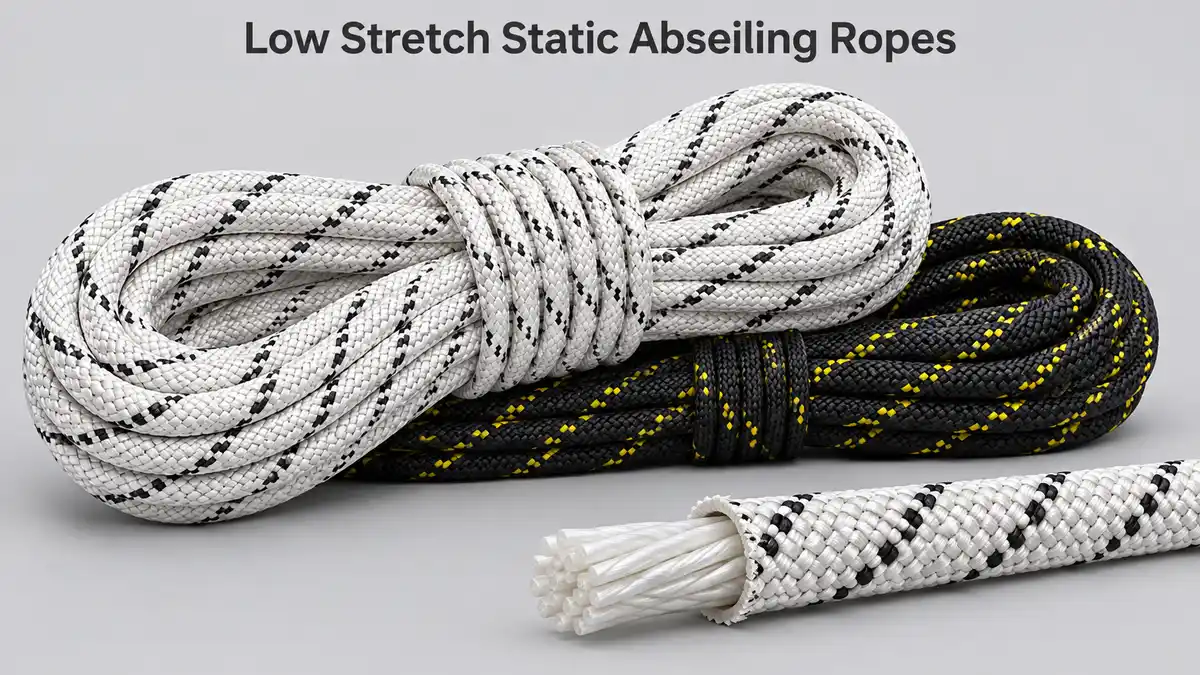
Duty follows fibre and construction
Read from the UK Trade Tariff on 2 October 2026, heading 5607 covers twine, cordage, ropes and cables, including braided and coated constructions. Braided nylon or polyester abseiling rope weighing more than 5 g per metre falls within the description of 5607 50 11 90. The other table entries show classification alternatives where fibre, construction or linear density differs; inclusion does not establish suitability for abseiling.
The synthetic-rope lines shown carry 8% duty for goods from China. The supplied tariff record lists no anti-dumping or countervailing measures and no attached import controls. The suspension under 5607 50 90 98 is restricted to specified surgical-suture twine and does not cover abseiling rope. Tariff clearance does not establish PPE compliance.
Give your customs broker the core and sheath composition, construction, linear density and details of any finished terminations, then confirm the commodity code. For the distinction from dynamic rope within the wider heading, see our dynamic climbing rope guide.
| Goods | Commodity code | Duty | Anti-dumping or countervailing duty on China |
|---|---|---|---|
| Braided nylon, polyamide or polyester rope over 5 g per metre | 5607 50 11 90 | 8% | None |
| Other nylon, polyamide or polyester rope over 5 g per metre | 5607 50 19 90 | 8% | None |
| Nylon, polyamide or polyester rope weighing 5 g per metre or less | 5607 50 30 90 | 8% | None |
| Rope of other synthetic fibres, excluding twine | 5607 50 90 98 | 8% | None |
Specify the core, sheath and intended descent use
Specify low-stretch kernmantel construction, core and sheath fibres, diameter, linear density, supplied length and end finish. Agree acceptance criteria for elongation, breaking force, sheath slippage and shrinkage. Ask the manufacturer to identify the intended descent use, compatible equipment and limitations rather than accepting a catalogue description of static rope.
Specify testing to EN 1891 for low-stretch kernmantel ropes. Match the certificate and reports to the ordered model, diameter and construction. For supply in Great Britain, check the appropriate CE or UKCA marking, declaration of conformity and English instructions. The importer must indicate its name and postal address on the PPE; if marking the PPE is not possible, confirm the permitted alternative with the relevant authority. Arrange testing and certification before approving production.
Worked duty example
Illustrative example, not a quote: 12 bulk coils of braided polyamide low-stretch abseiling rope, illustrative order under 5607 50 11 90, invoiced at £3,000 free on board, with £648 of freight and insurance to the UK. The customs value is £3,648. Duty at 8% is £291.84. Import VAT at 20% is charged on the customs value plus duty, £3,939.84, so it is £787.97. Import taxes total £1,079.81; a VAT-registered importer can usually reclaim the VAT, so the lasting cost is the £291.84 of duty. The import duty and VAT guide explains each step.
Inspection checklist
Dimensions: measure supplied length, diameter under the agreed reference tension and mass per metre against the approved specification.
Core and sheath: compare cut samples with the approved construction; check for missing yarns, uneven braiding, exposed core, abrasion and poorly finished ends.
Performance: commission batch sample tests against the agreed breaking-force, elongation, sheath-slippage and shrinkage criteria. Keep the results linked to the supplied batch.
Documents: match the rope identity to its certificate, declaration, CE or UKCA marking and English instructions. Check importer identification and preserve batch labels when repacking.
Working out your own order? Send us the product on WhatsApp and we reply the same working day: WhatsApp us
What goes wrong
A rope can look like the approved sample while containing a different core, a lighter sheath or less material per metre. Short coils, uneven diameter and slipping sheaths are useful rejection checks. A report naming another diameter or construction leaves the delivered rope's performance unresolved.
Breaking-force results alone do not replace the applicable marking for climbing or work-at-height rope; confirm any required certification with the relevant authority. Hold unmatched stock for investigation and agree how rejected batches will be identified and kept out of sale. Plan these checks through a quality inspection brief.
Cambridge China Bridge sources these products for UK businesses, checking the factory and the documents before shipment. See factory verification. For repeat volumes, see container programmes.
Frequently asked questions
What is the UK import duty on static abseiling rope from China?
The relevant synthetic-rope lines in heading 5607 carry 8% duty. The supplied tariff record lists no anti-dumping or countervailing duty; the surgical-twine suspension does not cover abseiling rope.
Which standard should I specify for low-stretch abseiling rope?
Specify EN 1891 testing for low-stretch kernmantel rope and match the certificate and reports to the actual model, diameter and construction. Agree performance acceptance criteria in the purchase specification.
Is a breaking-strength report enough to sell abseiling rope?
No. Check the CE or UKCA marking, declaration of conformity and English instructions, and confirm any required PPE certificate with the relevant authority. A breaking-force report alone does not establish the required conformity.
How do I check whether the rope suits my descenders?
Ask the rope and descender manufacturers to confirm the intended combination. Compare the specified diameter and construction with their documentation, and agree handling checks before approving the sample.