Sourcing mineral rubber process oils from China
The selected mineral rubber process oil feedstock lines carry 0% to 2% UK duty from China; specialised base oils may qualify for suspension. Confirm the formulation and code, check UK REACH, and obtain evidence that the oil was not produced using Russian crude. Cambridge China Bridge sources mineral rubber process oils.
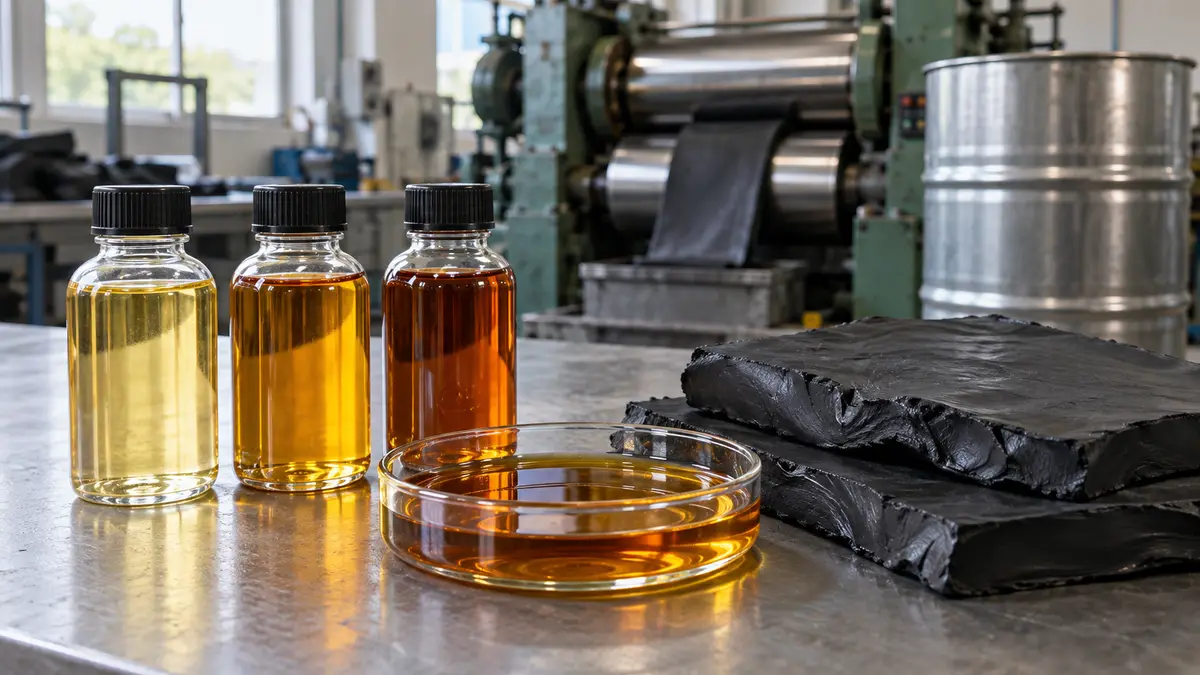
Duty depends on the oil and its intended use
Read from the UK Trade Tariff on 1 October 2026, heading 2710 covers non-crude petroleum oils and preparations containing at least 70% petroleum oils by weight as their basic constituents, alongside waste oils. This guide concerns mineral oils bought for rubber compounding. The supplied snapshot contains specialised base-oil and processing lines, but omits the general residual line for ordinary process oils.
The selected lines carry 0% or 2% duty from China, with no anti-dumping or countervailing measure recorded. The listed specialised base oils have 0% suspensions that exclude mixtures and preparations. The tariff attaches an import control on restricted goods and technologies. UK sanctions prohibit importing oil products processed in a third country from Russian crude; obtain supply-chain evidence showing that your oil was not produced using Russian crude.
The table gives conditional feedstock options, not interchangeable codes for every rubber process oil. The chemical-transformation line describes that stated use. Give your broker the composition, refining process, viscosity data and intended use to confirm the commodity code. Broader oil products are covered in our lubricants and motor oils guide. For compressor applications, see our mineral compressor oil sourcing guide. For electrical discharge machining, see sourcing mineral EDM dielectric oils.
| Goods | Commodity code | Duty | Anti-dumping or countervailing duty on China |
|---|---|---|---|
| Hydroisomerised, dewaxed base oil within the specified viscosity band | 2710 19 99 40 | 2% | None |
| Hydroisomerised, dewaxed base oil with the specified higher viscosity index | 2710 19 99 60 | 2% | None |
| Specified hydroisomerised base oil outside the middle viscosity band | 2710 19 81 30 | 2% | None |
| Heavy mineral oil for the specified chemical transformation | 2710 19 75 00 | 0% | None |
Specify the oil against your rubber compound
Specify aromatic, naphthenic or paraffinic oil, the refining route and whether the supply is a single oil or a blend. Agree viscosity at the stated test temperature, density, flash point, pour point, colour, water and insoluble contamination. Require a batch certificate of analysis and written approval before the factory changes the source or formulation.
Trial the sample in your actual rubber formulation. Compare mixing behaviour, cure behaviour, hardness, tensile properties and oil migration against your approved material. For tyre applications, request laboratory results for benzo[a]pyrene and the relevant polycyclic aromatic hydrocarbons, rather than accepting a general claim of low aromatic content.
Check whether the substance requires UK REACH registration. For hazardous oil supplied for workplace use, a safety data sheet is required; obtain the English GB version and match the hazard label to its classification. Agree the documents before ordering, with support from testing and certification where needed.
Worked duty example
Illustrative example, not a quote: Illustrative: 20 tonnes of qualifying mineral base oil in drums, using the standard duty without claiming suspension under 2710 19 99 40, invoiced at £24,000 free on board, with £1,800 of freight and insurance to the UK. The customs value is £25,800. Duty at 2% is £516. Import VAT at 20% is charged on the customs value plus duty, £26,316, so it is £5,263.20. Import taxes total £5,779.20; a VAT-registered importer can usually reclaim the VAT, so the lasting cost is the £516 of duty. The import duty and VAT guide explains each step.
Inspection checklist
Identity: match the refinery, oil description, batch references and certificate of analysis to the approved sample and purchase specification.
Analysis: independently check viscosity, water, insolubles and the agreed aromatic-content tests on a representative batch sample. Keep a sealed retained sample.
Compound trial: compare processing, cure and finished-rubber properties with the approved compound before releasing the batch for production.
Drums and documents: check closures, leaks, corrosion, contamination and batch labels on arrival. Match the safety data sheet and crude-origin evidence to the supplied oil.
Working out your own order? Send us the product on WhatsApp and we reply the same working day: WhatsApp us
What goes wrong
A substitute oil can match viscosity while behaving differently in the rubber compound. The result may be altered cure, surface staining, oil migration or inconsistent hardness. Water, sediment and residues from reused drums can also spoil an otherwise acceptable oil. Set acceptance criteria against the compound trial and batch analysis.
A generic refinery certificate may describe a different oil or batch, and a Chinese invoice alone does not establish the crude-oil supply chain. Obtain the supporting records before shipment. Do not assume that a suspension for a specified base oil also covers a blended process oil.
Cambridge China Bridge sources these products for UK businesses, checking the factory and the documents before shipment. See factory verification. For repeat volumes, see container programmes.
Frequently asked questions
What is the UK import duty on rubber process oil from China?
The selected feedstock lines carry 0% or 2%. Listed specialised base oils may qualify for 0% suspension. The snapshot omits the general residual process-oil line, so confirm your exact code before ordering.
Can I replace rubber process oil with another oil of the same viscosity?
Trial it first. Matching viscosity does not establish equivalent mixing, cure, hardness or oil-migration behaviour. Compare the proposed oil in your actual rubber formulation.
Do mineral rubber process oils need a safety data sheet?
Hazardous oil supplied for workplace use needs a safety data sheet. Obtain the English GB version, match it to the supplied product and check that the hazard label follows its classification.
What origin evidence should I request from a Chinese oil supplier?
Request supply-chain evidence showing that the oil was not produced using Russian crude. Ask for refinery records supporting the declaration and match them to the shipment.