Sourcing kitchen and folding knives from China
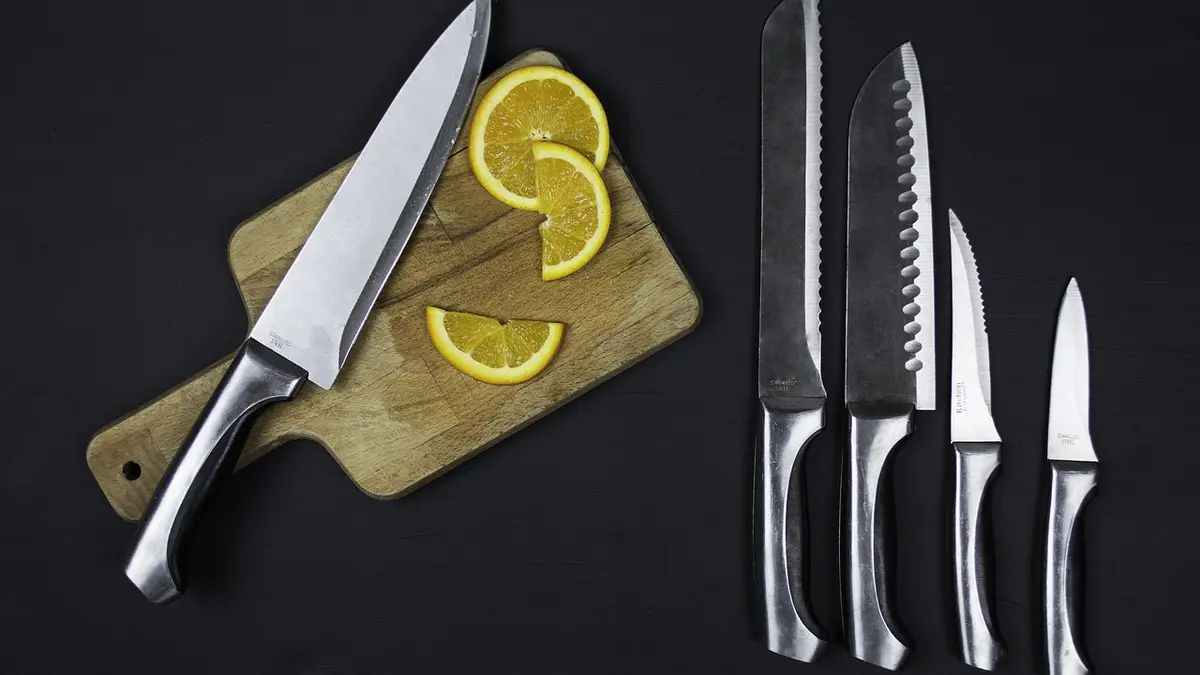
Knives with cutting blades from China, including kitchen and chef's knives, knife sets, table knives with fixed blades, pruning knives and folding pocket knives, pay 8% UK duty, blades on their own 6% and base metal handles 2%, with no anti-dumping duty. Some knife designs are banned from import into the UK, and most knives cannot be sold to under-18s. Cambridge China Bridge sources knives.
Buying from China for a business? How our UK China sourcing agent service works · China sourcing agent for small orders and first imports
Mostly 8%
Read from the UK Trade Tariff on 25 September 2026, sets of assorted knives, table knives with fixed blades, other knives with fixed blades and knives with other than fixed blades of heading 8211 carried 8% duty on goods from China, blades 6% and handles of base metal 2%, with no anti-dumping measure. The tariff also asks for an ivory and a CITES declaration at import, which for ordinary steel and plastic knives is a statement that the goods contain neither.
Forks, spoons and cake servers are in heading 8215, covered in the cutlery guide, and razors in 8212; confirm the commodity code.
| Goods | Commodity code | Duty | Anti-dumping duty on China |
|---|---|---|---|
| Sets of assorted knives | 8211 10 00 00 | 8% | None |
| Table knives with fixed blades | 8211 91 00 00 | 8% | None |
| Other fixed-blade knives, such as kitchen knives | 8211 92 00 00 | 8% | None |
| Folding and other non-fixed-blade knives | 8211 93 00 00 | 8% | None |
| Blades | 8211 94 00 00 | 6% | None |
| Handles of base metal | 8211 95 00 00 | 2% | None |
Knife law
Weapons listed under section 141 of the Criminal Justice Act 1988 cannot be imported, sold or hired in the UK. The list includes butterfly knives, disguised knives, belt buckle knives and, since 24 September 2024, zombie-style knives and machetes, and flick and gravity knives are also banned. A design that opens automatically or hides the blade is a legal problem, not a product feature, so check every new style against the GOV.UK list before sampling.
It is illegal to sell most knives to anyone under 18, with an exception for small folding pocket knives, and online sellers must verify age and arrange delivery accordingly. Kitchen knives touch food, so ask for a food contact declaration; BS EN ISO 8442-1 sets material requirements for cutlery used to prepare food, and ISO 8442-5 describes a sharpness and edge retention test.
Worked duty example
Suppose, purely for illustration, you import 20,000 stainless steel kitchen knives under 8211 92 00 00. At £30,000 free on board and £2,000 to ship and insure, the customs value is £32,000. Kitchen knives at 8% pay £2,560 of duty; VAT is then worked out on value plus duty, £34,560, giving £6,912. Of the £9,472 paid at import, only the £2,560 of duty stays a cost for a VAT-registered business. The method is set out in how UK import duty and VAT work.
Inspection checklist
Steel and edge: blade hardness measured by the Rockwell method of ISO 6508-1 at the points on the drawing, stainless blades checked against the corrosion requirements of BS EN ISO 8442-2 where claimed, edge sharpness and retention tested to ISO 8442-5 on samples from each lot, and edge angle and grind checked against the approved sample.
Handles and locks: tang length and rivets checked on a cut sample, handles pulled and twisted for movement, kitchen knives run through dishwasher cycles by the method of BS EN 12875-1 where dishwasher-safe is claimed, and folding knives checked for lock engagement, blade play and that no design opens by gravity or a spring. For retractable designs, see our utility knife sourcing guide. For replacement blades, see our snap-off blade sourcing guide.
Pack and law: every new design checked against the section 141 banned weapons list, blade guards or sheaths fitted so edges cannot cut through retail packs or cartons, age-restriction and handling warnings on packs, and cartons marked for the delivery rules of the Offensive Weapons Act 2019 where the buyer sells online.
Working out your own order? Send us the product on WhatsApp and we reply the same working day: WhatsApp us
What goes wrong
Knives fail on steel and heat treatment. A blade marked as a premium steel may be a cheaper grade, and a blade that is too soft goes blunt within weeks while one that is too hard chips. Handles work loose where the tang is short or the rivets are not peened, wooden handles crack and moulded handles leave gaps where food lodges, and blades rust at the edge when the steel has too little chromium.
Ask for the steel grade with a material certificate and a hardness test on samples, run an edge retention test, check tang length and handle fit, soak and dishwasher-test samples for rust and handle movement, and check blade guards and packaging so knives cannot cut through the carton or the retail pack.
Cambridge China Bridge sources kitchen knives, knife sets and folding knives, with steel, hardness, legal design checks and packing agreed before the order. See how we source knives and kitchenware. For hand-operated food preparation tools, see our manual kitchen gadgets guide.
Frequently asked questions
What is the UK import duty on kitchen knives from China?
Read from the UK Trade Tariff on 25 September 2026, kitchen and other fixed-blade knives of heading 8211 carried 8% duty from China.
Are any knives banned from import into the UK?
Yes. Flick and gravity knives, butterfly knives, disguised knives and, since 24 September 2024, zombie-style knives and machetes, among others.
Can I sell knives to under-18s?
Generally no, apart from small folding pocket knives; in Scotland, cutlery and kitchen knives can also be sold to 16 and 17 year olds. Online sellers must verify age where age restrictions apply.
How do I check knife steel?
Ask for a material certificate, test hardness on samples and run an edge retention test.