Sourcing industrial line scan cameras from China
Industrial line scan cameras from China carry 0% UK duty across the ordinary and specialist camera lines listed, with no trade remedies recorded. Confirm with the relevant authority which electromagnetic compatibility requirements apply before sale in Great Britain. Cambridge China Bridge sources industrial line scan cameras.
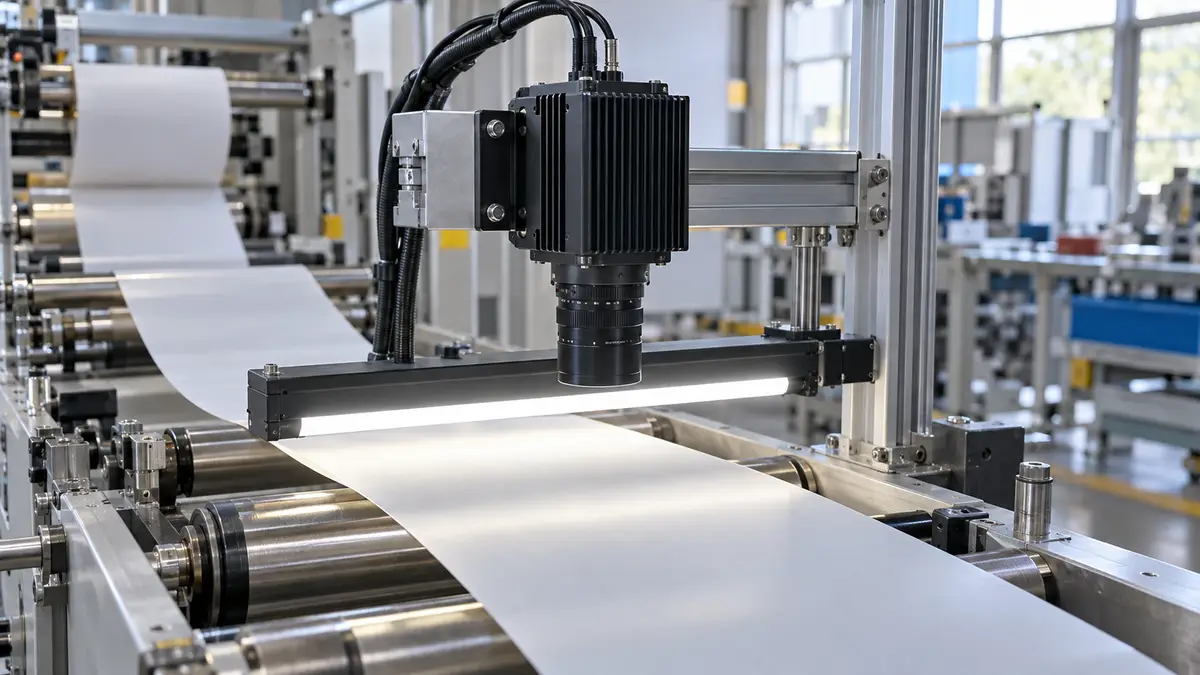
Zero duty on the listed camera lines
Read from the UK Trade Tariff on 30 September 2026, heading 8525 covers transmission apparatus and television, digital and video cameras. This guide focuses on industrial line scan cameras that build an image from successive lines as material moves past the sensor.
All camera lines listed carry 0% duty for goods from China. The supplied record lists no anti-dumping or countervailing duties, suspensions or attached import controls. The specialist table rows are classification alternatives only when the relevant tariff note is met. A high line rate alone does not establish the specialist high-speed classification. Import VAT is separate; see UK import duty and VAT.
Check the commodity code against the camera's technical specifications and imaging function. Start by checking 8525 89 00 00 for an ordinary line scan camera, then assess any specialist characteristics. See industrial machine vision cameras for the wider product family.
| Goods | Commodity code | Duty | Anti-dumping or countervailing duty on China |
|---|---|---|---|
| Ordinary industrial line scan cameras | 8525 89 00 00 | 0% | None |
| Specialist high-speed cameras meeting the tariff note | 8525 81 00 00 | 0% | None |
| Radiation-hardened or radiation-tolerant cameras meeting the tariff note | 8525 82 00 00 | 0% | None |
| Night vision cameras meeting the tariff note | 8525 83 00 00 | 0% | None |
Specify line capture and motion synchronisation
Specify the sensor model, pixels across the inspection width, monochrome or colour output, lens mount, working distance and smallest defect to detect. Agree the sustained line rate at the required exposure and full sensor width. Define the lighting geometry and ask for raw images of representative material at the intended production speed.
Define encoder input, trigger polarity, line spacing, scan direction and behaviour when the conveyor accelerates or stops. Specify the data interface, connector pinout, power supply, production cable and acquisition software. For colour models, test channel alignment on moving material. Retain the approved settings, firmware and correction files.
For electrical equipment liable to generate electromagnetic disturbance, confirm with the relevant authority the applicable electromagnetic compatibility requirements and exceptions. Hazardous-substance restrictions cover electrical and electronic equipment unless specifically excluded. Ask for model-specific conformity documents and reports, and English instructions. Electrical equipment producers must register annually. Arrange testing and certification for the proposed camera configuration.
Worked duty example
Illustrative example, not a quote: Pilot batch of industrial line scan cameras; illustrative order and values under 8525 89 00 00, invoiced at £14,000 free on board, with £1,200 of freight and insurance to the UK. The customs value is £15,200. Duty at 0% is £0. Import VAT at 20% is charged on the customs value plus duty, £15,200, so it is £3,040. With no duty, the only import tax is the VAT, which a VAT-registered importer can usually reclaim. The import duty and VAT guide explains each step.
Inspection checklist
Image uniformity: scan an evenly illuminated target and representative material; check defective pixels, vertical streaks, shading and colour consistency against the approved sample.
Motion timing: run the actual encoder and conveyor through changing speeds; check stretched images, repeated or missing lines, scan direction and restart behaviour.
Integration: use the intended computer, acquisition software and production cable; check sustained transfer, connection stability and settings retention after power cycling.
Identity and condition: match sensor, model and firmware to the order; inspect lens mounts, connectors, protective caps and accompanying documents during quality inspection.
Working out your own order? Send us the product on WhatsApp and we reply the same working day: WhatsApp us
What goes wrong
A demonstration at a short exposure or reduced sensor width can hide the limits of sustained capture. Incorrect encoder scaling stretches the reconstructed image, while uneven illumination produces streaks that resemble material defects. Approve the camera, lens, lighting and motion control together using your inspection task.
Colour channels can become misaligned when motion timing changes. Sensor substitutions, firmware revisions or missing correction files can alter image quality even when the housing is unchanged. Record the approved configuration and require approval before substitutions; test replacement cameras in your acquisition system.
Cambridge China Bridge sources these products for UK businesses, checking the factory and the documents before shipment. See factory verification. For components and parts, see sourcing for manufacturers.
Frequently asked questions
What is the UK import duty on industrial line scan cameras from China?
The ordinary and specialist camera lines listed carry 0% duty. The supplied tariff record lists no anti-dumping or countervailing duties. Import VAT is separate.
Which commodity code covers an industrial line scan camera?
Check 8525 89 00 00 for an ordinary camera. Specialist categories depend on the relevant tariff notes, rather than the supplier's description or advertised line rate.
What specifications should I send to a Chinese line scan camera factory?
Send the inspection width, smallest defect, sensor requirements, exposure, sustained line rate, lens mount, lighting, encoder signals, data interface and representative material.
How do I test a line scan camera before ordering?
Use your conveyor, encoder, lighting, lens and acquisition software. Test changing speeds, image uniformity, missing lines, sustained transfer and settings retention after restarting.