Sourcing Hydrogenated Castor Oil from China
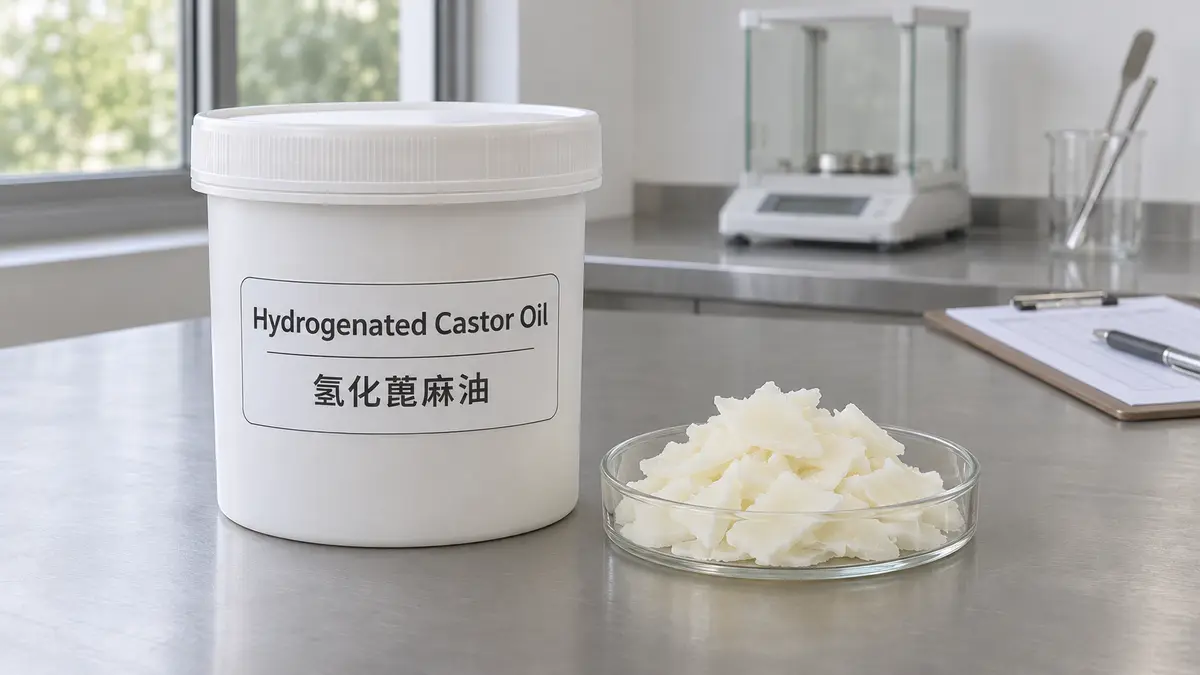
Hydrogenated castor oil from China has 2% ordinary UK duty, with a suspension to zero for qualifying goods. The suspension excludes mixtures and preparations. Confirm the composition and UK REACH position before ordering industrial raw material. Cambridge China Bridge sources hydrogenated castor oil.
Buying from China for a business? How our UK China sourcing agent service works · China sourcing agent for small orders and first imports
Ordinary duty and the suspension
Read from the UK Trade Tariff on 29 September 2026, heading 1516 covers hydrogenated and certain other transformed fats and oils, whether refined or not, but not further prepared. Hydrogenated castor oil has the dedicated code 1516 20 10 00. This guide uses that single relevant line; other oils belong in the wider heading guide.
The recorded ordinary duty for goods from China is 2%, with an autonomous tariff suspension of 0.00 %. Its footnote excludes mixtures, preparations and products made up of different components containing the oil. No anti-dumping or countervailing duty is recorded for this line. Confirm suspension eligibility and the commodity code using the actual composition, rather than the supplier's trade name.
The line attaches organic-product import control and waste import and export controls. For industrial hydrogenated castor oil, ask your customs broker to confirm the organic-control requirement and whether guidance for organic food, feed and seed applies to the product. Consult an approved organic control body about organic claims. If material is waste subject to notification controls, confirm with the Environment Agency and other competent authorities involved which consents are needed before shipment to England.
| Goods | Commodity code | Duty | Anti-dumping or countervailing duty on China |
|---|---|---|---|
| Hydrogenated castor oil, also called opal wax | 1516 20 10 00 | 2% | None |
Specify the wax and its processing behaviour
Specify hydrogenated castor oil rather than an unspecified wax blend. Ask for the full composition, any additives and the manufacturing process. Agree whether the material is supplied as powder, flakes or granules, together with melting behaviour, colour, odour, moisture, acid value and iodine value. Set acceptance criteria and test methods in the purchase specification.
Trial the sample in your own formulation or process. Check melting, dispersion and the consistency after cooling. Ask for batch analysis and a retained sample. If this is a new substance for your business, assess whether registration under UK REACH is required. Confirm the applicable substance and mixture labelling and packaging requirements with HSE before placing the material on the market.
Worked duty example
Illustrative example, not a quote: Illustrative order: hydrogenated castor oil in sealed bags under 1516 20 10 00, invoiced at £4,000 free on board, with £2,500 of freight and insurance to the UK. The customs value is £6,500. Duty at 2% is £130. Import VAT at 20% is charged on the customs value plus duty, £6,630, so it is £1,326. Import taxes total £1,456; a VAT-registered importer can usually reclaim the VAT, so the lasting cost is the £130 of duty. The import duty and VAT guide explains each step. This assumes the goods are standard-rated for VAT. Most food for human consumption is zero-rated, and animal feed can be too, in which case no import VAT is due, so check the rate for your product in HMRC's VAT Notice 701/14.
Inspection checklist
Identity: match the composition, manufacturing description and batch analysis to the ordered hydrogenated castor oil.
Performance: compare melting behaviour, moisture, acid value and iodine value with the agreed specification; repeat the application trial on an arrival sample.
Condition: inspect for damp bags, contamination, unusual odour, discolouration and hard lumps that affect handling or dispersion.
Traceability: match bag labels, batch numbers and analysis reports; check seals and retain an arrival sample. Use a written inspection brief.
Working out your own order? Send us the product on WhatsApp and we reply the same working day: WhatsApp us
What goes wrong
An unspecified wax blend can behave differently from the approved sample. Changes in melting behaviour or particle form can leave material poorly dispersed or alter the finished formulation. Damp or damaged packaging can produce lumps and contamination. Agree the test method and compare production material with the approved sample before release.
A supplier may describe a preparation simply as hydrogenated castor oil, although the recorded suspension excludes preparations and mixtures. Keep composition evidence with the customs instructions. Resolve organic claims and any waste status before shipment, and ask for factory verification focused on batch segregation, laboratory records and packing.
Cambridge China Bridge sources these products for UK businesses, checking the factory and the documents before shipment. See factory verification. For repeat volumes, see container programmes.
Frequently asked questions
What is the UK import duty on hydrogenated castor oil from China?
Code 1516 20 10 00 has 2% ordinary duty and a suspension to 0.00 % for qualifying goods. The suspension excludes mixtures and preparations. No anti-dumping or countervailing duty is recorded.
Does a castor wax blend qualify for the suspension?
The recorded suspension excludes mixtures, preparations and products made up of different components containing the oil. Give your customs broker the full composition.
What should I test before accepting a batch?
Check identity, melting behaviour, moisture, acid value and iodine value against agreed methods and limits. Trial dispersion and consistency in your own process, rather than accepting appearance alone.
Do I need UK REACH registration?
Assess the actual substance and your import arrangements. If your business has not previously imported the substance, ask HSE to confirm whether UK REACH registration is required.