Sourcing forage harvesters from China
Forage harvesters from China carry 0% UK duty across self-propelled and other models, with no listed trade remedy. New machines placed on the Great Britain market must carry CE or UKCA marking, a declaration of conformity and English instructions. Cambridge China Bridge sources forage harvesters.
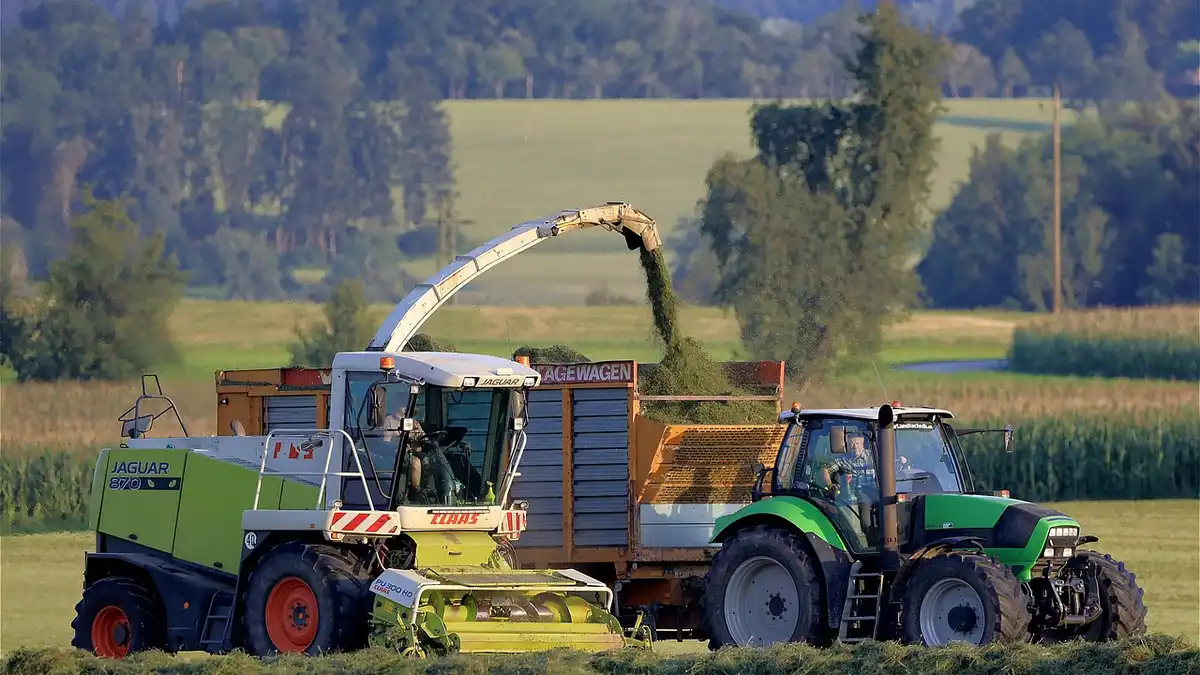
Zero duty on forage harvesters
Read from the UK Trade Tariff on 30 September 2026, heading 8433 covers harvesting and threshing machinery, balers, mowers and certain agricultural sorting machines. Forage harvesters have separate lines for self-propelled and other machines. Both carry 0% duty for goods from China, with no listed anti-dumping or countervailing duty and no tariff suspension.
The tariff attaches import and export waste controls to both forage harvester lines. Environment Agency guidance says waste shipment controls apply only where the material is waste. For a machine from China, ask your customs broker to confirm whether the control applies and which declaration evidence is needed, especially for damaged or scrap equipment.
Confirm the commodity code from the machine's functions and drive arrangement. The table also includes separately supplied forage-cutting mowers and parts; these are not additional complete-harvester categories. For the wider heading, see round hay balers. For sugar beet machinery, see our sugar beet harvester sourcing guide.
| Goods | Commodity code | Duty | Anti-dumping or countervailing duty on China |
|---|---|---|---|
| Self-propelled forage harvesters | 8433 59 11 00 | 0% | None |
| Other forage harvesters, including tractor-driven machines | 8433 59 19 00 | 0% | None |
| Parts for forage harvesters, subject to classification | 8433 90 00 00 | 0% | None |
| Separate tractor-carried or tractor-hauled mowers for forage cutting | 8433 20 50 00 | 0% | None |
Specify the crop, chopping system and drive
State whether the machine will harvest standing maize or collect cut grass, and name the header supplied. Agree working width, crop condition, chop-length adjustment, feed-roller arrangement, sharpening method and discharge-spout movement. Ask for a crop demonstration of the quoted configuration rather than an unloaded workshop run.
For tractor-driven machines, match the hitch, power take-off shaft, required tractor power and hydraulic connections to your tractor. For self-propelled models, identify the engine and service parts. New combustion-engine non-road mobile machinery must have a type-approved engine with approval markings displayed on it.
New machinery placed on the Great Britain market must be CE or UKCA marked, supplied with a declaration of conformity and have English instructions. The responsible person must ensure the technical file is compiled and available on request. Ask for documents identifying the actual machine, header and configuration before ordering.
Worked duty example
Illustrative example, not a quote: Illustrative order: one tractor-driven forage harvester; FOB and freight values are illustrative under 8433 59 19 00, invoiced at £8,000 free on board, with £1,200 of freight and insurance to the UK. The customs value is £9,200. Duty at 0% is £0. Import VAT at 20% is charged on the customs value plus duty, £9,200, so it is £1,840. With no duty, the only import tax is the VAT, which a VAT-registered importer can usually reclaim. The import duty and VAT guide explains each step.
Inspection checklist
Crop handling: demonstrate the agreed crop and settings; inspect chop consistency, feed blockage, crop losses and discharge into the receiving trailer.
Drive and hydraulics: check hitch fit, shaft clearance, hose connections, leaks and spout operation; compare fitted components with the agreed specification.
Guards and controls: inspect shaft and cutter guards, access covers and stopping controls; have a competent operator demonstrate shutdown and safe isolation before maintenance.
Documents and spares: match the serial plate, declaration and English instructions to the delivered machine; check engine approval markings where applicable and identify replacement knives, bearings and feed-roller parts.
Working out your own order? Send us the product on WhatsApp and we reply the same working day: WhatsApp us
What goes wrong
Problems to test for include a header suited to a different crop, uneven chopping, feed rollers that block in wet material, poor discharge reach and a driveline that does not fit the buyer's tractor. Agree a crop-based acceptance demonstration and record the tested settings.
A workshop video can leave crop performance untested. Component substitutions can also make the supplied documents difficult to match to the machine. Check the configuration before dispatch, then inspect guards, hydraulic lines and loose fittings on arrival before commissioning.
Cambridge China Bridge sources these products for UK businesses, checking the factory and the documents before shipment. See factory verification. For machinery and equipment, see machinery imports.
Frequently asked questions
What is the UK import duty on forage harvesters from China?
Both self-propelled and other forage harvesters carry 0% duty in the supplied tariff snapshot, with no listed anti-dumping or countervailing duty and no suspension.
What documents should a Chinese forage harvester come with?
New machinery for the Great Britain market must have CE or UKCA marking, a declaration of conformity and English instructions. Ask for documents matching the delivered configuration.
Can I use a tractor-driven forage harvester with my tractor?
Check the hitch, power take-off arrangement, required tractor power, shaft clearance and hydraulic connections against your tractor before ordering.
Does the waste control mean forage harvesters are banned?
The attached control is not itself a blanket ban. Waste shipment controls apply where the goods are waste. Ask your customs broker to confirm the position for the particular machine from China.