Sourcing e-waste and spent batteries from China
Electrical and electronic waste from China, spent batteries, scrap circuit boards and assemblies bought for recovery, pays 0% UK duty. Every line carries the waste import control, and much of this material is notifiable waste, which needs prior written notification and consent before it leaves China. Spent lithium batteries are also dangerous goods in transport.
Buying from China for a business? How our UK China sourcing agent service works · China sourcing agent for small orders and first imports
0% duty and the waste control
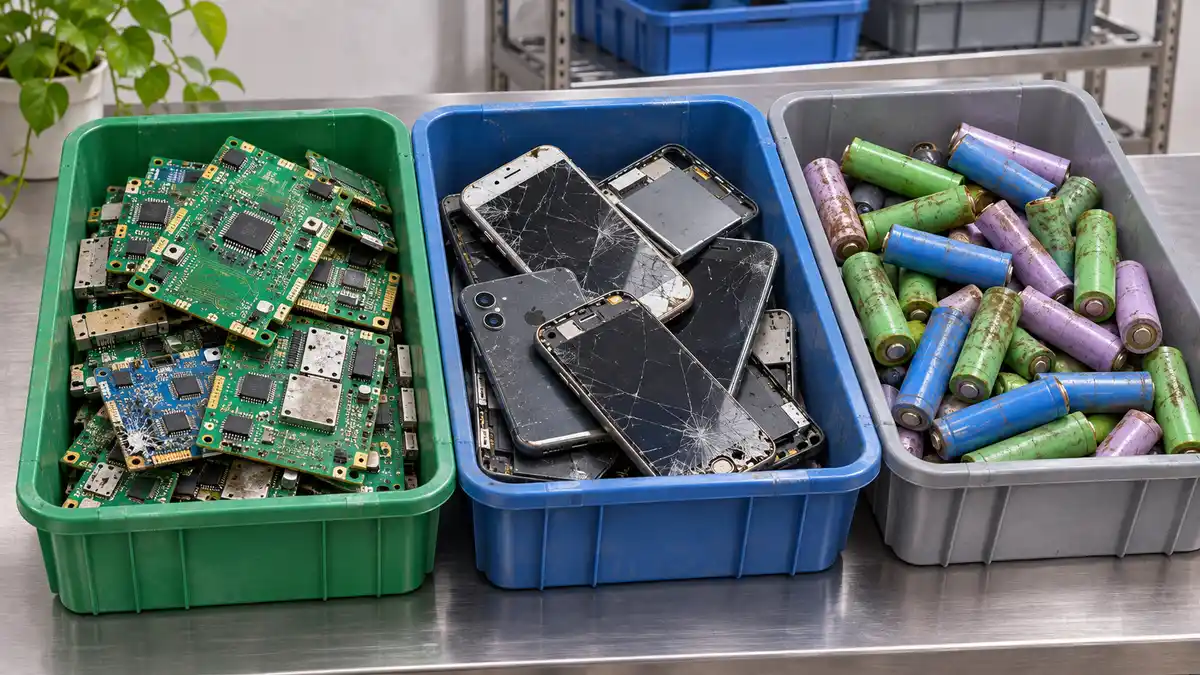
Read from the UK Trade Tariff on 17 November 2026, heading 8549 covers electrical and electronic waste and scrap, including spent batteries and scrap boards of a kind used principally for the recovery of precious metal. The lines shown carried 0% on goods from China, with no anti-dumping measure.
Every line carries a waste import control. Goods clear on a declaration that they are not waste under the retained waste shipments regulation; if they are waste, the shipment needs either the information document for non-hazardous green-list waste or, for waste that must be notified, the notification and movement documents. The tariff notes that notifiable waste needs prior written notification and consent, so that must be in place before the goods leave China.
| Goods | Commodity code | Duty | Anti-dumping duty on China |
|---|---|---|---|
| Spent lead-acid accumulators | 8549 11 10 00 | 0% | None |
| Spent lithium-ion or nickel metal hydride accumulators | 8549 13 20 10 | 0% | None |
| Electronic waste containing batteries, of a kind used for recovery of precious metal | 8549 21 00 00 | 0% | None |
| Other electrical and electronic waste of a kind used for recovery of precious metal | 8549 29 00 00 | 0% | None |
| Other electrical and electronic assemblies and boards, waste | 8549 39 00 00 | 0% | None |
| Other electrical and electronic waste and scrap | 8549 99 00 00 | 0% | None |
Batteries and hazardous components
Spent lead-acid and lithium batteries are the kind of material likely to be notifiable, while scrap printed circuit boards must be classified as hazardous WEEE and require notification and consent, so confirm the route with the Environment Agency before you contract. Lithium batteries, including spent ones, are dangerous goods in transport and need compliant packing and declarations.
Whether used equipment is waste depends on its condition and purpose, so confirm that too; for new products, see our electrical goods rules guide .
Worked duty example
An invented example rather than a quote: 5 tonnes of scrap circuit boards for precious metal recovery under 8549 29 00 00, with a customs value of £25,000. Duty is 0%. The costs to plan are the notification and consent, dangerous goods transport where relevant, and assay and refining. See calculating UK import duty and VAT for the method.
Checks before shipping
Classification: get the composition and waste code for the lot and confirm green-list or notifiable status.
Consent: hold the notification consent before loading where required.
Packing: check battery packing and dangerous goods documents. See our quality inspection guide.
Working out your own order? Send us the product on WhatsApp and we reply the same working day: WhatsApp us
What goes wrong
E-waste shipments fail on classification and consent. Lots are shipped as green-list when they are notifiable, batteries are hidden in boards, and consignments are held or returned at the importer's cost.
Cambridge China Bridge checks the counterparty and documents before UK recyclers commit. See factory verification.
Frequently asked questions
What is the UK import duty on e-waste from China?
Read from the UK Trade Tariff on 17 November 2026, the heading 8549 lines shown here carried 0% from China.
Do spent batteries need waste shipment consent?
Notifiable waste needs prior written notification and consent; spent batteries are the kind of material likely to be notifiable, so confirm with the Environment Agency.
Are spent lithium batteries dangerous goods?
Yes. Lithium batteries, including spent ones, need compliant packing and dangerous goods declarations in transport.
Is used equipment waste?
It depends on its condition and purpose; confirm with the Environment Agency before shipping.