Sourcing Dahlia tubers from China
Dahlia tubers from China have base UK duty rates of 4% to 6%, depending on whether they are dormant or growing, with a listed suspension to 0%. Confirm plant-health requirements before shipment and agree viable crowns, variety identity and packing with the grower. Cambridge China Bridge sources Dahlia tubers.
Buying from China for a business? How our UK China sourcing agent service works · China sourcing agent for small orders and first imports
Dahlia tuber duty and suspensions
Read from the UK Trade Tariff on 29 September 2026, heading 0601 covers bulbs, tubers, tuberous roots, corms, crowns and rhizomes, dormant, growing or flowering, plus chicory plants and roots. For Dahlia tubers, the relevant lines are 0601 10 90 00 when dormant and 0601 20 90 00 when growing or flowering. The table distinguishes buying formats sharing those codes.
The China duty rates are 4% for dormant tubers and 6% for growing or flowering material. Both lines list an autonomous suspension to 0.00 %, excluding mixtures, preparations or products made up of different components containing these products. Neither lists anti-dumping or countervailing duty. Organic import controls attach to both; CITES import and export controls attach to the dormant line, and CITES export controls to the growing line. Ask your customs broker to confirm their application to the consignment.
Confirm the condition at import, the suspension and the commodity code before ordering. See the wider bulbs and rhizomes guide. Confirm the plant-health risk category separately with APHA, including any applicable registration, phytosanitary certificate, pre-notification, checks and fees. Ask your customs broker to confirm whether any wood packaging needs to meet ISPM 15.
| Goods | Commodity code | Duty | Anti-dumping or countervailing duty on China |
|---|---|---|---|
| Dormant Dahlia tuber clumps | 0601 10 90 00 | 4% | None |
| Dahlia tuberous roots in growth | 0601 20 90 00 | 6% | None |
Specify the variety and viable crown
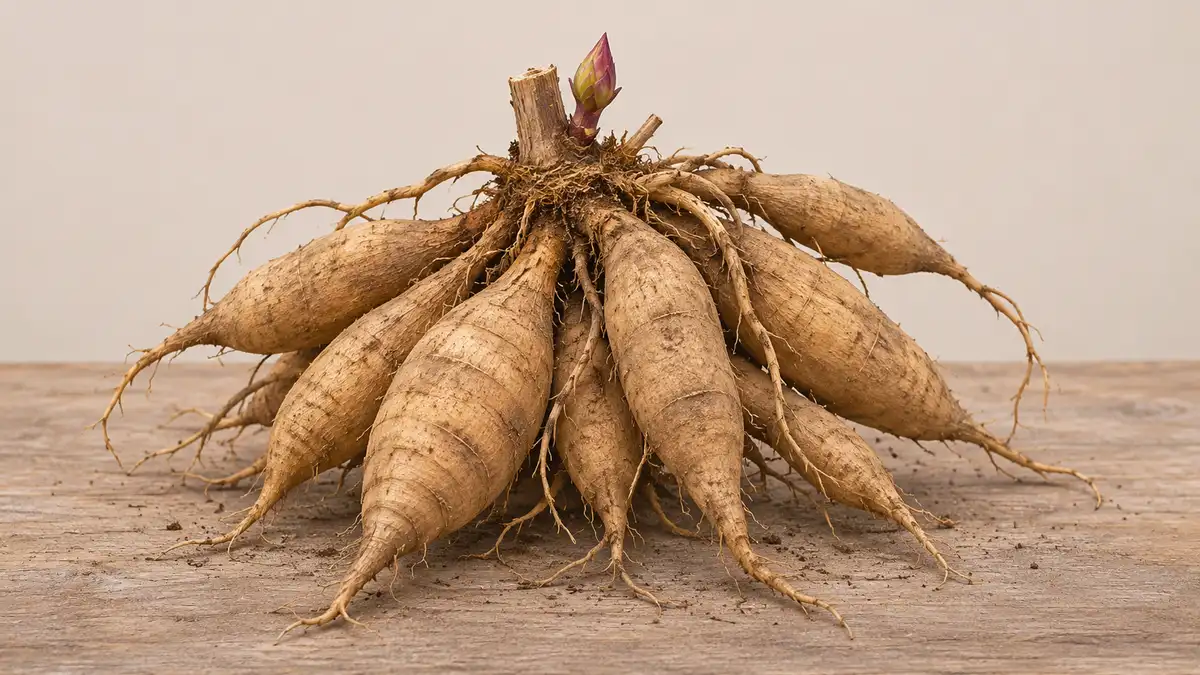
Specify the botanical identity, cultivar name, flower colour and form, dormant or growing condition, whole clumps or divisions, and the agreed size grade. Require divisions with an intact crown, a viable bud and an unbroken connection between crown and tuber. Agree how the grower will demonstrate viability before dispatch.
Keep cultivar batches separate and match carton labels to the packing list. Agree ventilated packing that protects crowns and prevents rubbing, crushing and condensation. State acceptable dryness and reject soft rot, mould, pest damage and shrivelled material in the purchase specification.
Before shipping from China to Great Britain, confirm the applicable plant-health category and documents with the exporter and broker. Risk categorisations can change. If you sell plants online directly to customers buying for personal use, a UK plant passport is still needed.
Worked duty example
Illustrative example, not a quote: 2,000 dormant Dahlia tubers; illustrative order and values under 0601 10 90 00, invoiced at £6,000 free on board, with £900 of freight and insurance to the UK. The customs value is £6,900. Duty at 4% is £276. Import VAT at 20% is charged on the customs value plus duty, £7,176, so it is £1,435.20. Import taxes total £1,711.20; a VAT-registered importer can usually reclaim the VAT, so the lasting cost is the £276 of duty. The import duty and VAT guide explains each step.
Inspection checklist
Identity: match cultivar labels, batch references and quantities to the order and packing list.
Viability: inspect crowns, buds and necks; separate broken divisions and severely shrivelled tubers.
Health: check for soft patches, mould, pest damage and attached soil; photograph suspect material.
Packing: check crushed cartons, condensation and mixed varieties before storage. Use the quality inspection guide to agree the inspection record.
Working out your own order? Send us the product on WhatsApp and we reply the same working day: WhatsApp us
What goes wrong
A large tuber can look acceptable while its neck or crown is broken. Mixed cultivar labels can remain unnoticed until flowering, and damp packing can conceal rot. Agree a grow-on sample check for variety identity and record arrival condition before redistributing stock.
Missing plant-health paperwork and assuming a tariff suspension removes import controls can disrupt clearance. For organic-labelled stock and the attached CITES measures, have the broker confirm the requirement for the exact goods before dispatch.
Cambridge China Bridge sources these products for UK businesses, checking the factory and the documents before shipment. See factory verification. For repeat volumes, see container programmes.
Frequently asked questions
What is the UK import duty on Dahlia tubers from China?
Dormant tubers have a base rate of 4%; growing or flowering material has 6%. Both relevant lines list a suspension to 0.00 %, subject to its exclusion for mixtures and component products.
Do Dahlia tubers need a phytosanitary certificate?
Confirm the plant-health risk category before dispatch. Ask APHA to confirm the phytosanitary certificate and pre-notification requirements for the consignment's category.
Can I sell imported Dahlia tubers online?
A UK plant passport is still needed when plants are sold online directly to customers buying for personal use. Arrange the passport process before offering the stock.
What should I check when Dahlia tubers arrive?
Check cultivar labels, intact crowns and necks, viable buds, firmness, mould, pest damage and damp packing. Keep suspect batches separate and record defects with photographs.