Sourcing compressed pallet blocks from China
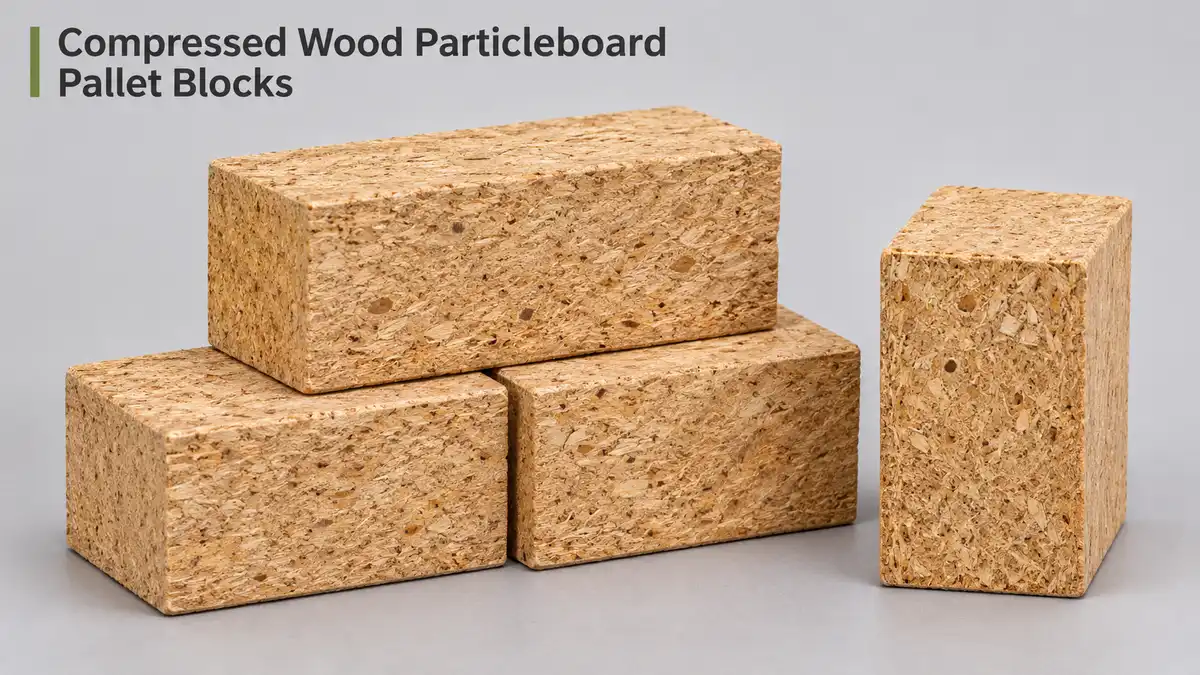
Compressed wood particleboard pallet blocks within heading 4410 carry a flat 6% UK duty from China. Timber due diligence applies when these products are first placed on the Great Britain market. Specify block dimensions, moisture and nail-holding performance. Cambridge China Bridge sources compressed wood particleboard pallet blocks.
Buying from China for a business? How our UK China sourcing agent service works · China sourcing agent for small orders and first imports
A flat duty for blocks within heading 4410
Heading 4410 covers particleboard and similar board made from wood or other ligneous materials, with or without organic binders. This guide concerns compressed particleboard pallet blocks. The table shows material and processing categories to discuss with your broker, rather than interchangeable codes for the same block. See the wider particleboard and OSB guide.
Read from the UK Trade Tariff on 1 October 2026, every supplied line carries 6% duty for goods from China. The supplied extract lists no anti-dumping or countervailing duties, suspensions or attached import controls. Particleboard placed on the Great Britain market is covered by timber due diligence requirements, as explained in the wider guide.
Confirm the commodity code using the material composition, manufacturing process, surface treatment and finished shape. Send photographs and a drawing to your broker before ordering. For the illustrative order, the FOB value and freight allowance are hypothetical; see UK duty and VAT for the calculation method.
| Goods | Commodity code | Duty | Anti-dumping or countervailing duty on China |
|---|---|---|---|
| Raw or sanded wood particleboard for cutting into pallet blocks | 4410 11 10 00 | 6% | None |
| Other wood particleboard, subject to confirmation for finished pallet blocks | 4410 11 90 00 | 6% | None |
| Other similar wood board, subject to confirmation for compressed blocks | 4410 19 00 00 | 6% | None |
| Board of other ligneous materials for alternative pallet-block formulations | 4410 90 00 00 | 6% | None |
Block dimensions, binder and pallet performance
Specify length, width, height, tolerances, solid or hollow construction, chamfers and nail positions. Record the wood-particle mix, binder, density, moisture acceptance criteria and intended storage conditions. Agree compression, nail withdrawal and swelling tests using production blocks and your intended pallet assembly.
Collect species, harvest-country and legality information for the timber due diligence file. Assess illegal-harvest risk and address identified risks before placing the products on the Great Britain market. Ask the factory to explain its raw-material sources and retain evidence supporting any recycled-content claim.
Processed, non-solid wood packaging is generally exempt from the solid wood packaging treatment rules; official guidance includes particleboard packaging made using glue, heat or pressure, while noting possible exceptions. Confirm the exemption for the actual blocks. Solid wood shipping pallets and dunnage used to bring them into Great Britain must meet the international wood packaging standard. Check the shipping packaging separately.
Worked duty example
Illustrative example, not a quote: An illustrative container shipment of compressed wood particleboard pallet blocks, with classification confirmed before ordering under 4410 11 90 00, invoiced at £16,000 free on board, with £3,500 of freight and insurance to the UK. The customs value is £19,500. Duty at 6% is £1,170. Import VAT at 20% is charged on the customs value plus duty, £20,670, so it is £4,134. Import taxes total £5,304; a VAT-registered importer can usually reclaim the VAT, so the lasting cost is the £1,170 of duty. The import duty and VAT guide explains each step.
Inspection checklist
Dimensions: measure sampled blocks against the drawing, including height, squareness, chamfers and any hollow core; trial-fit them in your assembly.
Bond and fastening: cut samples to inspect the core for voids and loose particles; test compression and nail withdrawal with the agreed fasteners.
Moisture and swelling: check moisture at loading and arrival, inspect for mould and edge breakdown, and compare conditioned samples against the agreed swelling criteria.
Packing and records: check bundle stability, water protection, quantities and batch identification; match the supplied blocks to the approved sample and timber-source documents. Arrange quality inspection around these checks.
Working out your own order? Send us the product on WhatsApp and we reply the same working day: WhatsApp us
What goes wrong
Weak bonding can leave blocks crumbling around nails or crushing under load. Uneven height prevents consistent deck support, while moisture uptake causes swelling and loosens joints. A satisfactory sample does not establish that the production batch performs the same way, so test blocks from the shipment in the intended pallet assembly.
A description such as compressed wood can leave the material and processing unclear. Resolve the classification before shipment, retain the timber-source evidence, and check whether solid wood packaging accompanies otherwise processed blocks.
Cambridge China Bridge sources these products for UK businesses, checking the factory and the documents before shipment. See factory verification. For repeat volumes, see container programmes.
Frequently asked questions
What is the UK import duty on compressed wood pallet blocks from China?
For blocks confirmed within heading 4410, the supplied tariff lines carry 6% duty, with no listed anti-dumping or countervailing duties or suspensions.
Do particleboard pallet blocks need wood packaging treatment?
Wholly processed particleboard packaging is generally exempt, subject to possible exceptions. Confirm the actual blocks; solid wood shipping pallets and dunnage must meet the wood packaging standard.
Do I need timber due diligence for imported pallet blocks?
Yes, for particleboard products first placed on the Great Britain market. Gather timber-source information, assess illegal-harvest risk and address identified risks.
How do I check whether pallet blocks will hold nails?
Agree nail withdrawal and compression tests using production blocks, your intended fasteners and the assembled pallet. Inspect cut samples for voids, loose particles and weak bonding.