Sourcing armoured explosives safes from China
Empty armoured explosives storage safes from China carry 2% UK duty under the reinforced-safe line. Explosives storage generally needs a licence, and HSE warns against metal boxes for shooters’ powder. Agree the intended contents and storage arrangement before choosing a safe. Cambridge China Bridge sources armoured explosives storage safes.
Buying from China for a business? How our UK China sourcing agent service works · China sourcing agent for small orders and first imports
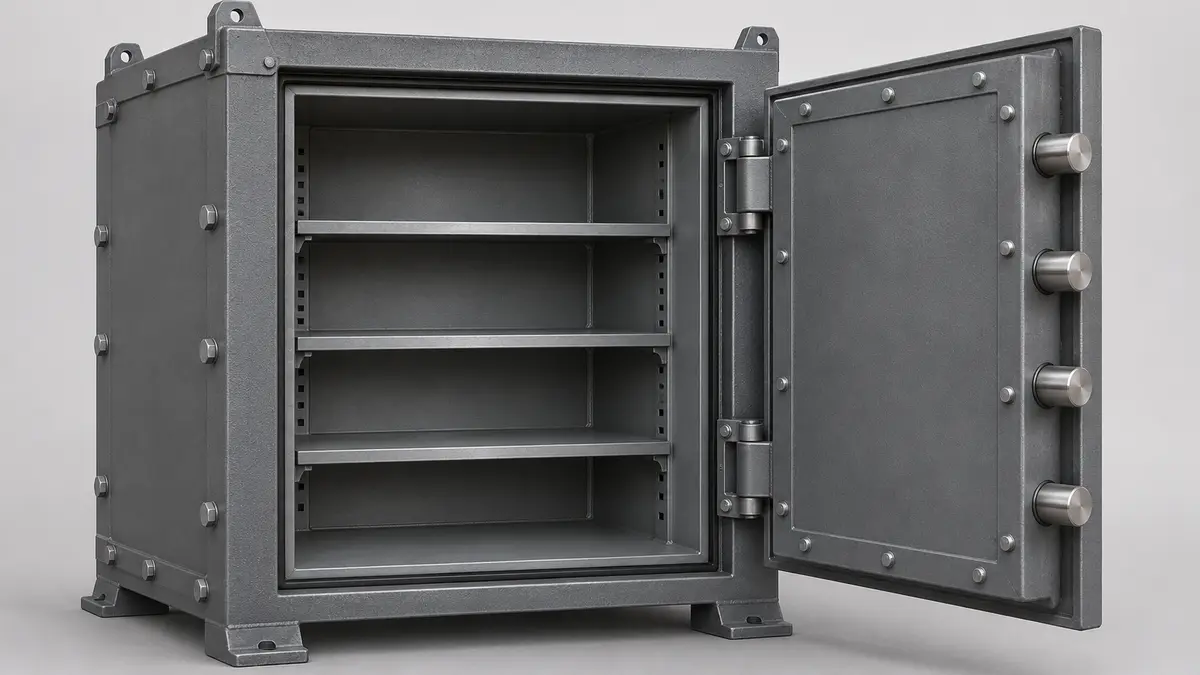
Duty on empty armoured explosives storage safes
Read from the UK Trade Tariff on 1 October 2026, heading 8303 covers base-metal armoured or reinforced safes, strongboxes, safe doors, strongroom deposit lockers, and cash or deed boxes. This guide concerns empty armoured explosives storage safes, not shipments containing explosives.
The reinforced-safe line 8303 00 40 00 carries 2% duty for goods from China. The supplied record lists no anti-dumping or countervailing duty, suspension or attached import control. The table repeats this code for product variants rather than separate tariff lines; inclusion does not establish suitability for a particular explosive.
Send construction drawings, photographs, materials and a description of the imported article to your customs broker to confirm the commodity code. For the wider heading and the distinction between gun cabinets and armoured safes, see the gun cabinets guide.
| Goods | Commodity code | Duty | Anti-dumping or countervailing duty on China |
|---|---|---|---|
| Empty armoured explosives storage safes with mechanical locks | 8303 00 40 00 | 2% | None |
Specify the contents before the armoured enclosure
Before storing explosives in Great Britain, you will generally need a licence from the appropriate licensing authority. Discuss the intended explosives, quantity, packaging and proposed location with that authority before ordering. HSE’s guidance on shooters’ powder says metal boxes, including ammunition boxes, are unsuitable and must not be used. Do not order an armoured metal safe for that purpose.
For an application assessed as suitable, agree usable internal dimensions, door opening, compartment layout, body and door construction, lock arrangement, anchoring and lifting provisions. Record lining materials and any specialist-designed pressure-relief features in the approved drawings. Request model-specific evidence for claimed security or fire performance and review it through testing and certification support.
Keep the intended use and its limitations in the specification, sales description and installation instructions. A burglary-resistance certificate or a fire test for paper storage does not answer whether the enclosure suits the proposed explosives. Ask the buyer’s explosives specialist to review that application separately.
Worked duty example
Illustrative example, not a quote: A pair of empty armoured explosives storage safes; illustrative order and values under 8303 00 40 00, invoiced at £7,000 free on board, with £600 of freight and insurance to the UK. The customs value is £7,600. Duty at 2% is £152. Import VAT at 20% is charged on the customs value plus duty, £7,752, so it is £1,550.40. Import taxes total £1,702.40; a VAT-registered importer can usually reclaim the VAT, so the lasting cost is the £152 of duty. The import duty and VAT guide explains each step.
Inspection checklist
Construction: measure body and door thickness against approved drawings; inspect welds, hinges, lock bolts, internal compartments and lining materials.
Operation: test the empty safe’s locking, unlocking and door movement; check key control, bolt engagement and any agreed override procedure.
Documents: match the model identification to drawings, test reports and installation instructions; compare specialist-specified features with the agreed design.
Delivery: inspect pallets, restraint, lifting provisions and door protection; check for distortion, corrosion and loose internal fittings before installation. Arrange a shipment inspection.
Working out your own order? Send us the product on WhatsApp and we reply the same working day: WhatsApp us
What goes wrong
The main purchasing mistake is choosing by steel thickness or a gun-cabinet description before establishing the intended use. A supplier’s claim that a safe is suitable for explosives needs application-specific review. For shooters’ powder, HSE expressly warns against metal boxes; a strong lock does not resolve that incompatibility.
Production faults include thinner steel than agreed, incomplete welds, misaligned bolts, substituted linings and missing anchoring provisions. Transit damage can distort the door and prevent full locking. Keep the approved drawings and sample as inspection references, and resolve deviations before accepting the shipment.
Cambridge China Bridge sources these products for UK businesses, checking the factory and the documents before shipment. See factory verification. For repeat volumes, see container programmes.
Frequently asked questions
What is the UK import duty on armoured explosives storage safes from China?
The supplied tariff record shows 2% under 8303 00 40 00, with no anti-dumping or countervailing duty, suspension or attached import control. Confirm that the empty safe fits this classification.
Can I store shooters’ powder in an armoured metal safe?
HSE’s shooters’ powder guidance says metal boxes, including ammunition boxes, are unsuitable and must not be used. Do not choose an armoured metal safe for that purpose.
Do I need a licence to store explosives in Great Britain?
You will generally need a licence from the appropriate licensing authority before storing explosives. Discuss your intended contents and storage arrangement with that authority before ordering.
What should I send a Chinese safe factory?
Send the application reviewed by your explosives specialist, approved construction drawings, internal dimensions, compartment layout, lock requirements, installation details and the evidence needed for any performance claims.