Importing a mobility scooter for personal use
Before ordering, confirm the vehicle's UK class using its actual speed, width, weight and equipment. Check that your intended use is permitted, settle registration and obtain evidence for the exact configuration being shipped. Ask Cambridge China Bridge to check the factory's model documents and supplied configuration.
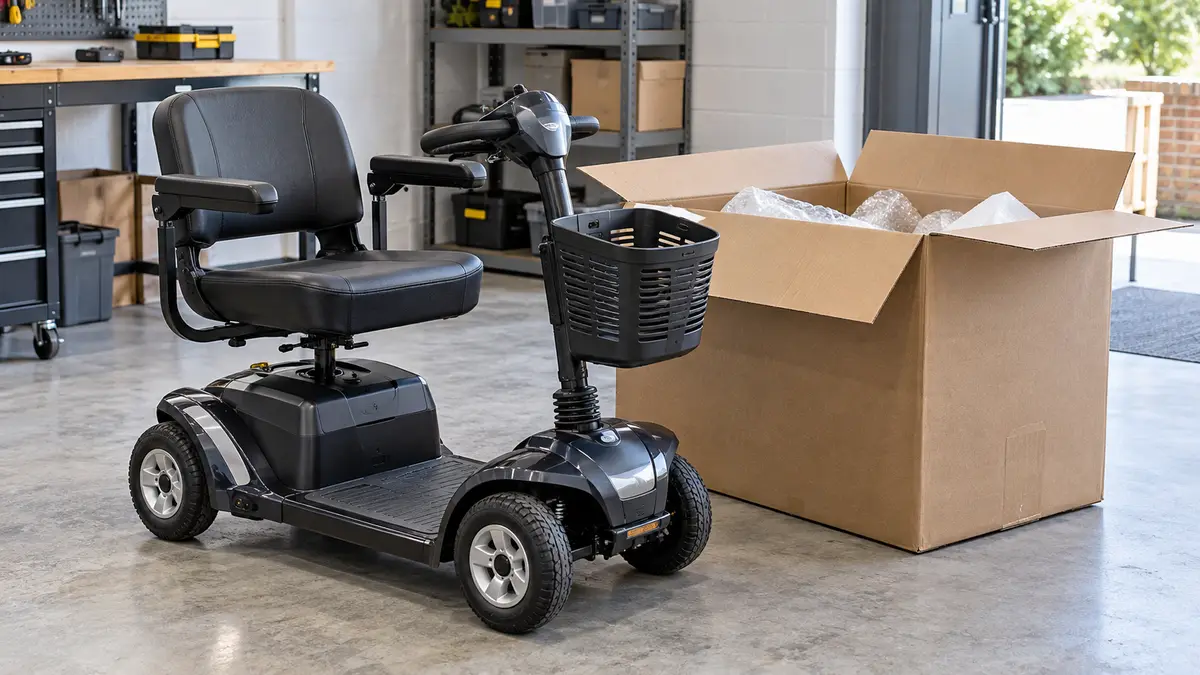
Start with the user and intended journeys
For your own everyday use, GOV.UK says you must have trouble walking because of an injury, physical disability or medical condition. Other permitted uses include maintenance journeys, manufacturer testing, sales demonstrations and training a disabled user. Buying a vehicle for yourself does not establish that your intended use is permitted.
Write down whether you need pavement journeys, road journeys or both. Check storage, charging access, seating support and whether you can operate the controls comfortably. For broader supplier and product checks, use our guide to sourcing wheelchairs and mobility scooters. For charging connections at home, see our guide to China appliances and UK plug adaptors.
Check the class against the actual configuration
GOV.UK describes class 2 as usually having a maximum speed of 4mph or less, and class 3 as usually having a maximum speed of 8mph. Treat these as a starting point. Ask the manufacturer to identify the UK class in writing and support it with the model's speed, overall width, unladen weight and equipment specification.
GOV.UK says a vehicle is not in a class if it exceeds 8mph, is wider than 0.85 metres, or weighs more than 150kg, with a 200kg threshold where attached equipment is needed. Ask what each weight includes. Do not confuse user carrying capacity, shipping weight and unladen weight, or assume a selectable slow mode establishes the class.
Match the vehicle to permitted routes
Class 2 and class 3 vehicles can use pavements and other pedestrian areas, where the maximum speed is 4mph and users must give way to other pedestrians. They can use separated cycle tracks but cannot use painted cycle lanes. Class 3 vehicles can also use the road. A vehicle not in a class cannot use pedestrian areas.
For road use, GOV.UK requires an efficient braking system, a clear view ahead, front and rear lights and reflectors, indicators capable of acting as hazard warnings, a rear view mirror and a horn. Ask for photographs and demonstrations of these features on your ordered configuration. Check your intended route before paying.
Settle registration before shipment
Class 3 vehicles and vehicles not in a class must be registered with DVLA. For a new class 3 vehicle, arrange who will complete form V55/MV. DVLA asks for a manufacturer certificate or declaration confirming newness and identifying the frame or vehicle identity number, together with evidence of speed and unladen weight.
DVLA accepts speed and weight evidence such as a manufacturer or supplier letter, a printed email, a manual extract or a printed website extract. Obtain documents tied to the actual vehicle. For a vehicle not in a class, ask DVLA about the appropriate registration route before ordering. Prepare shipment paperwork separately using our customs documents guide. For a car purchase instead, see our guide to importing a car for UK road use.
Working out your own order? Send us the product on WhatsApp and we reply the same working day: WhatsApp us
Make the advert's claims verifiable
Before paying, request the full model designation, configuration sheet, manual, identification-label photograph and supporting test reports. Ask the factory to explain how the evidence supports each claimed speed, dimension, weight and fitted feature. Follow our test report verification guide to check the issuing body and model coverage.
Put the agreed motor, controller settings, battery, seating and accessories in the order. Ask for inspection evidence matching the finished vehicle to that specification, including its identity number and operating modes. Resolve conflicting documents before shipment, and agree access to replacement parts, servicing instructions and warranty support.
Frequently asked questions
Can I import a mobility scooter for myself?
Check the vehicle and your intended use before ordering. For your own everyday use, GOV.UK requires trouble walking because of an injury, physical disability or medical condition.
Can an imported mobility scooter go on pavements?
Class 2 and class 3 vehicles can use pavements, with a maximum speed of 4mph. Vehicles not in a class cannot use pedestrian areas.
Does a class 3 mobility scooter need registration?
Yes. It must be registered with DVLA. For a new vehicle, obtain the manufacturer's newness declaration, vehicle identity number and evidence of speed and unladen weight.
What proof should I ask the Chinese factory for?
Ask for the exact model specification, manual, identity-label photograph and supporting reports. Match these to the controller, battery, seating and accessories being supplied.